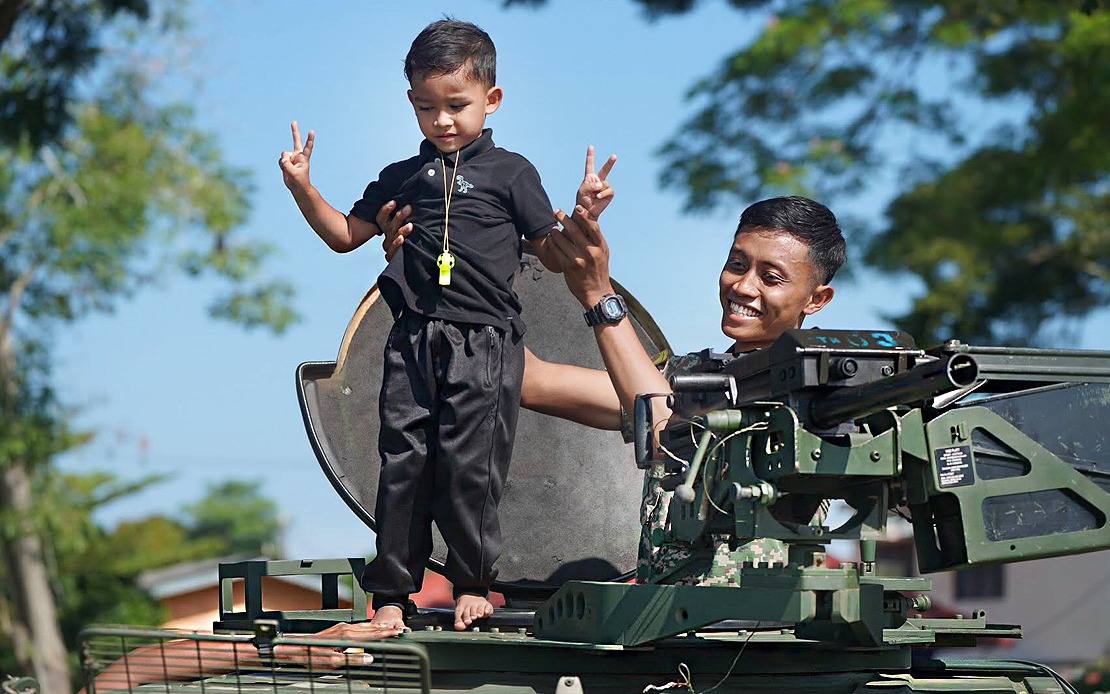
The Ministry of Defence has intensified its reach into local communities across Malaysia through structured programming designed to strengthen the bond between the armed forces and civilian populations. In Alor Gajah, a district in Melaka, this engagement took concrete form with the rollout of the 'Program Jiwa Murni MADANI' initiative, which positions the defence establishment as an active partner in addressing grassroots welfare needs rather than remaining confined to strictly military functions.
The programme represents a deliberate pivot toward what defence officials term civil-military cooperation, or CIMIC—a strategic framework that recognises the armed forces as capable contributors to civilian development beyond their core security mandate. By embedding soldiers and defence resources into community projects, the ministry seeks to rebuild public confidence in military institutions and demonstrate their relevance to everyday Malaysian life. This approach aligns with broader regional trends where Southeast Asian militaries have sought legitimacy through development roles.
The Alor Gajah event itself offered a microcosm of this expanded defence footprint. Residents accessed free medical evaluations, explored career pathways within defence-related sectors, and discovered entrepreneurship opportunities—services typically provided by civilian government bodies but here delivered through military channels. The inclusion of RAHMAH sales outlets, which offer subsidised essential goods, signals the defence ministry's role in managing cost-of-living pressures affecting Malaysian households. Such dual-purpose activities blur traditional lines between military and civilian responsibilities.
Infrastructure rehabilitation emerged as a tangible legacy of the programme. The 9th Squadron of the Royal Engineers Regiment invested RM179,200 in five distinct projects spanning multiple villages within the district. These efforts tackled practical deficits: a deteriorated playground in Kampung Baru, a compromised school fence in Sekolah Jenis Kebangsaan (Tamil) Durian Tunggal, a neglected futsal facility, and places of worship requiring structural attention. By directing engineering resources toward civilian amenities, the military effectively becomes an alternative delivery mechanism for local infrastructure—valuable in districts where municipal budgets face constraints.
Deputy Defence Minister Adly Zahari's presentation of RM133,000 in grants distributed across eight recipients underscores institutional commitment to sustained engagement rather than one-off gestures. The beneficiaries—surau committees, Hindu and Buddhist associations, and Tamil vernacular schools—represent Alor Gajah's religious and cultural diversity. This inclusive approach reflects Malaysia's multicommunal character and suggests the defence ministry is consciously avoiding perception of favouring particular constituencies. Investment in a school's GreenLab facility also signals alignment with environmental consciousness, a consideration increasingly important to younger Malaysian voters.
The Religious Corps of the Malaysian Armed Forces orchestrated a parallel initiative, the 'Program Ilmu dan Muafakat MADANI,' which channelled spiritual and charitable activities through mosque settings. This dimension reveals how the defence ministry integrates religious institutions into its community strategy, potentially amplifying reach through trusted local leaders. The combination of congregational prayer, lectures, and charity contributions positioned military personnel as stakeholders in community spirituality—a sensitive expansion of military roles in a Muslim-majority nation where civil-military boundaries historically remained clearer.
These activities derive direction from the National Defence Strategic Plan 2026-2030, specifically its Core 4 pillar. This planning framework suggests the defence ministry has embedded community engagement into mid-term strategic thinking rather than treating it as episodic outreach. Malaysian defence planners have evidently calculated that resilience derives not only from firepower but from deep institutional roots within civilian populations. Such doctrine reflects lessons learned across the region, where militaries lacking public legitimacy face vulnerabilities during political upheaval.
For Malaysian communities in districts like Alor Gajah, the practical benefits are immediate: infrastructure improvements, health access, and financial support for institutions serving grassroots populations. The distribution of 500 RAHMAH baskets to veterans' associations and residents extends benefit beyond organised institutions into informal networks. These concrete deliverables matter particularly in rural and semi-urban areas where government service delivery often lags urban centres.
However, the expansion of military functions into civilian domains warrants scrutiny. When armed forces assume responsibilities traditionally held by civilian agencies—healthcare, infrastructure development, skills training—questions emerge regarding appropriate institutional boundaries and long-term sustainability. If communities become accustomed to military provision of services, what occurs when defence resources shift toward security priorities? Additionally, civilian agencies responsible for these functions may face further marginalisation if the better-resourced military apparatus crowds them out.
The emphasis on CIMIC through programmes like PJM and PIKAT also reflects contemporary understanding that military legitimacy depends on demonstrated utility beyond combat readiness. In Malaysia's context, where civil-military relations have historically remained stable but where periodic political tensions arise, investing in community connection insulates defence institutions from political vulnerability. A military embedded in grassroots welfare becomes harder to isolate or delegitimise during political disputes.
Southeast Asian defence establishments increasingly employ similar strategies. Indonesia's armed forces similarly undertake civilian development projects, while Singapore's military maintains community engagement through neighbourhood programmes. These initiatives compete for legitimacy with civilian governance structures and suggest a regional trend toward militarisation of development functions—a shift with implications for institutional accountability and democratic governance. Malaysian policymakers should consider whether deepening military involvement in civilian welfare genuinely strengthens resilience or creates structural dependencies and institutional overlaps that complicate governance during crises.
The Alor Gajah programme demonstrates the defence ministry's commitment to redefining its social role in Malaysian society. Whether this model proves sustainable and whether it genuinely strengthens civil-military cooperation or inadvertently blurs critical institutional boundaries remains an open question for observers of Malaysia's evolving governance architecture.

