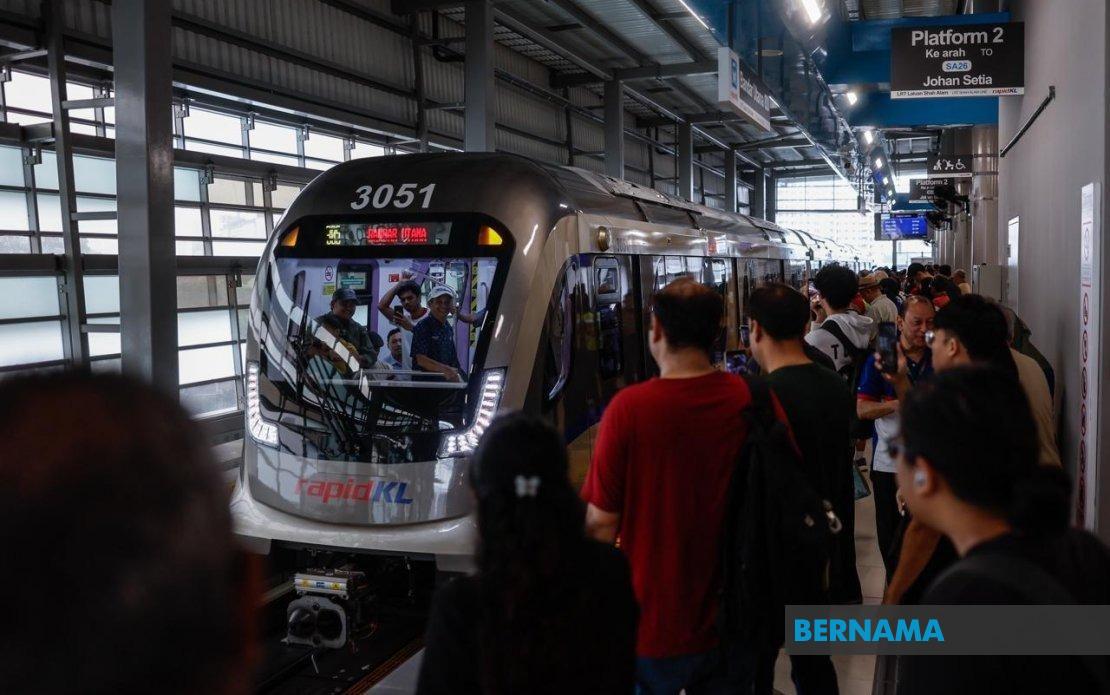
A malfunctioning component aboard one of Rapid KL's Light Rail Transit 3 trains made unexpected contact with the power conductor, triggering an incident at Shah Alam Stadium Station on July 4 that produced sparks and a sharp sound but caused no harm to passengers or staff. The transport operator disclosed the findings in a statement on July 14, ten days after the incident disrupted service along the Shah Alam Line during evening peak hours.
The technical failure occurred at 7:05 pm when the faulty component connected with the high-voltage conductor, generating a momentary surge that produced visible sparks and an audible pop resembling a small explosion. Despite the alarming nature of the event, Rapid KL confirmed that no injuries resulted from the incident and that normal operations resumed without significant delay. The swift response prevented what could have escalated into a more serious safety situation on one of the Klang Valley's critical commuter lines.
Once the malfunction became apparent, Rapid KL crews immediately took the affected train out of service. Passengers aboard were guided to disembark at the subsequent station, where they transferred to an alternative train to complete their journeys. This procedural response demonstrates the operator's established protocol for handling mid-line incidents, prioritizing passenger continuity while ensuring that potentially unsafe equipment does not remain in operation.
Following withdrawal from service, the train underwent comprehensive examination and diagnostics at Rapid KL's maintenance depot. Technicians identified the exact source of the problem and replaced the defective component entirely. Only after rigorous testing and safety validation did Rapid KL authorize the train to return to the active fleet, underlining the operator's commitment to maintaining vehicle integrity before redeploying equipment to passenger routes.
Beyond addressing the singular fault, Rapid KL responded to the incident by expanding its oversight activities across the broader LRT3 fleet. The operator conducted systematic inspections and monitoring of other trains running on the line as a precautionary step, seeking to identify any similar component degradation that might pose comparable risks. This proactive approach reflects industry best practice when isolated failures occur, ensuring that lessons learned from one unit inform the maintenance and inspection strategies for the entire network.
The incident underscores the inherent risks associated with operating electrified rail systems in high-density urban environments. When electrical components deteriorate or malfunction, the consequences can include unexpected arcing, conductor contact, and localized energy discharge. The Klang Valley's commuter rail network carries hundreds of thousands of passengers daily, making reliable asset management and preventive maintenance essential to public safety and service reliability.
For commuters in Shah Alam and surrounding areas, the July 4 incident serves as a reminder of the technical complexities underlying modern rapid transit. While passengers may rarely encounter such disruptions, the systems that support millions of journeys annually operate with slim margins for mechanical or electrical error. The competence of maintenance teams and the robustness of inspection protocols determine whether incidental faults become catastrophic failures or manageable anomalies resolved swiftly.
Rapid KL's statement reaffirmed that passenger safety constitutes the organization's paramount operational priority, a principle evident in its decision to withdraw the train immediately and subject it to exhaustive testing before return to service. In the competitive landscape of Malaysian public transport, where reliability and safety directly influence ridership confidence, such transparency and decisive action reinforce public trust in the operator's stewardship of critical urban infrastructure.
The handling of this incident also reflects broader trends in Southeast Asian rapid transit systems, where aging infrastructure and sustained ridership growth create ongoing maintenance pressures. Operators across the region increasingly rely on systematic condition monitoring, predictive analytics, and fleet-wide inspections to prevent failures before they impact service. Rapid KL's response aligns with international standards and regional benchmarks for proactive asset management.
As the Klang Valley continues expanding its integrated public transport network, technical incidents like this highlight the importance of sustained investment in maintenance capabilities and engineering expertise. With the LRT3 Shah Alam Line serving as a vital artery connecting suburban communities to central employment zones, maintaining peak operational reliability remains critical to the region's economic and social vitality. Rapid KL's willingness to communicate transparently about such incidents, rather than concealing them, sets a constructive tone for stakeholder engagement and public confidence in the operator's judgment.

