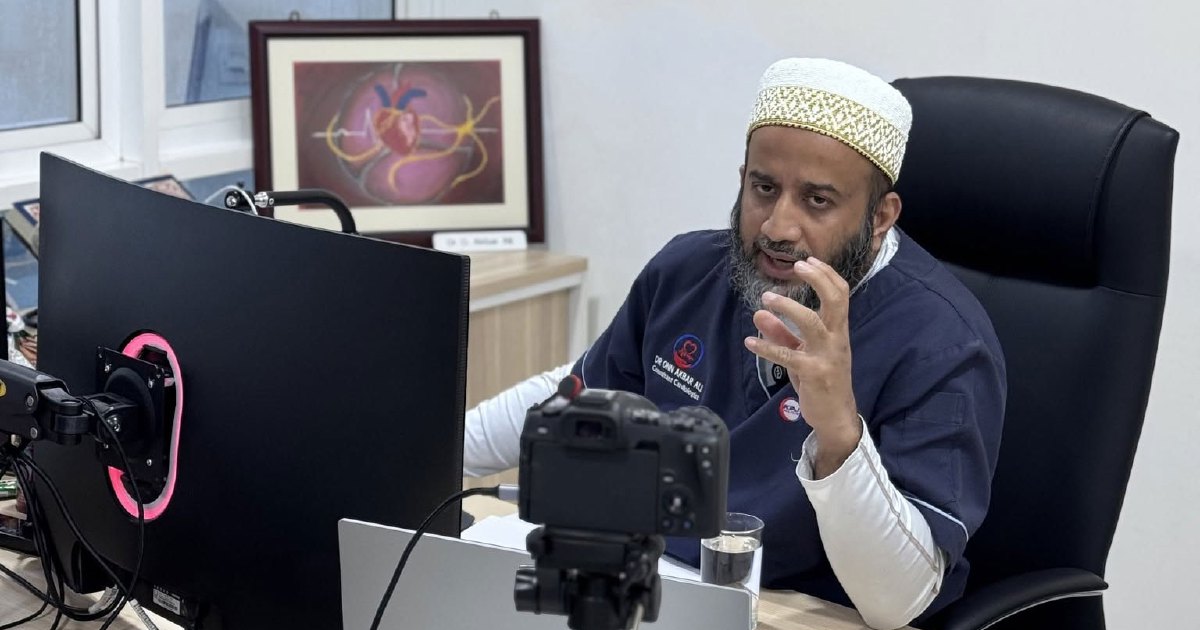
A respected Malaysian cardiologist has become the latest victim of synthetic media manipulation, sparking fresh alarm about how artificial intelligence is supercharging medical fraud and undermining public trust in healthcare. Consultant cardiologist Dr Onn Akbar Ali was alarmed to discover that criminals had created deepfake video content featuring his face and voice endorsing a herbal tea as a diabetes cure—a false and potentially dangerous claim that exploited his professional reputation.
The incident reveals a troubling intersection between advancing AI capabilities and healthcare misinformation. Deepfake technology, which uses machine learning to create realistic but fabricated video and audio content, has become increasingly accessible to bad actors with minimal technical expertise. In Dr Ali's case, scammers weaponised his identity to lend false credibility to an unproven herbal product, deliberately targeting people with diabetes who are actively searching for treatment options. The fact that a prominent physician can be impersonated so convincingly underscores how difficult it has become for ordinary consumers to distinguish between genuine medical endorsements and fraudulent ones.
The implications for Malaysia's healthcare ecosystem are significant. Patients already navigate a complex landscape of legitimate medical advice, wellness trends, and dubious remedies promoted through social media. Adding synthetic video impersonations of real doctors creates an additional layer of deception that erodes informed decision-making. Someone struggling with diabetes management might stumble across such a deepfake video and, believing it comes from a qualified specialist, abandon their actual prescribed treatment in favour of an ineffective herbal alternative. The health consequences could be severe.
Beyond individual cases, this trend threatens the broader architecture of medical trust. Doctors spend years acquiring qualifications and building professional reputations. When those reputations can be instantly hijacked through AI-generated content, it damages not just individual practitioners but the credibility of the profession itself. Patients may begin to doubt whether any video endorsement they encounter is genuine, even when it actually comes from a legitimate healthcare provider attempting to share evidence-based guidance. The weaponisation of deepfakes thus becomes a form of institutional sabotage.
The sophistication of current deepfake technology makes prevention difficult at the individual level. Early deepfakes were sometimes detectable through telltale artifacts—flickering eyes, unnatural facial movements, audio lag. Modern systems produce increasingly convincing results that fool even trained observers. Dr Ali's experience demonstrates that doctors cannot simply ignore this threat and hope it goes away. Many practitioners lack the resources or technical knowledge to monitor the internet for impersonations or to respond effectively when they occur.
Southeast Asia presents a particularly vulnerable target for this form of fraud. The region has a large and growing population with high rates of chronic diseases including diabetes and hypertension. Healthcare literacy varies widely, and many people lack easy access to in-person consultations with qualified doctors. These conditions create demand for alternative health information sources, and scammers recognise this gap. Deepfake videos of respected medical figures can spread rapidly through messaging apps and social networks, reaching vulnerable populations before fact-checkers can intervene.
Regulatory frameworks in Malaysia and across the region have not kept pace with deepfake risks in healthcare. While cybersecurity laws exist, they often do not specifically address synthetic media fraud or medical impersonation. Platforms that host and distribute fraudulent videos face limited accountability, particularly if content is shared through private channels or encrypted messaging services. The legal grey zones create an environment where scammers can operate with relative impunity, knowing that victims may struggle to identify where to report violations or how to seek redress.
Responding to this threat will require coordinated effort across multiple sectors. Technology companies hosting deepfake content need better detection systems and rapid response protocols. Malaysia's medical regulatory bodies, including the Malaysian Medical Council, must develop clear guidance for practitioners on how to respond to impersonation and what support is available. Telecommunications regulators should work with internet service providers to identify and remove fraudulent health content circulating locally. Healthcare communicators need to educate the public about deepfake risks and how to verify whether medical claims actually come from legitimate sources.
For individual doctors, the stakes are high. Dr Ali's case shows that professional isolation from digital spaces is no longer viable—criminals will create deepfakes whether physicians engage online or not. Instead, doctors should document and report impersonations, consider digital authentication methods where possible, and work collectively to pressure platforms into faster removal of fraudulent content. Some are exploring technological solutions such as blockchain-based verification systems or cryptographic signatures that prove video authenticity.
The broader public health concern transcends any single case. As deepfake technology becomes cheaper and easier to use, the potential for large-scale medical fraud campaigns grows exponentially. Imagine coordinated deepfake videos of multiple prominent doctors endorsing a dangerous supplement, or fake wellness gurus impersonating actual specialists to promote dangerous health advice. The financial incentives for scammers are substantial, and the damage to public health could be profound.
Malaysia's health authorities and technology regulators must act with urgency to establish frameworks that detect, remove, and prosecute deepfake medical fraud. This includes investment in AI detection tools, clear penalties for synthetic media impersonation, and public education campaigns that build awareness of the threat. Dr Ali's experience serves as a warning sign of a much larger problem on the horizon—one that demands proactive policy response before it becomes endemic.

