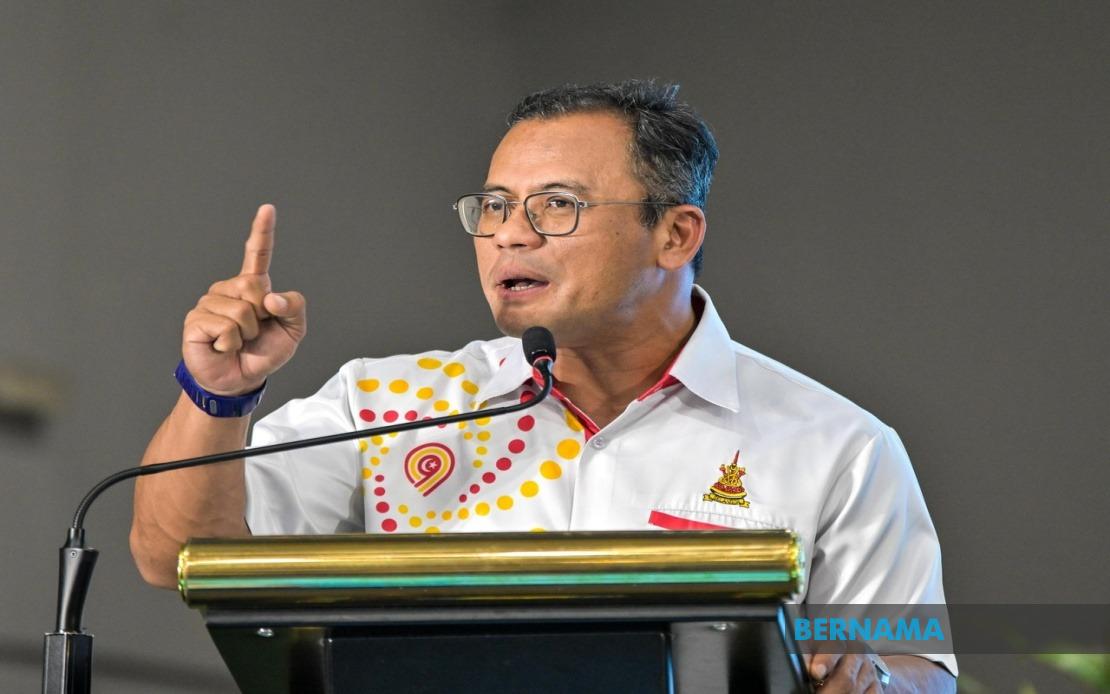
Selangor Menteri Besar Datuk Seri Amirudin Shari has underscored the necessity for Malaysians to move beyond rote recitation of the Rukun Negara toward a substantive engagement with its underlying philosophy. Speaking after launching the MADANI Kita Bersama Komuniti Ampang Jaya programme in Kuala Lumpur, Amirudin stressed that shallow familiarity with the nation's foundational document poses a significant risk to social cohesion, particularly in an era when identity-based politics threatens to fragment Malaysia's multicultural fabric.
The Menteri Besar articulated a concern that has gained traction among policy circles across Southeast Asia: the danger of constitutional and national principles becoming hollow symbols rather than living guides for governance and citizenship. When citizens memorize the five principles without grasping their intended purpose, Amirudin argued, they forfeit the protective values embedded within the framework. This distinction matters profoundly for Malaysia, where competing narratives around race, religion, and national identity frequently surface in public discourse and electoral cycles.
Amirudin illustrated his argument through the principle concerning belief in God, demonstrating how surface-level interpretation diverges from substantive understanding. While the principle explicitly references religion, he explained, its deeper objective encompasses fostering unity across Malaysia's diverse faith communities. This nuanced reading transforms the principle from a potentially divisive statement into a unifying force—one that acknowledges religious pluralism while emphasizing mutual respect and shared national purpose. His framing suggests that the Rukun Negara, properly understood, contains resources for countering sectarian appeals that exploit religious identity for narrow political advantage.
The Selangor leader also defended recent efforts to include the Rukun Negara's preamble and stated objectives in official recitations, countering criticism that such revisions constitute tampering with Malaysia's constitutional heritage. Rather than representing substantive amendment, Amirudin characterized the initiative as a mechanism for restoring collective memory of principles that have slipped from popular consciousness. This distinction carries weight in Malaysian political discourse, where accusations of institutional change often inflame tensions. By reframing the move as retrieving forgotten context rather than revising fundamental law, Amirudin attempts to neutralize opposition whilst advancing his substantive agenda.
The Menteri Besar positioned the Rukun Negara's primary objective—unity among citizens of diverse racial backgrounds—as both historically rooted and urgently contemporary. Malaysia's founding generation crafted these principles amid post-independence nation-building, yet their relevance has arguably intensified as social fragmentation increases and identity politics gains electoral salience. Amirudin's intervention suggests that senior political leaders recognize the need to reclaim nationalist frameworks from cynical deployment, employing them instead as correctives to polarizing discourse.
This initiative reflects broader Southeast Asian anxieties about maintaining multireligious, multiethnic states amid rising communal tensions and populist appeals to parochial identities. Thailand, Indonesia, and the Philippines have each grappled with similar challenges—attempts by elites to reaffirm founding principles of national unity against centrifugal forces. Malaysia's particular context involves the constitutional entrenchment of Islam alongside guaranteed religious freedom for non-Muslims, creating inherent tensions that actors regularly exploit or manage depending on political calculation. Amirudin's emphasis on understanding rather than merely reciting principles represents an implicit acknowledgment that institutional design alone cannot guarantee social peace; deliberate cultivation of shared values remains necessary.
The Selangor government's framing also addresses a persistent Malaysian challenge: the gap between formal commitment to Rukun Negara principles and their practical erosion through selective application. Political actors routinely invoke national unity whilst simultaneously pursuing sectional agendas. Amirudin's call for genuine comprehension implicitly critiques this hypocrisy, suggesting that deeper internalization of the document's objectives would render such contradictions untenable. Whether educational campaigns can accomplish this shift remains uncertain, but the attempt signals elite concern about mounting divisiveness.
The event featured Deputy National Unity Minister Yuneswaran Ramaraj, signaling whole-of-government commitment to this narrative around Rukun Negara revival. The National Unity Ministry's involvement underscores official recognition that racial and religious harmony constitute active policy challenges rather than settled matters. For Malaysian readers and regional observers, this positioning suggests that federal and state governments perceive sufficient communal friction to warrant elevated attention to foundational national principles—a posture that both reflects genuine concern and potentially signals to constituencies that such concerns are being taken seriously.
Amirudin's intervention arrives amid broader regional debates about populism, identity politics, and democratic governance. Across Southeast Asia, political leaders increasingly appeal to narrow ethnic or religious constituencies, fragmenting shared civic space. Malaysia's plural society depends more than many others on maintenance of deliberate cross-communal consensus. Efforts to reinvigorate understanding of Rukun Negara represent one policy response, though effectiveness ultimately depends on whether political incentives favor unity or division. The Selangor Menteri Besar's emphasis on moving beyond superficial memorization toward internalized commitment reflects hope that cultural and educational interventions can complement institutional structures in sustaining multiracial democracy.

