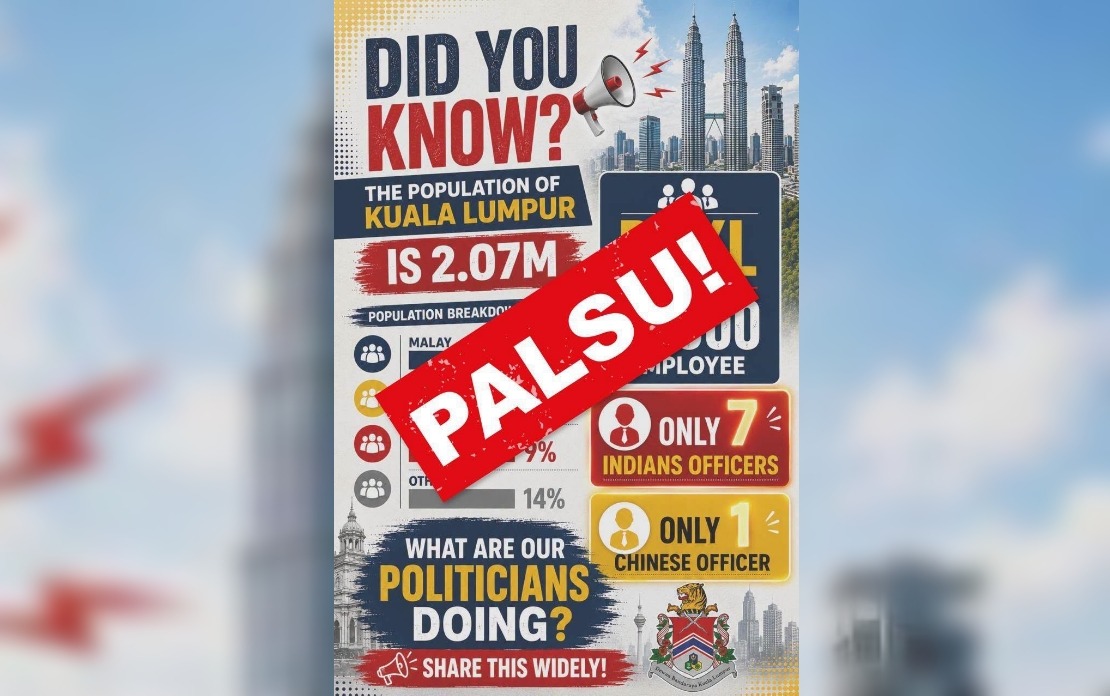
A WhatsApp poster spreading misleading information about the ethnic composition of Kuala Lumpur City Hall's workforce has prompted Minister in the Prime Minister's Department (Federal Territories) Hannah Yeoh to publicly correct the record. The viral claim asserted that DBKL employed only seven Indian staff members and a single Chinese staff member—figures that bear no resemblance to the actual workforce breakdown, according to official data released by Yeoh's office.
The timing of these false claims, emerging during Malaysia's election campaign season, underscores a recurring challenge facing public institutions: the rapid dissemination of unverified information through messaging platforms that can inflame racial sensitivities at politically charged moments. Hannah Yeoh explicitly cautioned the public against accepting such assertions at face value and called for greater scrutiny of claims circulating without supporting documentation. Her intervention highlights the responsibility of government officials to intervene with factual corrections when misinformation threatens public discourse.
According to the latest employment records from DBKL as of July 1, 2026, the city hall operates with a substantially larger and more diverse workforce than the false poster suggested. The local authority employed 9,131 staff members across all grades and departments. Within this total, Indian staff numbered 490 individuals, whilst Chinese staff reached 22 personnel. These figures represent markedly different proportions from those claimed in the misleading WhatsApp message, revealing a significant discrepancy between rumour and documented reality.
Within the higher-ranking Management and Professional Group—positions that typically require advanced qualifications and represent career progression—the composition reflects the broader workforce patterns. This cadre includes 10 Indian officers and two Chinese officers, according to Yeoh's statement. The existence of these professional-level positions for minority staff members indicates some degree of advancement opportunity, though the minister acknowledged that further gains remain possible and necessary in this regard.
Yeoh's response combined factual correction with measured candour about ongoing challenges. Rather than dismissing concerns about representation wholesale, she recognised that DBKL's ethnic composition within various employment tiers warrants continued attention and improvement. This acknowledgement carries significance in a Malaysian context where diversity in civil service and local government bodies remains a subject of legitimate public interest and occasional political contention.
In response to the misinformation episode, the minister announced that DBKL would undertake a comprehensive review of its employment practices. This examination would span recruitment methodologies, hiring decision-making, internal promotion mechanisms, and the channels through which job vacancies are advertised to prospective candidates. Such a review could identify unintentional barriers to applications from underrepresented groups and illuminate whether structural factors inadvertently narrow the applicant pool before selection processes even begin.
Yeoh explicitly committed to implementing improvements that operate according to principles of transparency, fairness, and merit-based advancement. This three-pronged approach addresses concerns from multiple angles: transparency provisions ensure that employment decisions remain open to scrutiny, fairness commitments guard against discrimination, whilst merit-based standards maintain professional standards and institutional capacity. For Malaysian readers accustomed to periodic controversies over civil service composition, such explicit commitments provide at least a framework for accountability.
The minister also issued a broader appeal to all stakeholders—political parties, civil society organisations, media commentators, and ordinary citizens—to resist weaponising workforce diversity issues for political gain. She called on parties to distinguish between correcting genuine misinformation and exploiting legitimate concerns about representation as a tool for generating racial discord. This plea for responsible discourse reflects recognition that Malaysia's multiethnic society requires scrupulous protection against inflammatory rhetoric, particularly during election campaigns when political actors face heightened incentive to mobilise ethnic constituencies.
The incident illustrates how false claims about public sector employment can spread rapidly through digital channels, potentially affecting public confidence in institutions and fuelling intercommunal tension. DBKL, as Kuala Lumpur's principal municipal authority responsible for urban management across the capital and federal territories, occupies a high-profile position in public administration. Misinformation about its operations therefore carries outsized potential to shape public perceptions and political sentiment.
For Malaysian readers monitoring governance and representation issues, this episode underscores the importance of demanding factual evidence before accepting claims about government workforce composition. The gap between the false poster's allegations and documented reality—claiming seven Indian staff versus the actual 490—demonstrates how dramatically misleading information can distort perception. This discrepancy did not occur through simple rounding error or outdated data, but represented a roughly seventy-fold undercount.
The broader Southeast Asian context adds relevance to such representation questions. Throughout the region, capital cities and metropolitan authorities continue navigating questions of inclusive employment and fair access to government positions. Malaysia's explicit commitment to addressing these concerns through systematic review and transparent improvement mechanisms may offer instructive lessons for regional counterparts grappling with similar challenges.
Moving forward, the credibility of DBKL's review process and the concrete reforms that follow will determine whether this episode catalyses genuine improvement or fades as another election-season controversy. Malaysian civil society and media organisations will likely scrutinise the outcomes of the announced workforce review, measuring DBKL's follow-through against the minister's stated commitments. For a public institution frequently subject to political scrutiny, delivering measurable progress in recruitment transparency and ethnic representation could strengthen institutional legitimacy whilst countering future false claims with demonstrated results.

