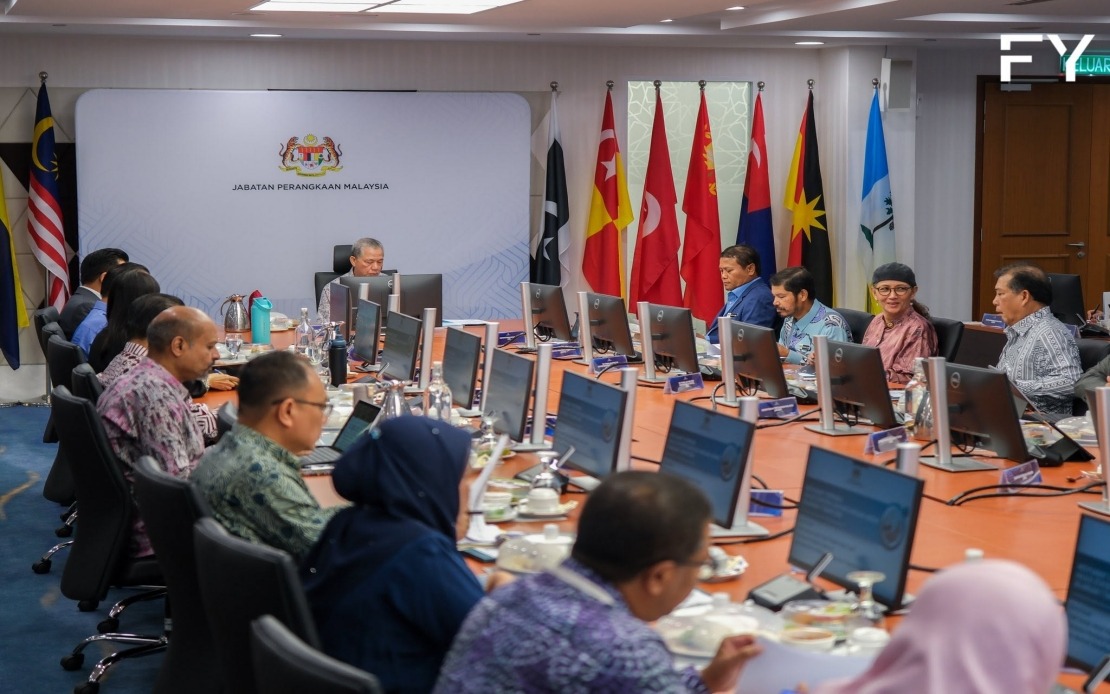
Malaysia's government has signalled its commitment to transforming policy-making through data and artificial intelligence, positioning these tools as foundational elements for achieving the objectives of the 13th Malaysia Plan spanning 2026 to 2030. Deputy Prime Minister Datuk Seri Fadillah Yusof outlined this strategy following a high-level meeting of the National Statistics and Data Council, underscoring the administration's recognition that informed decision-making rests on robust information infrastructure.
The contemporary global environment presents multiple interconnected challenges that demand sophisticated analytical capabilities. Economic volatility, geopolitical instability, the accelerating pace of digitalisation, environmental pressures and rapid technological innovation have created a landscape where governments cannot afford to rely on outdated or ad-hoc information systems. Fadillah framed this context as the driving force behind Malaysia's push to elevate its data governance frameworks, suggesting that the nation's ability to navigate these headwinds depends substantially on its capacity to harness information effectively.
Critically, the deputy prime minister reframed the significance of data itself, moving beyond its conventional perception as merely informational content. Instead, he characterised data and official statistics as strategic national assets—resources whose proper management and utilisation directly strengthen governmental efficacy and public sector resilience. This conceptual shift reflects an emerging consensus among policymakers that data infrastructure warrants the same priority and investment typically reserved for physical infrastructure or capital projects.
The 13th Malaysia Plan's ambitions cannot be realised without foundational improvements to the quality, reliability and timeliness of statistical information. Successful execution of any development strategy requires continuous feedback loops that track outcomes against projections, identify implementation bottlenecks and enable mid-course corrections. Fadillah emphasised that data systems must support not merely the initial policy formulation stage but also the ongoing processes of monitoring and evaluation, ensuring that programmes generate measurable impacts on population wellbeing.
Malaysia's recent economic performance has provided some validation for data-driven governance approaches. The nation recorded gross domestic product growth of 5.4 per cent during the first quarter of 2026, a performance the deputy prime minister attributed to development policies constructed on solid informational foundations. This result suggests that systematic investment in statistical capacity yields tangible economic dividends, an argument likely to resonate with policymakers and the broader public alike.
The practical challenge facing Malaysian administrators centres on integration and accessibility. The modern data ecosystem comprises information scattered across multiple government ministries, federal agencies, state administrations, private sector entities, academic institutions and research organisations. Fadillah highlighted that the digital era demands systematic approaches to aggregating these dispersed data sources in ways that maintain security, uphold ethical standards and preserve operational effectiveness. The ability to synthesise information from diverse origins—while managing privacy concerns and maintaining data integrity—represents a genuine technical and organisational barrier that many governments struggle to overcome.
Big data analytics and artificial intelligence technologies promise to unlock value from these integrated datasets, enabling governments to perceive patterns and relationships that would remain invisible to traditional statistical methods. Fadillah identified several strategic domains where comprehensive data support has become indispensable: energy transition policies, climate change adaptation and mitigation measures, water sector modernisation and broader sustainable development objectives. In each of these domains, evidence-based investment decisions can substantially amplify returns and enhance development outcomes.
The institutional architecture supporting this data-driven governance requires coordination across traditional bureaucratic silos. The National Statistics and Data Council meeting included representation from multiple portfolios—works, health, communications, digital transformation and the economy—reflecting recognition that data capacity must be embedded throughout government rather than concentrated in a single ministry. The chief statistician's participation alongside cabinet ministers suggests an intentional effort to elevate statistical expertise within high-level decision-making forums.
Several specific initiatives emerged from the council's deliberations that will shape Malaysia's data infrastructure over the coming years. Standardising official statistical methodologies across the public sector addresses a fundamental problem: inconsistencies in data collection and definition that impede comparison and integration. Strengthening data governance frameworks establishes clear rules regarding who accesses information, for what purposes and under what safeguards. Integrating administrative data—records generated through routine government operations—promises to create vastly richer information resources without requiring new collection efforts.
Youth development and talent cultivation in data science and analytics represent forward-looking investments that acknowledge Malaysia's competitive positioning in the regional and global knowledge economy. A shortage of skilled practitioners in data analysis and AI implementation would ultimately constrain the nation's ability to extract value from its information assets. Specialised databases focused on science, technology and innovation talent signal awareness that human capital in these domains constitutes a scarce and strategically vital resource.
National road asset data management may appear technical and unglamorous, yet optimising transport infrastructure through data analytics has substantial multiplier effects across the economy. Better traffic flow reduces logistics costs, improves air quality, enhances safety outcomes and frees up personal and professional time. This initiative exemplifies how data systems yield value not through dramatic technological breakthroughs but through systematic improvements to routine governmental functions.
For Malaysia and other Southeast Asian economies, the strategic challenge centres on building comprehensive, well-governed data ecosystems that support evidence-based policymaking while remaining responsive to democratic principles and public accountability. The 13th Malaysia Plan's success will ultimately depend on whether these formal commitments to data-driven governance translate into institutional practices that persistently demand rigorous evidence before major policy decisions proceed. Regional observers will watch whether Malaysia's current emphasis on data infrastructure becomes embedded in administrative culture or remains a periodic rhetorical flourish.

