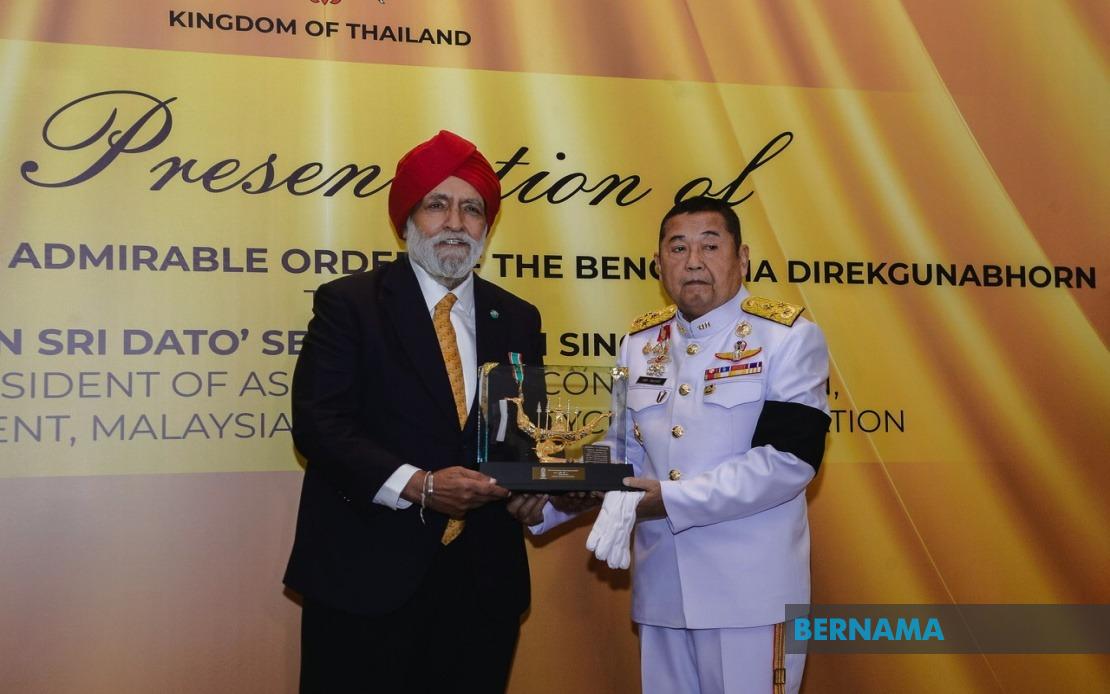
Tan Sri Darshan Singh Gill, a towering figure in Asian cycling administration, has received one of Thailand's most distinguished honours in recognition of his transformative leadership across three decades. The Most Admirable Order of the Direkgunabhorn, Fifth Class, was conferred upon the former Malaysian National Cycling Federation (MNCF) and Asian Cycling Confederation (ACC) president during a ceremony in Kuala Lumpur on August 6. The royal decoration was originally bestowed by the late King Bhumibol Adulyadej The Great, Rama IX, and presented by ACC senior vice-president General Decha Hemkasri under the patronage of the Thai monarchy, recognising Darshan's exceptional contributions to advancing cycling throughout Malaysia, Asia and the global arena.
Darshan's tenure at the helm of Malaysian cycling proved formative for the sport's institutional development. Between 1988 and 1990, he served as MNCF president during a critical period when the federation was establishing itself as a credible governing body. His influence extended further when he assumed the ACC presidency from 1996 to 2005, a nine-year period during which he elevated the confederation's profile and championed cycling development across the Asian continent. This extended period of leadership positioned him as one of the sport's elder statesmen, earning respect from administrators and athletes alike across the region.
Speaking to reporters following the award ceremony, Darshan framed the recognition as extending well beyond personal accolade, positioning it instead as validation of Malaysia's standing as a cycling nation. He characterised the honour as reflecting the country's institutional capacity and the genuine achievements of both its athletes and administrators who have competed and led at the highest international levels. This perspective reveals Darshan's consistent approach to leadership: viewing individual accomplishments as part of a larger national narrative of sporting development and institutional credibility.
The athlete landscape that Darshan referenced spans generations, illustrating the long arc of Malaysian cycling progress. During his presidency at the MNCF, cyclists including M. Kumaresan and Rosman Alwi represented the nation's competitive aspirations. The contemporary era has produced Datuk Mohd Azizulhasni Awang, now recognised as a legendary figure in track cycling who has achieved elite status on the world stage. Awang's recent gold medal victory in the men's keirin event at the Commonwealth Games in Glasgow, ending a 16-year drought for Malaysian cycling at the Games, exemplifies the calibre of athlete now competing under the Malaysian flag.
At the administrative level, Malaysia's progress has proven equally significant. Datuk Amarjit Singh Gill, the current MNCF president, made history by becoming the first Malaysian elected as vice-president of the Union Cycliste Internationale (UCI), the international governing body for cycling. Amarjit secured this prestigious position for the 2025-2029 term following his election during the 194th UCI Congress held in Kigali, Rwanda, during the previous year. This achievement represents a watershed moment for Malaysian cycling administration, signalling that the country has developed sufficient institutional expertise and credibility to influence global cycling governance.
Darshan's observation about Amarjit's UCI election carries particular weight because it addresses a fundamental question about administrative development in Asian sports. The emergence of a Malaysian holding executive responsibility at the UCI suggests that the groundwork laid by leaders like Darshan during the 1990s and 2000s had created the necessary institutional foundations. Building capable administrators who can operate effectively in international sporting bodies requires sustained investment in governance structures, technical knowledge transfer, and strategic relationship-building—elements that formed part of Darshan's legacy.
The timing of this Thai recognition is noteworthy given the contemporary achievements in Malaysian cycling. The award arrives just weeks after Awang's Commonwealth Games triumph and amid Amarjit's tenure at the UCI, suggesting that regional recognition of Malaysian cycling success is intensifying. Thailand's decision to honour Darshan reflects not merely appreciation for past services but also acknowledgement of the enduring influence of his leadership and vision on the sport's trajectory throughout Asia.
For Malaysian readers and Southeast Asian sports observers, the award underscores a broader principle about sporting development: sustained institutional leadership and careful administration can elevate a nation's performance over decades. Darshan's tenure, though completed nearly two decades ago, continues to bear fruit through the accomplishments of subsequent generations of athletes and administrators. This multigenerational impact distinguishes transformative leadership from mere tenure.
The Direkgunabhorn Order itself carries historical significance within Thai honours systems, typically conferred to individuals of exceptional merit and service. By extending this recognition to a Malaysian administrator, Thailand has implicitly acknowledged the cross-border nature of Asian sporting cooperation and the value of leaders who have worked to strengthen regional institutions. Darshan's career represents the kind of diplomatic service through sport that strengthens ties between nations.
Looking forward, Darshan's honours and the recent successes of Malaysian cycling suggest that the institutional development he championed has achieved sufficient maturity to compete at global levels. The combination of elite athletes reaching international prominence and administrators influencing world governing bodies indicates a cycling ecosystem that functions coherently from grassroots through to international competition. This integrated development distinguishes Malaysia's approach from nations that excel in isolated aspects of sport but lack systemic strength.
The recognition also carries implications for aspiring sports administrators across Southeast Asia. Darshan's award demonstrates that dedicated service to regional sporting bodies can achieve international recognition and that the development of Asian sporting institutions is viewed favourably by the global sporting community. For young administrators and athletes considering careers in sports governance, the visibility of such achievements provides both inspiration and a roadmap for how institutional contributions accumulate over time.
As Malaysian cycling continues building on the momentum established during Darshan's era and sustained through contemporary leaders like Amarjit, the Thai royal honour serves as a symbolic anchor connecting the sport's past achievements to its present aspirations. The award validates the patient, institutional approach to sporting development that prioritises governance strength alongside athletic excellence, a formula that increasingly defines successful Asian nations in global sporting competition.

