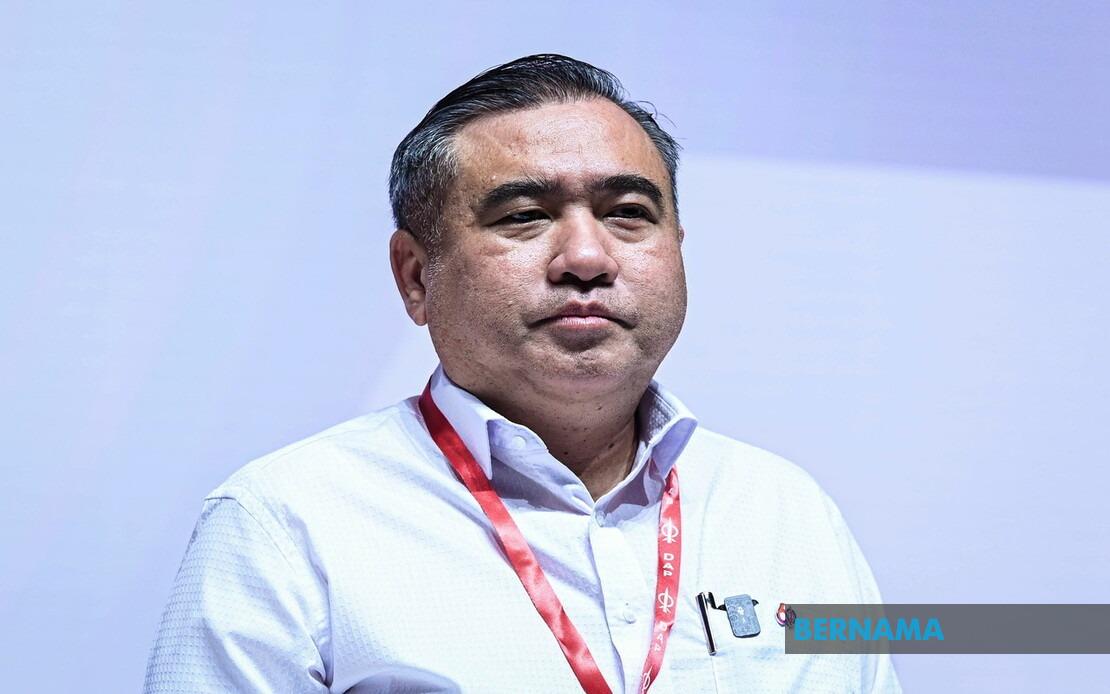
The Democratic Action Party has committed to relaying feedback from its grassroots membership directly to the federal government through Cabinet channels, following robust internal debate at its 2026 Party Conference in Putrajaya. Secretary-general Anthony Loke, speaking after the conference concluded at the Putrajaya International Convention Centre, indicated that while the party decisively voted to remain within the Unity Government, delegates had articulated clear expectations for the government and party to adopt more assertive and commanding positions on key policy matters.
The conference's open-forum format created space for delegates to voice substantive criticism both of party direction and government performance, a practice Loke characterised as fundamental to democratic accountability. Rather than suppressing dissent, DAP leadership has chosen to treat the critical perspectives raised as legitimate input that warrants serious consideration at the highest levels of government. This approach reflects an attempt to balance party unity with internal pluralism, a distinction that may prove significant as Malaysian politics continues to navigate coalition dynamics and shifting expectations among coalition partners.
The numerical outcome was compelling: 1,857 delegates voted to maintain the party's position in government, while 242 opposed continuation, yielding an 88 per cent supermajority with seven spoilt ballots from 2,106 papers distributed. Loke emphasised that despite the decisive majority, the 12 per cent minority opposition carries legitimacy and warrants respect rather than recrimination. This framing attempts to forestall future internal divisions by acknowledging that legitimate concerns exist about the sustainability and strategic value of continued participation in the current coalition arrangement, even as the party formally endorses ongoing engagement.
Loke's assertion that delegates' feedback will be channelled through Cabinet mechanisms warrants scrutiny. The statement suggests DAP intends to leverage its ministerial positions to amplify grassroots concerns regarding government decisiveness, potentially signalling that the party views its Cabinet representation as a vehicle for advancing internally-generated pressure for policy shifts. This approach carries implications for coalition cohesion, as it indicates DAP may use Cabinet forums to advocate more forcefully for positions that extend beyond traditional party-specific interests into broader governance questions.
Crucially, Loke rebuffed opposition claims that the conference agenda represented a DAP-specific platform designed to pressure the Prime Minister. Instead, he positioned the reform agenda discussed—including separation of the Attorney-General and Public Prosecutor roles, limiting prime ministerial tenure to two terms, and anti-corruption initiatives—as jointly agreed priorities within both the broader Pakatan Harapan coalition and the Unity Government framework. This reframing is significant for Malaysian readers, as it addresses concerns among non-aligned observers that coalition partners may be instrumentalising shared governance structures to advance factional interests.
The context of these reforms matters considerably for understanding the political moment. The proposed institutional changes touch directly on constitutional powers and executive prerogatives—precisely the areas where Prime Minister Anwar Ibrahim's position is strongest and most resistant to dilution. By invoking these reforms as shared coalition commitments rather than DAP demands, Loke attempts to distribute political responsibility across multiple actors, potentially reducing the appearance that any single party is mounting a challenge to executive authority. For Malaysian voters and analysts tracking coalition stability, this rhetorical move serves as both acknowledgment and mitigation of tensions within the government.
The distinction between DAP's internal mandate and the government's actual policy trajectory remains underdetermined. While delegates have expressed appetite for more decisive action, the mechanics by which grassroots preferences translate into Cabinet outcomes remain opaque. The party's willingness to advance these calls through established coalition channels suggests confidence in institutional processes, yet also leaves open the possibility that Cabinet-level resistance could frustrate implementation. This gap between aspiration and execution represents a chronic vulnerability for coalition governments, particularly where junior partners lack sufficient numerical strength to compel outcomes independently.
The broader Southeast Asian context illuminates the significance of DAP's positioning. Across the region, Chinese-led political parties operating within multiethnic democracies face particular pressures to demonstrate both internal vitality and external reliability—they must satisfy their base whilst reassuring coalition partners that they remain committed team players. DAP's recent emphasis on internal democratic processes and transparent dissent management serves partly to address this dual audience, signalling to its supporters that their voices matter while simultaneously demonstrating to coalition partners that grievances remain contained within party structures and do not threaten government stability.
For Malaysia specifically, the conference outcome carries implications for the trajectory of institutional reform. The three flagship reforms mentioned by Loke—Attorney-General/Public Prosecutor separation, prime ministerial term limits, and corruption combat—represent unfinished business from the Pakatan Harapan 2018-2020 period. That delegates have renewed emphasis on these initiatives suggests impatience with the measured pace of institutional change under the current government. This grassroots pressure, if effectively transmitted through Cabinet channels, could either accelerate reform momentum or, conversely, trigger defensiveness from less enthusiastic coalition partners.
Loke's emphasis on respecting the democratic process and minority dissent, while avoiding repercussions against dissenters, establishes a marker for how DAP intends to manage internal governance going forward. In a Malaysian political environment where factional discipline can veer toward authoritarianism, the public commitment to protecting minority voice carries both practical and symbolic importance. It suggests DAP leadership believes its legitimacy and long-term party cohesion depend upon creating genuine space for internal contestation rather than manufacturing artificial consensus.
The mechanism by which grassroots feedback reaches Cabinet decision-making remains largely institutional and behind-closed-doors. Loke's commitment to channel delegate positions through Cabinet forums implies reliance on the party's ministerial representation—currently including significant portfolios—to advocate internally within government structures. Yet Cabinet dynamics involve negotiation, competing priorities, and bureaucratic inertia. The genuine test of DAP's conference mandate will emerge in coming months as specific policy proposals and resource allocations either advance or stall.
For regional observers, DAP's approach illustrates broader challenges confronting Southeast Asian coalition governments attempting to reconcile intra-party democracy with coalition stability. The party has chosen a path that acknowledges grassroots discontent whilst reaffirming institutional commitment, a balance that demands continuous active management. Should the Cabinet channels prove ineffective in advancing key priorities, or should the government move in directions contrary to grassroots expectations, DAP faces renewed pressure to reconsider its continued participation in the Unity Government framework—stakes that neither the party nor the government can ignore.

