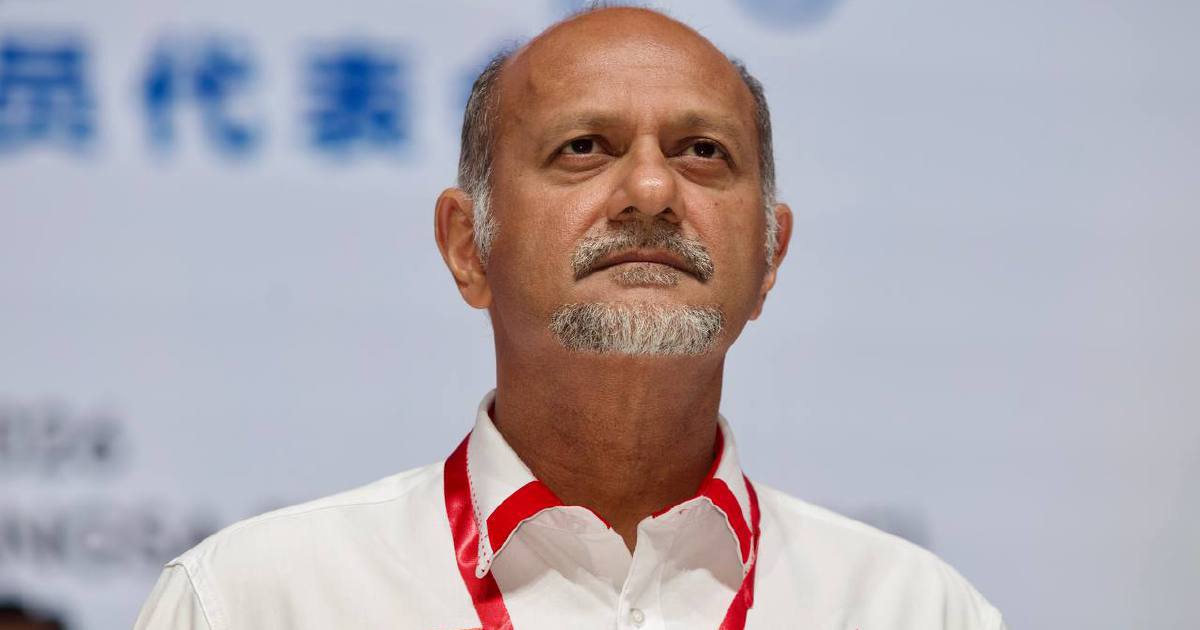
The Democratic Action Party's national leadership has publicly pressed the Prime Minister to intensify structural reforms across government and the broader economy, marking a notable intervention as the ruling coalition approaches a critical phase in its tenure. Gobind Singh Deo, who leads the DAP at a national level, delivered these remarks in Putrajaya, underscoring growing expectations among coalition partners that measurable progress on institutional overhaul must accelerate in coming months.
The timing of DAP's intervention reflects broader tensions within Malaysia's ruling coalition as it matures beyond its initial establishment phase. The unity government, formed in the aftermath of the 2022 general election, entered this administration with an ambitious reform agenda centred on combating corruption, strengthening democratic institutions, and restructuring an economy heavily reliant on patronage networks and incumbent business relationships. Three and a half years into this term represents a natural moment of reckoning: the government has survived multiple political tests, yet critics across the coalition argue that transformative change remains incomplete and uneven.
DAP's emphasis on institutional reform carries particular weight given the party's historical positioning as a champion of democratic governance and transparency. The party has long advocated for reducing the concentration of executive power, streamlining bureaucratic procedures, and establishing independent oversight mechanisms insulated from political manipulation. That these demands resurface now suggests the party perceives a window closing, and that without deliberate acceleration, institutional reform initiatives risk becoming stalled or diluted through compromise.
The economic reform component of DAP's call addresses Malaysia's structural challenges that predate this administration but have proven resistant to correction. The country's economy continues to grapple with subsidy systems that favour politically connected enterprises, procurement processes vulnerable to cronyism, and regulatory frameworks designed to protect incumbent players rather than foster genuine competition. These inherited distortions constrain growth potential and divert resources from productive investment toward rent-seeking activities, a reality the unity government has acknowledged but struggled to systematically address.
Anwar Ibrahim entered office with significant political capital and a personal history of advocating economic liberalisation and institutional accountability. His positioning as a reformist Prime Minister created expectations, particularly among coalition members like DAP, that his administration would pursue transformative change more aggressively than previous governments. Yet three and a half years of governing have exposed the practical challenges of balancing reform ambitions against political survival, competing interests within the coalition, and entrenched resistance from beneficiaries of existing systems.
For Malaysia's broader political economy, DAP's public intervention signals that patience among reform-minded coalition members is wearing thin. The party's parliamentary presence, while smaller than Barisan Nasional's traditional dominance, carries significance beyond raw numbers because DAP represents educated urban constituencies and the business community segments that see reform as essential for competitiveness. When such constituencies lose confidence that meaningful change is materialising, electoral consequences can follow, threatening coalition stability.
The regional implications merit consideration as well. Southeast Asian economies increasingly compete on institutional quality and governance credibility as a basis for attracting investment. Singapore, Vietnam, and Indonesia have all executed major anti-corruption initiatives and institutional reforms as economic development strategies. Malaysia's reform trajectory influences not only domestic capital allocation but also international perceptions of the country as an investment destination. Stalled or superficial reforms risk reinforcing the narrative that Malaysian governance remains ineffective at addressing structural corruption and inefficiency.
Within DAP itself, the call reflects internal party dynamics around strategic positioning within the coalition. The party has maintained a delicate balance between strengthening its role as an indispensable coalition partner and avoiding the perception of opportunistic leverage-taking that might alienate other coalition members or the general public. By framing demands for reform as necessary for national benefit rather than party advantage, DAP seeks to occupy high ground while applying tangible pressure on the Prime Minister's office.
The question of institutional reform encompasses several discrete but interconnected areas where measurable momentum has lagged. Judicial independence, anti-corruption enforcement, parliamentary procedure modernisation, and public sector efficiency improvements all feature prominently in reform discussions. Yet each area involves disrupting existing power structures and vested interests, creating resistance even within the government apparatus itself. Officials benefiting from current systems, whether through informal networks or formal hierarchies, naturally resist changes that might constrain their discretion or authority.
Economic reform challenges compound these institutional difficulties. Addressing subsidy frameworks requires politically sensitive decisions about cost-of-living pressures on ordinary citizens. Reforming procurement and regulatory systems affects the profitability of established business groups and their political patrons. These economic dimensions cannot be separated from institutional questions, as many economic distortions persist because institutions fail to enforce transparent, competitive processes. DAP's call implicitly recognises this interconnection and presumably assumes that without real institutional change, economic reforms remain cosmetic.
For the unity government moving forward, the challenge involves translating DAP's public pressure into concrete policy shifts without fracturing the coalition or provoking backlash from parties focused more on patronage maintenance. Anwar Ibrahim's response to such calls will significantly influence whether the government can project an image of continued momentum toward promised reforms or whether it increasingly appears mired in compromise and incremental adjustment.
Ultimately, DAP's intervention serves as a reminder that the unity government remains a coalition of distinct parties with divergent reform priorities rather than a seamless political entity. Managing these tensions while demonstrating tangible progress on institutional and economic restructuring will largely determine whether the coalition can successfully present itself to voters as a meaningful alternative to previous administrations, or whether it risks being perceived as converging toward the same governance patterns it was elected to change.

