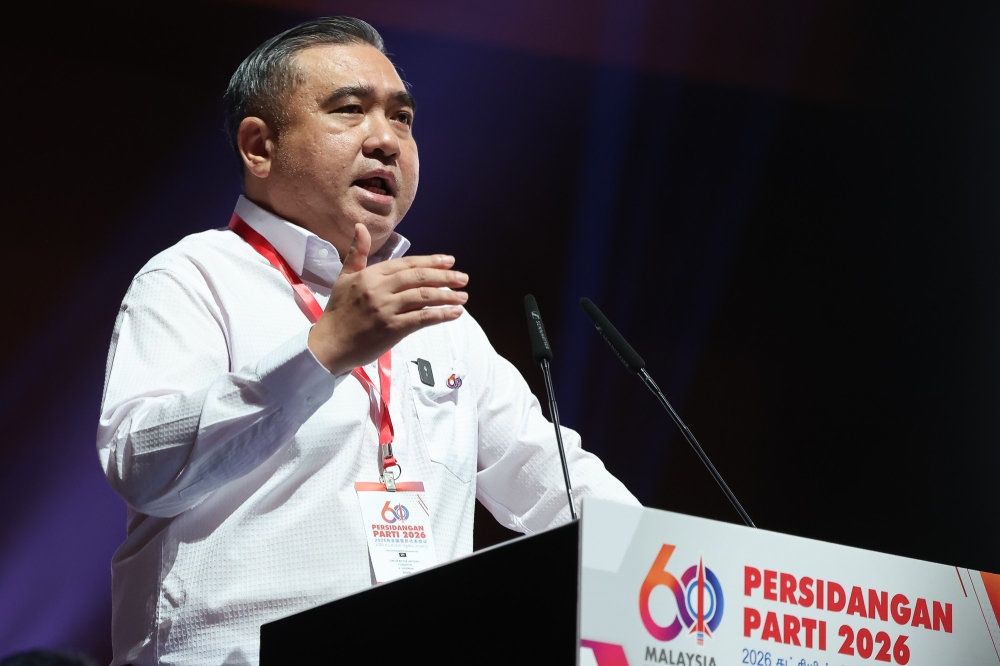
The Democratic Action Party has thrown its full backing behind Prime Minister Datuk Seri Anwar Ibrahim's plan to dismantle the Universities and University Colleges Act, signalling broad coalition consensus on what has become a flagship agenda item for liberalising Malaysia's academic landscape. The party's support, articulated in Putrajaya on August 16, represents alignment on one of the government's most symbolically significant policy pushes, yet the backing comes with strings attached, as senior party figures have indicated that repealing AUKU is merely the foundation for a far more ambitious programme of institutional reform.
The Universities and University Colleges Act, commonly referred to as AUKU, has for decades restricted campus-based political activity, banned student unions, and limited freedom of expression on university grounds. These provisions have become increasingly controversial, particularly among younger Malaysians and civil society advocates who view the restrictions as inconsistent with a genuinely democratic society. By targeting AUKU repeal, the Anwar administration is signalling its intention to dismantle one of the most visible symbols of state control over academic institutions, a move that carries substantial symbolic weight beyond its immediate legal implications.
When party officials confirmed DAP's backing for the AUKU repeal initiative, they framed it not as a standalone victory but as part of a larger democratic project. The party's stance reflects broader coalition thinking that moves toward institutional liberalisation must move in tandem with reforms to how Malaysian society functions at its core level. This conditioning of support suggests that while DAP champions the AUKU repeal, it views the measure as insufficient on its own and remains committed to pressing for additional changes that would reshape the relationship between state authority and civil freedoms.
For Malaysia's academic community, the potential repeal carries profound implications. Universities have long occupied a peculiar position within the Malaysian system, functioning as spaces where intellectual inquiry exists under considerable government oversight. Students have been unable to organise independently, faculty have faced restrictions on political commentary, and campus forums have operated under explicit limitations on certain categories of discussion. Removing AUKU would fundamentally alter this landscape, potentially enabling the emergence of genuine student movements and allowing universities to function more as independent intellectual spaces.
The timing of this legislative push deserves careful consideration. The current administration came to power partly on a reform agenda, and dismantling a statute that many view as oppressive represents a concrete delivery on that mandate. However, sustaining momentum on such reforms requires maintaining coalition unity, and DAP's decision to condition its support on broader action suggests potential friction points within the government. The party's insistence that AUKU repeal must be accompanied by other reforms indicates it will not be satisfied with incremental changes or symbolic gestures divorced from substantive expansion of freedoms.
From a regional perspective, Malaysian academic freedoms have lagged considerably behind peers in the region. Neighbouring Thailand has recently grappled with student activism despite its own restrictions, while Indonesia's universities operate with substantially greater freedom of expression. A genuine AUKU repeal would position Malaysia more competitively within Southeast Asia's higher education landscape and potentially enhance the nation's appeal to international academics and researchers seeking less restrictive professional environments. The move could also strengthen Malaysia's standing among younger professional classes who increasingly weigh institutional freedoms when considering career destinations.
The coalition dynamics at play warrant examination as well. DAP's positioning of its support as conditional rather than enthusiastic suggests the party intends to use this moment to extract commitments on other reform priorities. This negotiating stance is characteristic of coalition politics where smaller partners leverage their votes and political capital to advance their broader agendas. Whether the government can satisfy DAP's appetite for wider reforms while managing competing demands from other coalition members remains uncertain.
Implementation presents its own set of challenges. Even with AUKU formally repealed, the practical mechanics of expanding campus freedoms require supporting regulatory changes, cultural shifts within university administrations, and broader institutional adjustments. Universities will need new frameworks for managing student political activity, protecting academic freedom while maintaining institutional stability, and navigating the complex terrain between enabling expression and maintaining discipline. These questions do not resolve themselves through legislation alone.
The education sector itself faces considerable uncertainty about what post-AUKU campus life might look like. While greater freedom is broadly welcomed by student advocates and civil libertarians, questions remain about how universities will operationalise newfound freedoms and what guardrails might be necessary. Different institutions may respond differently to the removal of statutory restrictions, potentially creating a patchwork of approaches across Malaysia's higher education system.
Moving forward, the government faces a decision point about the scope and pace of reform. DAP's intervention signals that at least one significant coalition member views AUKU repeal as an entry point to broader institutional change rather than as a destination. This raises questions about what other reforms might be forthcoming and whether the administration possesses the political will and capacity to pursue them alongside AUKU repeal. The party's public stance effectively puts the government on notice that delivering on this single reform, while welcome, will not satisfy calls for more comprehensive democratic change.

