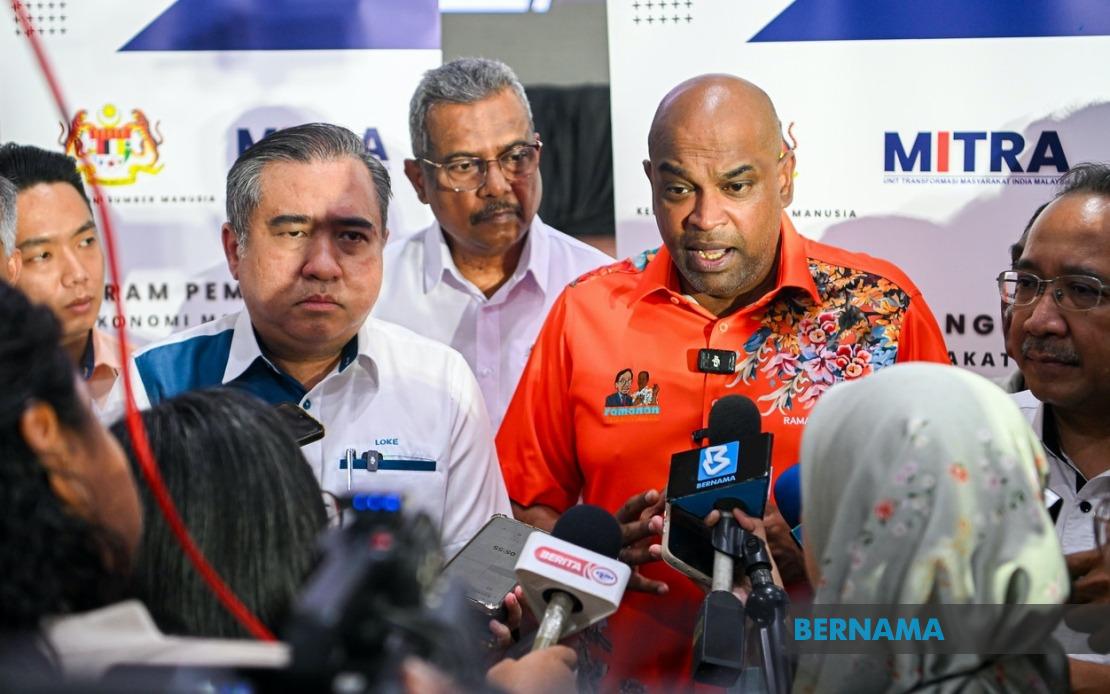
In Seremban on July 7, Transport Minister Anthony Loke confronted a persistent criticism that has dogged Malaysia's Pakatan Harapan coalition since its assumption of power: that the Democratic Action Party exercises undue influence over government decision-making. Loke, who also serves as DAP secretary-general, pushed back against the allegation with a forthright defence of the coalition's governance structure, arguing that all major policy choices emerge from collective deliberation rather than the edicts of any single party.
The minister's remarks came in response to mounting accusations that the federal administration takes its direction from DAP, a claim he characterised as both worn and deliberately misleading. By labelling it a "tired narrative," Loke highlighted how opposition figures and critics have recycled this argument repeatedly over recent years as a means to undermine public confidence in Pakatan Harapan's legitimacy. Such attacks, he suggested, reflect a failure to engage with the coalition's actual operational mechanisms and reveal instead a reliance on old partisan talking points.
Loke articulated the coalition's decision-making process with specificity, explaining that all component parties—whether DAP, UMNO, or PKR—receive genuine opportunity to contribute their perspectives before Prime Minister Datuk Seri Anwar Ibrahim finalises any major direction. This sequential model, he indicated, allows for meaningful input across ideological and organisational lines without surrendering executive authority to committee rule. The Transport Minister's tone suggested frustration with the reductionist framing of governance as though one party unilaterally controls outcomes while others remain powerless bystanders.
Central to Loke's defence is the distinction between participation in deliberation and dominance in decision-making. He acknowledged that DAP, as a governing partner, naturally voices its priorities and preferences—as do UMNO and PKR. To remain silent, he implied, would be a dereliction of duty toward the constituencies each party represents. Yet he emphasised that the final determination rests solely with Prime Minister Anwar Ibrahim, a structural safeguard that prevents any coalition member from exercising veto power or imposing its will unilaterally. This framing positions the Prime Minister as arbiter rather than mere figurehead, a crucial distinction for defending the coalition's internal balance.
The same governance model, according to Loke, operates at the state level in Negeri Sembilan, where Menteri Besar Datuk Seri Aminuddin Harun convenes coalition partners for consultation before announcements. This parallel structure underscores consistency in how Pakatan Harapan conducts business across jurisdictions, suggesting that the coalition's approach reflects deliberate design rather than ad hoc improvisation. Such layered governance, with consultation happening both at federal and state tiers, theoretically distributes influence more broadly and reduces the likelihood of any faction capturing policy wholesale.
Yet Loke's rebuttal highlights deeper anxieties within Malaysia's political ecosystem about power concentration and the role of non-Malay parties in a Muslim-majority nation. Critics have long weaponised concerns about DAP's influence partly because the party's secular-nationalist positioning and its association with urban, non-Bumiputera constituencies feed existing tensions about representation and identity. By framing DAP's influence as problematic rather than merely disagreeing on policy specifics, opponents attempt to delegitimise the party's participation in government itself rather than engage substantive disagreements.
Loke also addressed companion allegations that Malays face systemic threats under Pakatan Harapan's stewardship in Negeri Sembilan. He countered by noting that the state's Menteri Besar remains Malay and that government initiatives have continued protecting Malay and Muslim interests since the coalition assumed control in 2018. This line of argument seeks to dismantle the narrative of erosion by pointing to continuity in institutional leadership and policy outcomes. The claim that "everything is fine" in the state, however, risks oversimplifying genuine disagreements about the pace, direction, or substance of governance affecting various communities.
The persistence of DAP-control accusations despite repeated denials suggests that structural reassurance may accomplish only limited persuasion among sceptics already disposed toward viewing the coalition with suspicion. Political trust, particularly around questions of minority influence and majority protection, does not typically yield to logical rebuttal alone. For many voters in rural or conservative constituencies, the composition of the governing coalition itself—regardless of internal decision-making procedures—registers as the fundamental issue.
Loke's comments reflect broader challenges facing Pakatan Harapan as it manages coalition dynamics while maintaining legitimacy across Malaysia's diverse electorate. The coalition must demonstrate that consultation is genuine and outcomes reflect balanced compromise rather than predetermined outcomes favouring any faction. Simultaneously, it must address underlying anxieties about representation, identity, and power distribution that accusations about DAP's influence implicitly invoke. Without progress on both fronts, defensive statements, however logically sound, may struggle to alter perceptions or stem ongoing erosion of coalition unity heading toward future electoral contests.

