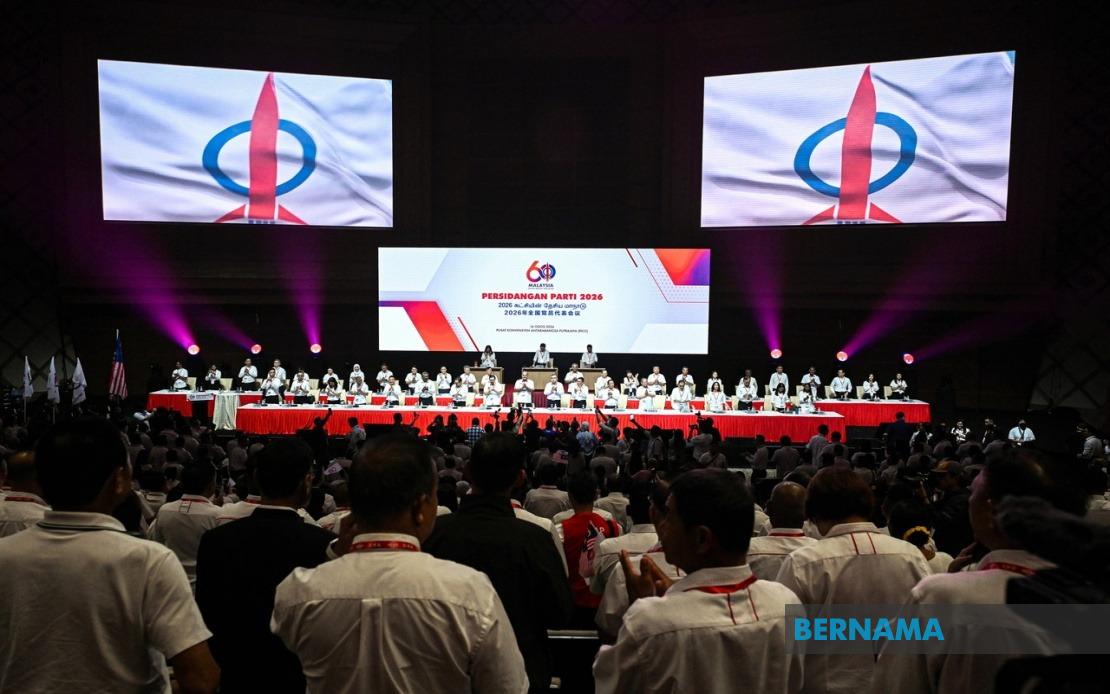
The Democratic Action Party's grassroots membership has signalled strong support for maintaining the coalition's membership in Malaysia's federal government, with fourteen state delegates advocating for the party to remain at the cabinet table until the current parliamentary term concludes. The backing emerged during deliberations at the party's 2026 National Conference held in Putrajaya, where the question of DAP's ongoing participation in the Unity Government administration took centre stage among the movement's senior representatives and rank-and-file activists.
The delegates who spoke in favour of continued involvement cited a constellation of reasons that extend beyond simple political arithmetic. At the heart of their argument lay the conviction that stepping away from government would undermine the capacity to deliver on the social and institutional promises made during the electoral campaign. Reforming the country's institutions, intensifying anti-corruption drives, alleviating cost-of-living pressures, and safeguarding the constitutional protections of Malaysia's multicultural population all depend, they contended, on remaining positioned within the administration where such measures can be drafted, debated, and implemented. The maintenance of policy consistency across government agencies also featured prominently, with delegates warning that an abrupt withdrawal could trigger political instability and create conditions for an unexpected early election—an outcome they believe would be detrimental to the nation.
Jason Ng Thien Yong, representing Perak's delegates, acknowledged the setbacks his party had experienced in preceding state-level contests but argued that such reverses should not dictate decisions about federal governance. He insisted that DAP's course should rest on pragmatism and forward momentum rather than reactive retreat. His remarks reflected a broader conviction among the advocates that remaining engaged, despite the Unity Government's acknowledged imperfections, offered the only realistic avenue for stewarding the reforms that voters had endorsed. By operating from within the administration, he suggested, the party could continue pressuring for substantive changes that would eventually restore public confidence.
Leong Ngah Ngah, a veteran DAP figure from Pahang, invoked maturity as a touchstone for the delegates' judgment. He pointed to three years of accomplishments under Prime Minister Datuk Seri Anwar Ibrahim's leadership, arguing that the government had delivered measurable results in governance and reform initiatives. The choice before the party, in his framing, was not between perfection and compromise but between continued influence and irrelevance. Walking away, he suggested, would amount to squandering the opportunity that elected office provided and would be difficult to explain to voters who had placed DAP in a position of responsibility.
Muhammad Shakir Amerr Mohideen from Selangor articulated confidence in DAP's capacity to rebuild electoral strength through demonstrated competence in office. He connected the party's prospects for recovery in constituencies where it had previously lost ground to the quality of governance it could showcase and the tangible benefits of good administration that citizens could experience directly. This argument linked DAP's longer-term electoral fortunes to its decision to remain engaged in executing policy—a calculus that privileged patience and institutional work over the immediate gratification of withdrawal or protest.
The deliberations also touched on the specific constitutional arrangements that govern Malaysia's federal structure. Sabah's delegate Yap Wui Lip advocated for DAP's continued presence while amplifying calls for implementation of provisions contained in the Malaysia Agreement 1963, which establishes the foundational compact between Sabah, Sarawak, and the peninsula. His intervention underscored how DAP's national role intersects with regional autonomy concerns, suggesting that the party can serve as an advocate for East Malaysian interests precisely by maintaining leverage within the federal cabinet.
Melaka's Jason Tze-Xi Nathan advanced a straightforward communicative argument: remaining in government presents DAP with fewer complications in its dialogue with voters than would exiting the coalition. The burden of explanation falls more heavily, he reasoned, on those who choose to abandon power than on those who choose to exercise it responsibly. This framing implicitly critiqued the notion that opposition politics represents a more authentic or principled position, instead casting government participation as consonant with accountability and direct engagement with the challenges citizens face daily.
A total of 4,264 delegates representing 1,704 branch committees were poised to determine the party's direction through secret ballot following the debate phase. The sheer scale of the membership vote lent weight to the decision, whether it moved in favour of continued participation or signalled a dramatic reversal. Secretary-General Anthony Loke's closing remarks clarified a crucial constraint on the anticipated mandate: should delegates vote to sustain DAP's coalition membership, that support would not amount to a blank cheque for executive overreach or unaccountable decision-making by the party's Central Supreme Committee or the Prime Minister. Instead, remaining in government would carry with it renewed obligations to advance the reform and renewal agenda that had animated DAP's electoral appeal and on which its claim to legitimacy ultimately rested.
The debate and vote took place within the context of DAP's sixtieth anniversary, marking six decades of the party's operation as one of Malaysia's principal political forces. Its role as a primary component of the Pakatan Harapan coalition, alongside PKR and Amanah, positions it as central to the broader stability and trajectory of the administrative bloc that has governed since 2022. The decisions made at this conference would therefore reverberate beyond DAP's internal structures and organizational calculations, shaping the composition and policy direction of the federal government itself.
The near-universal advocacy for remaining in the Unity Government reflected pragmatic acknowledgment of the costs and risks associated with coalition breakdown in Malaysia's fractious political environment. Rather than embrace purity or opposition-based criticism, the delegates articulated a vision of incremental institutional change pursued through the grinding work of government service. This orientation suggests that even parties that have experienced electoral disappointment may prefer the substance of power—however constrained and fraught—to the symbolism of principled withdrawal.

