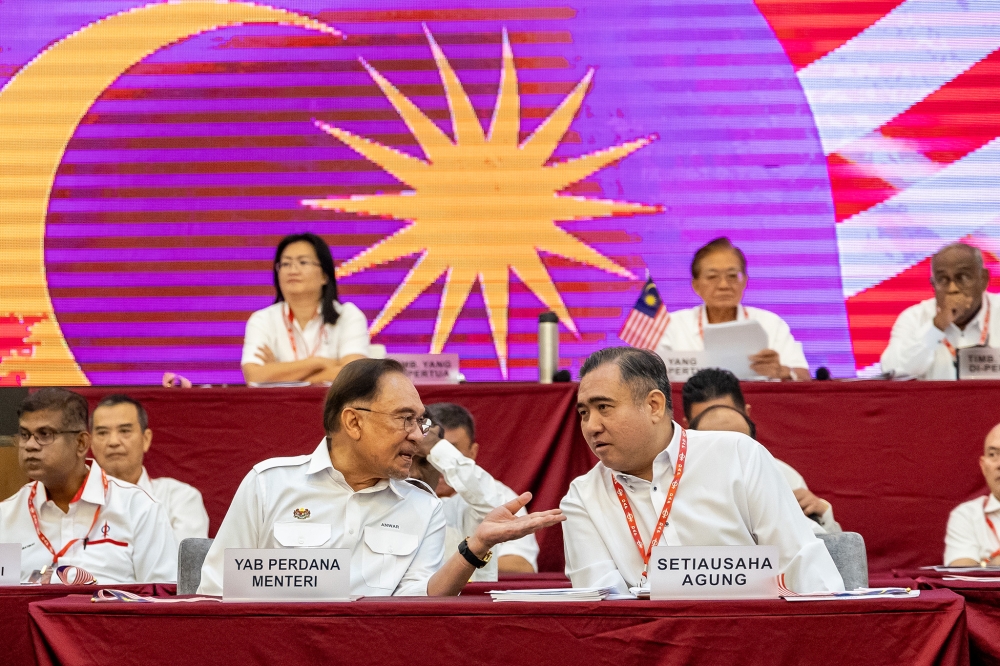
Transport Minister Anthony Loke has moved to settle months of speculation about the Democratic Action Party's future within Prime Minister Datuk Seri Anwar Ibrahim's governing coalition, publicly reaffirming DAP's commitment to Pakatan Harapan despite frustrations over the pace of policy changes. Speaking in Kuala Lumpur on July 17, Loke rejected outright any possibility that the party would withdraw from the alliance, framing the question as a misunderstanding of how coalition government functions in Malaysia's fragmented political landscape.
The Chinese-majority DAP has long positioned itself as the progressive conscience of Malaysian politics, advocating for rapid institutional reforms, secular governance frameworks, and faster implementation of anti-corruption measures. Yet the party's participation in Pakatan since 2022 has exposed the inherent tensions between ideological purity and the practical compromises required when sharing power across ideologically diverse partners. Loke's comments acknowledge this reality explicitly, suggesting that DAP members who expected swift transformative change have been confronted with the messy realities of multiparty negotiation and coalition management.
The transport minister's framing of slower reforms as "the price of governing" carries particular weight given DAP's historical positioning as an opposition watchdog. The party's move into government represented a significant pivot—from critic to participant—and that transition has generated internal discussion about whether the trade-offs justify the participation. By characterising gradual change as inherent to coalition governance rather than as evidence of compromise or dilution, Loke is attempting to reset expectations among party members and broader Chinese-Malaysian voters who formed a significant part of Pakatan's 2022 electoral base.
Pakatan itself remains a complex three-way alliance comprising Anwar's PKR, DAP, and the Islamist-oriented Amanah. These partners hold fundamentally different visions on key issues including constitutional Islamic provisions, secular law applications, and the pace of meritocratic versus bumiputera-focused policies. Within this context, DAP's participation requires constant negotiation with coalition partners whose priorities diverge sharply on cultural and religious matters. Any unilateral acceleration of DAP-favoured reforms risks destabilising the coalition equilibrium and potentially triggering withdrawal by other partners sensitive to concerns from their conservative constituencies.
The DAP's potential exit from government would carry significant political consequences across multiple dimensions. Departure would hand an enormous symbolic victory to opposition forces while potentially collapsing the Pakatan majority in parliament, depending on how remaining MPs aligned themselves. For DAP itself, such a move would risk delegitimising the party's claim to serious governance capacity and could be portrayed as political petulance by opponents. Simultaneously, the party's base expects measurable progress on governance standards, anti-corruption prosecution, and institutional accountability—areas where Anwar's government has had uneven results.
Recent Malaysian political history demonstrates that coalition partners often remain engaged even when frustrated, as the costs of exit frequently outweigh the costs of patience. The experience of Pakatan's 2018-2020 period, when the coalition fractured under pressure from Bersatu and defecting MPs, haunts current discussions about coalition stability. The lesson absorbed by most serious political actors is that once governing coalitions collapse, reconstructing them proves extraordinarily difficult and unpredictable. This institutional memory likely constrains DAP's willingness to escalate coalition disagreements toward rupture, regardless of frustrations over reform velocity.
Loke's statement also signals to Pakatan coalition partners—particularly Amanah and PKR—that DAP leadership remains committed to collective governance even when tensions emerge. The transport minister is essentially reassuring these allies that DAP will not use the threat of exit as leverage in internal negotiations, a move that would undermine the trust necessary for coalition functioning. By publicly taking the exit option off the table, Loke is paradoxically strengthening DAP's negotiating position on specific policy issues, since coalition partners know disagreement will be resolved through discussion rather than through threats of dissolution.
The broader Southeast Asian context adds another dimension to this development. DAP's commitment to Pakatan and coalition governance provides a counterweight to regional trends toward increasingly personalised executive leadership and weakened institutional checks. Malaysia's coalition system, with all its frustrations for individual parties, represents one of the few mechanisms through which ideologically diverse political forces must negotiate publicly and make binding compromises. The durability of Pakatan—imperfect as it remains—offers lessons for neighbouring countries struggling with democratic institutions.
Looking forward, the real test of DAP's commitment will emerge not from statements by senior figures like Loke but from the party's response when specific reform initiatives face coalition resistance. Issues including judicial independence, constitutional amendments, and religious establishment matters will inevitably generate intra-coalition friction. How DAP navigates these disputes—whether through patient negotiation, strategic compromise, or escalating pressure—will reveal whether Loke's reassurance reflects genuine alignment with coalition governance principles or merely tactical patience pending more opportune political conditions.
The transport minister's explicit rejection of exit rumours also serves a domestic political function within DAP itself. Periodic questioning of coalition membership likely reflects discussions among more impatient party factions frustrated by governance constraints. By firmly closing this conversation at the leadership level, Loke signals that DAP's strategic decision to participate in Pakatan remains non-negotiable despite implementation frustrations. This message matters particularly for party members in constituencies where DAP needs to mobilise voter enthusiasm for the next general election, reassuring supporters that their party remains seriously committed to governing rather than perpetually positioned as an opposition critic.

