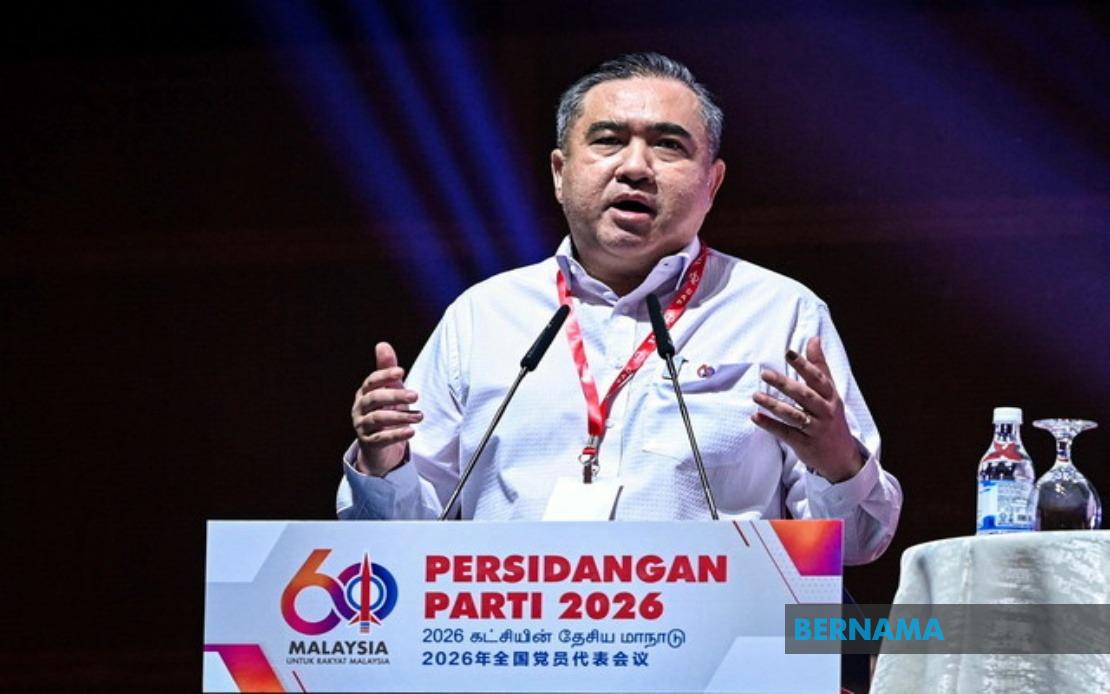
The Democratic Action Party has committed itself to remaining within Malaysia's federal government apparatus until the conclusion of the current parliamentary term, cementing the party's role in the ruling coalition for the foreseeable future. This significant decision emerged from a specially convened motion at the DAP's 2026 Party Conference held at the Putrajaya International Convention Centre, where delegates overwhelmingly endorsed the party leadership's recommendation to maintain the partnership.
The mandate provided by the party grassroots was substantial and unambiguous. Of the 2,106 ballot papers distributed to eligible delegates, 1,857 voted in favour of remaining within government, while 242 opted for withdrawal, with seven ballots deemed invalid. This translates to an 88.2 per cent approval rating among those present, representing a decisive endorsement that leaves no room for equivocation regarding the party's immediate political future. The voting process itself was conducted through secret ballot rather than the conventional voice or hand-raising methods, a procedural choice that party leadership appears to have employed to maximise transparency and procedural integrity in what constitutes a fundamental strategic decision.
The conference attracted substantial participation from across the party hierarchy and membership base. According to Conference Speaker Cha Kee Chin, preliminary data indicated that approximately 4,264 delegates representing 1,704 branches nationwide were anticipated to attend and possessed voting eligibility. This broad-based consultation mechanism underscores how the party has sought to ground such a consequential decision in genuine internal democratic process rather than relying solely on leadership pronouncement. Secretary-General Anthony Loke's special motion served as the formal mechanism through which this commitment was crystallised and presented to the membership for ratification.
The decision carries particular significance given the practical leverage DAP wields within Malaysia's governmental structure. The party currently maintains five Cabinet-level ministerial positions, with Loke himself serving as Transport Minister. The other Cabinet representatives include Steven Sim handling Entrepreneur and Cooperatives Development, Gobind Singh Deo overseeing Digital affairs, Nga Kor Ming managing Housing and Local Government, and Hannah Yeoh directing the Prime Minister's Department overseeing Federal Territories. These five ministerial portfolios represent substantial executive responsibility and decision-making authority within the federal apparatus.
Beyond the Cabinet level, DAP's influence extends through seven deputy ministerial appointments, further embedding the party within the governmental machinery. These positions span diverse portfolios: Teo Nie Ching in Communications, Datuk Chan Foong Hin in Agriculture and Food Security, Wong Kah Woh in Education, and Liew Chin Tong in Finance represent the more economically significant assignments. The remaining three deputies—M. Kulasegaran in the Prime Minister's Department overseeing Law and Institutional Reform, Lim Hui Ying in Women, Family and Community Development, and Mordi Bimol in Youth and Sports—extend DAP's reach across social policy domains. This distribution of positions indicates DAP has secured influence across multiple governance dimensions.
The timing of this reaffirmation arrives at a strategic juncture for Malaysian politics. The 15th Parliament entered session following recent electoral contests, and the coalition dynamics governing Malaysia's current political dispensation have involved ongoing negotiations regarding power-sharing and policy direction. DAP's explicit commitment to remain through the parliamentary term's conclusion provides stability and predictability for the governing coalition, potentially reducing speculation about potential realignments or government instability stemming from coalition partner withdrawal. Such public commitment can function as a stabilising force in environments where coalition partner defection represents a constant underlying risk.
For Malaysian voters and observers, the significance extends beyond mere procedural politics. DAP's participation in government determines substantive policy outcomes across multiple sectors. The party's historical positions on issues ranging from constitutional reform to economic policy implementation translate into practical governance decisions when party members occupy ministerial berths. The commitment to remain therefore implies that voters can anticipate continuity in the policy orientations these positions will pursue, though coalition dynamics and compromise may moderate any transformative agenda the party might independently prefer.
The decision also reflects DAP's calculation regarding the costs and benefits of government participation versus opposition positioning. Remaining within government enables the party to influence policy, maintain ministerial perquisites, and demonstrate to supporters that the party possesses substantive governing capacity. Conversely, opposition status would have freed DAP from compromise constraints inherent in coalition politics while potentially positioning it as a voice for constituencies critical of government performance. The overwhelming delegate vote suggests the party membership perceives greater advantage in the former approach.
Regional implications warrant consideration as well. Malaysia's political stability, particularly the coherence and predictability of its governing coalition, carries implications for Southeast Asian regional dynamics and investor confidence. Coalition stability facilitates long-term policy continuity on foreign relations, economic frameworks, and regional positioning. DAP's commitment thus extends beyond domestic Malaysian politics into the regional dimension, where neighbouring governments and international actors factor Malaysia's internal political stability into their own strategic calculations and investment decisions.
The secret ballot mechanism employed represents a notable procedural choice deserving analytical attention. This methodology indicates that party leadership prioritised demonstrable internal democratic legitimacy over the speed and simplicity associated with voice votes or hand-raising. In contemporary Malaysian political contexts, where intra-party democracy and grassroots input increasingly matter to party members and external observers alike, such procedural choices carry symbolic significance beyond their mechanical function. They signal an orientation toward internal pluralism and member agency, even when leadership preferences are clearly signalled in advance.
Moving forward, this decision establishes a political framework within which DAP will operate through the remainder of the parliamentary term. However, political decisions remain contingent upon implementation and evolving circumstances. Coalition dynamics could shift, policy disagreements might intensify, or external political developments could alter calculations. Nevertheless, the delegate vote represents a clear mandate regarding the party's stated intentions during the period immediately ahead, providing a baseline expectation for DAP's political behaviour and positioning within Malaysia's governing structure.

