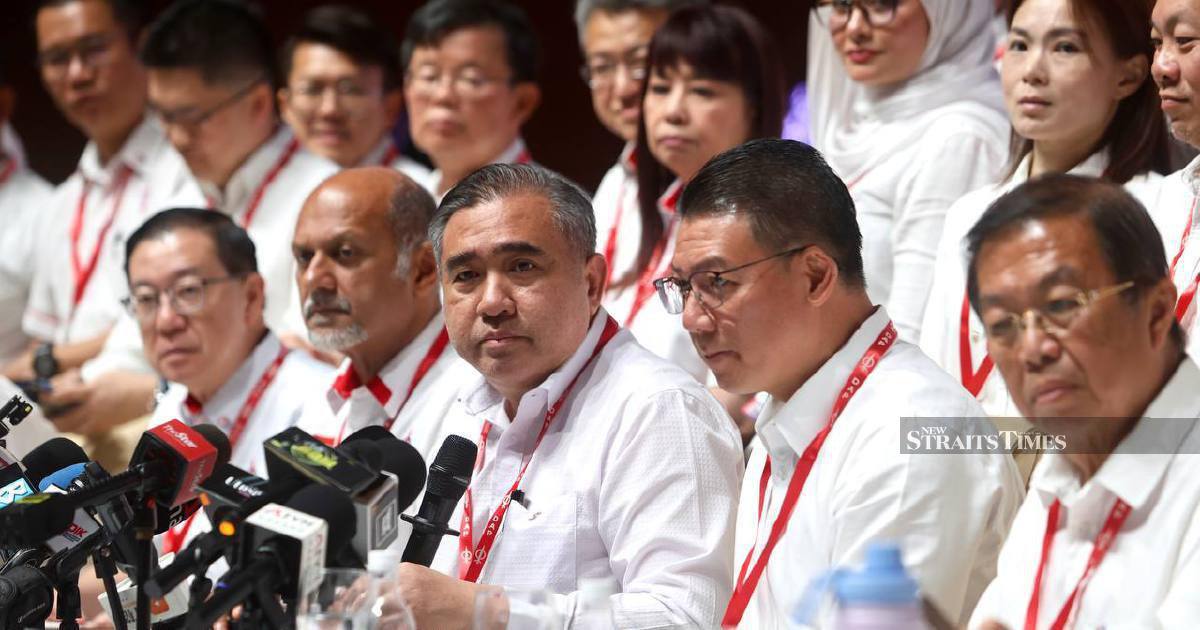
The Democratic Action Party has signalled its intention to sustain its governing coalition with Umno, even as internal party discord emerges over the handling of corruption charges faced by Barisan Nasional chairman Datuk Seri Ahmad Zahid Hamidi. The decision to discharge the former deputy prime minister without acquittal—a legal outcome that stops short of clearing him of wrongdoing—has sparked considerable discomfort among DAP members, who view the development as problematic for the coalition's credibility on governance and anti-corruption messaging.
Transport Minister Anthony Loke, speaking from Putrajaya, outlined the party's pragmatic stance on the matter. Despite acknowledging the legitimate concerns voiced by DAP members regarding the Zahid case, Loke emphasised that the party recognises the broader necessity of maintaining the current government formation. The coalition between DAP and Umno, formally cemented in the Madani government, remains foundational to Malaysia's political stability following the 2022 general election, and DAP's leadership has determined that dissolving this partnership would prove counterproductive to national governance objectives.
The discharge not amounting to an acquittal verdict has proven particularly contentious because it represents an unusual legal middle ground. Under this ruling, Zahid is freed from further prosecution, yet the court has not formally declared his innocence—a distinction that resonates heavily with DAP's core voter base, which has historically prioritised institutional reform and judicial accountability. For many party members, the outcome sits uneasily with promises of transformed governance that helped propel the Pakatan Harapan-led coalition to power in 2018 and contributed to the formation of the Madani government.
Umno's position within Malaysian politics presents DAP with a complex strategic dilemma. The party cannot simply withdraw from partnership without risking governmental collapse and triggering fresh elections—a scenario that carries substantial uncertainty for all stakeholders. Simultaneously, DAP must manage domestic party pressure from members who view the accommodation of Zahid and Umno as inconsistent with anti-corruption principles. Loke's statement represents an attempt to thread this needle by confirming continued cooperation while acknowledging legitimate grievances within the party structure.
The broader context of this coalition arrangement reflects the fractured state of Malaysian politics since the 2022 elections. No single bloc commands a parliamentary majority, making inter-party cooperation essential for government formation and survival. DAP's participation in the Madani government alongside Umno, despite their historical opposition, underscores the pragmatic realities of contemporary Malaysian politics. The partnership represents both parties' recognition that political survival now depends on cross-ideological alliances rather than zero-sum adversarial positioning.
Internally, DAP faces mounting pressure from its base to articulate how continued collaboration with Umno aligns with party values. DAP has built its political brand partly on anti-corruption messaging and institutional reform, making the Zahid DNAA particularly uncomfortable for communications purposes. Party leaders must devise messaging strategies that satisfy both coalition partners and restive party members who question whether principles have been compromised for political expediency.
The timing of Loke's statement carries significance as the government enters the latter phases of its term ahead of elections due by 2025. Maintaining coalition stability becomes increasingly critical, as early governmental breakdown could trigger snap elections before either major coalition can consolidate advantages. From DAP's perspective, sustaining the arrangement provides opportunity to demonstrate effective governance credentials and highlight policy achievements, potentially offsetting concerns about moral consistency raised by the Zahid case.
Umno's perspective on maintaining coalition stability appears aligned with DAP's pragmatic approach. Despite occasional tensions and rhetorical posturing, both parties have demonstrated capacity to cooperate effectively on legislative and executive matters. The Zahid DNAA, while politically awkward for coalition partners, represents a concluded matter from the courts—though not definitively—allowing both sides to gesture toward moving forward rather than reopening disputes.
Regionally, Malaysia's coalition dynamics attract attention from other Southeast Asian democracies navigating fragmented parliaments and complex multi-party arrangements. DAP's decision to prioritise governmental stability over ideological purity offers lessons about the compromises necessary in modern democratic governance when no single force commands overwhelming parliamentary strength. This balancing act between principle and pragmatism will likely define Malaysian politics through the upcoming election cycle.
Looking ahead, the relationship between DAP and Umno will test whether parties can develop mature frameworks for collaboration despite significant ideological differences and contested historical relationships. The success or failure of this arrangement carries implications not merely for coalition partners but for Malaysian democracy's capacity to function effectively under conditions of permanent hung parliament scenarios.

