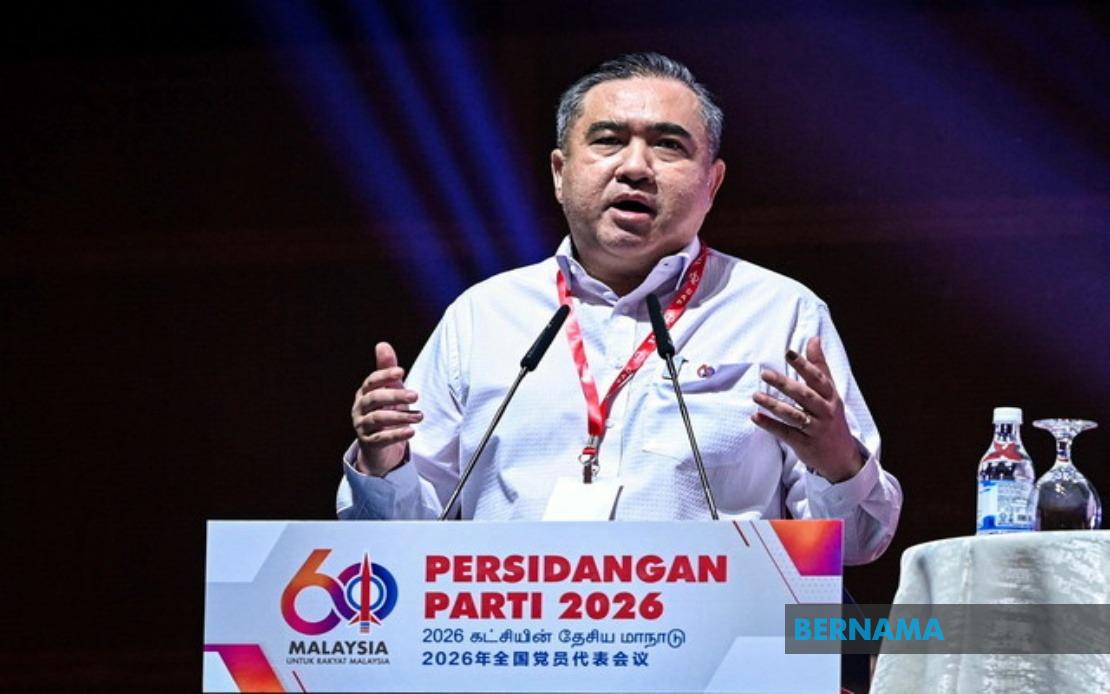
The Democratic Action Party has given its full backing to the government's announcement that it will repeal the Universities and University Colleges Act (AUKU) 1971, a decades-long policy objective for the party. Anthony Loke, the DAP secretary-general, declared the party's support during his policy address at the DAP 2026 National Conference held at the Putrajaya International Convention Centre on Friday, hailing the move as evidence that the government is committed to substantive reform rather than mere political posturing.
Prime Minister Datuk Seri Anwar Ibrahim unveiled the repeal plan the previous day at the PKR 2026 National Congress, framing the decision as a response to sustained pressure from student leaders and civil society advocates. The government intends to table the proposal before Cabinet the following Wednesday, setting in motion the formal legislative process. For DAP, the announcement represents vindication of a campaign the party has championed for generations, marking a watershed moment in the evolution of higher education governance in Malaysia.
Loke emphasised that DAP's participation in government extends beyond holding ministerial positions and wielding administrative power. Instead, he characterised the party's role as a catalyst for meaningful institutional change and national progress. The AUKU repeal exemplifies this philosophy, he suggested, demonstrating the party's ability to translate long-held principles into concrete policy outcomes even within a coalition framework.
The Prime Minister's rationale for the repeal centred on liberalising the operating environment for student activism and democratic participation on university campuses. By dismantling the AUKU framework, the government aims to expand the scope for students to engage in political organising and civic activity, removing restrictions that have historically constrained campus-based political movements. This aligns with broader international trends towards greater academic freedom and student autonomy in tertiary institutions.
The AUKU has undergone seven amendments since its establishment in 1971, reflecting incremental shifts in higher education policy and government philosophy. A pivotal 2012 amendment permitted students to participate in political party activities provided they took place off campus, a compromise that acknowledged student demands while maintaining some institutional boundaries. These amendments indicate that even without full repeal, the legislation has become progressively more permissive, suggesting institutional readiness for complete overhaul.
Two recent amendments in 2024 have substantially weakened the Act's original disciplinary framework. The revision to Section 16B transferred disciplinary authority away from university vice-chancellors and vested it instead in Student Disciplinary Committees, reducing the power of university administrators to unilaterally punish student conduct. Simultaneously, changes to Section 15A liberalised the fundraising capabilities of Student Representative Councils and student organisations, permitting them to solicit and receive contributions without the stringent prior approval mechanisms that previously applied.
These cumulative modifications demonstrate that even incremental amendments have shifted the balance of power on campuses, transferring agency from institutional authorities to student bodies and establishing more democratic decision-making structures. The trajectory suggests that complete legislative repeal, rather than further patchwork amendments, reflects an institutional consensus that the 1971 framework is fundamentally incompatible with contemporary expectations regarding student rights and campus governance.
Loke seized the occasion to push the government beyond the AUKU repeal, urging Prime Minister Anwar Ibrahim to channel the reformist energy into additional higher education initiatives. He specifically highlighted the need to guarantee equal access to tertiary education regardless of ethnic background, a persistent concern within Malaysia's plural society. This broadens the reform debate beyond student activism and disciplinary procedures to encompass fundamental questions about equity, meritocracy, and national cohesion within the education system.
The timing of the AUKU repeal announcement carries significance for coalition dynamics. DAP's public endorsement and its framing as a long-delayed vindication reinforces the party's narrative that participation in government yields substantive policy outcomes. For PKR and Anwar Ibrahim, the announcement demonstrates responsiveness to student constituencies and civil society pressure, bolstering the government's reform credentials ahead of potential electoral contests.
Malaysian higher education observers note that the AUKU repeal raises downstream implementation questions about institutional governance, disciplinary procedures, and the boundaries of acceptable campus political activity. Universities will require new frameworks to navigate student organising, and the government may need to establish transitional provisions to ensure institutional stability during the shift away from the existing regime.
Sector stakeholders anticipate that complete AUKU repeal could catalyse broader campus activism similar to patterns observed elsewhere in Southeast Asia, where student movements have historically played catalytic roles in political and social change. Malaysian universities, long characterised by relative political quiescence due to AUKU restrictions, may experience a surge in organised student political engagement following the Act's removal.
For the wider higher education landscape, repeal signals the government's acceptance that regulatory frameworks designed during an earlier era have outlived their utility and legitimacy. The decision reflects evolving international norms regarding academic freedom and student agency, positioning Malaysia's tertiary sector more closely with regional and global best practices regarding campus autonomy and democratic participation.

