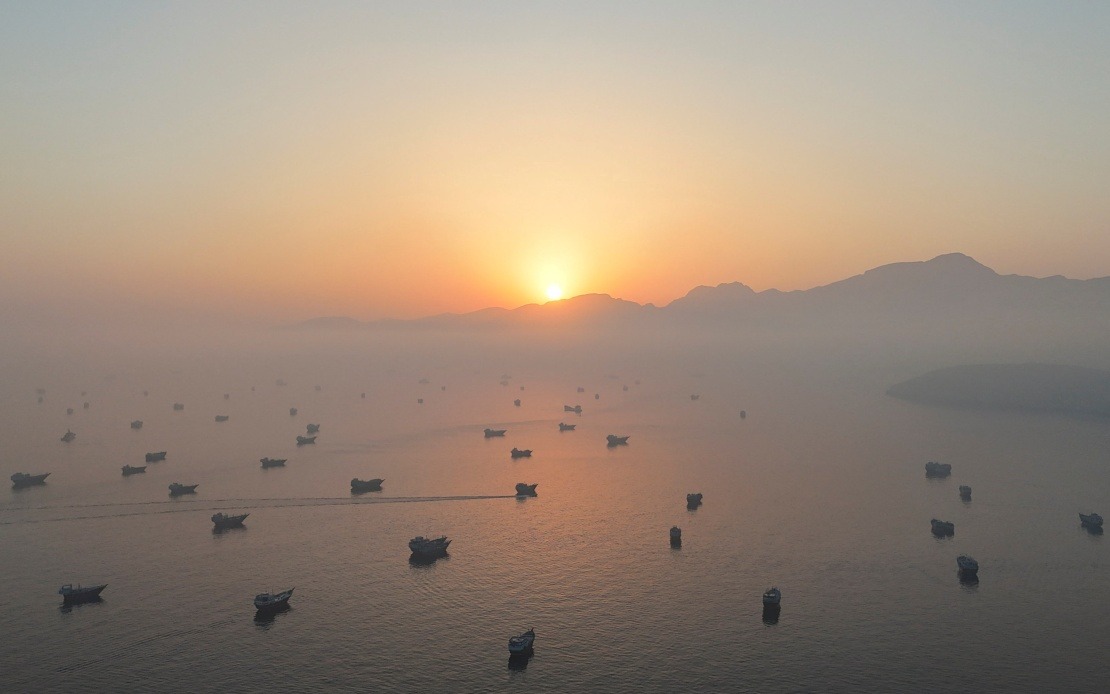
The Comprehensive and Progressive Agreement for Trans-Pacific Partnership, a bloc encompassing twelve major trading nations, has formally endorsed the recent diplomatic accord between the United States and Iran following a virtual ministerial conference held on Friday. The endorsement comes at a moment of acute anxiety about the security and continuity of global trade flows, particularly in energy commodities that transit through one of the world's most strategically vital waterways.
Among the countries represented at the virtual meeting were Australia, Brunei, Canada, Chile, Japan, Malaysia, Mexico, New Zealand, Peru, Singapore, the United Kingdom and Vietnam. Their collective statement reflects a unified position that geopolitical tensions affecting major shipping routes pose direct economic risks to member economies and the broader international trading system. The statement explicitly underscores the necessity of maintaining open and secure maritime passages, guaranteeing freedom of navigation and overflight, and ensuring safe, unobstructed transit through the Strait of Hormuz—a channel through which roughly one-third of global seaborne traded oil passes daily.
The CPTPP members have identified energy security as central to their economic interests, recognising that disruptions to fuel, crude oil, diesel, natural gas and petrochemical product flows carry cascading consequences. The joint ministerial statement acknowledges that fertilisers and other critical goods have equally suffered from previous supply chain disturbances linked to regional instability. For Malaysia and other Southeast Asian economies heavily reliant on energy imports and dependent upon stable commodity pricing, such reassurance from major trading partners carries real significance. Any prolonged closure or militarisation of the Strait would immediately elevate shipping costs and create uncertainty for regional manufacturers and consumers.
The ministers reaffirmed their commitment to supporting free and open markets for energy and related products, framing such openness as foundational to the security and economic wellbeing of their populations. This language represents more than diplomatic courtesy; it signals a united front against potential trade restrictions or supply-chain weaponisation that could emerge from ongoing geopolitical friction. The CPTPP bloc explicitly pledged to refrain from imposing unjustified trade-restrictive measures and called upon other trading nations to adopt the same restraint. This position stands in contrast to the protectionist impulses seen in some quarters of global trade in recent years.
Notably, the statement references the United Nations Convention on the Law of the Sea as the legal framework governing maritime conduct. This invocation of UNCLOS underscores the bloc's preference for rules-based international commerce over unilateral action or blockades. For Southeast Asian nations like Malaysia, Singapore and Vietnam, which depend upon the principle of freedom of navigation, this affirmation carries particular weight given their own positions in strategically sensitive waters and their reliance upon merchant shipping lanes.
The CPTPP has also drawn attention to emerging regional initiatives aimed at fortifying energy supply chains against future shocks. The Partnership On Wide Energy and Resources Resilience Asia, known as POWERR Asia, represents an attempt to build redundancy and diversification into global energy infrastructure by fostering closer coordination between energy-producing and energy-consuming nations. For nations without significant hydrocarbon reserves—a category that includes most CPTPP members outside Canada, Australia and Mexico—such cooperative frameworks represent a pragmatic hedge against supply disruptions and price volatility.
Particular emphasis has been placed on the energy vulnerabilities of small-island developing countries, particularly those in the Pacific region. These nations face singular exposure to supply chain disruptions because of their geographic isolation and limited alternative sourcing options. The CPTPP's acknowledgement of these acute vulnerabilities suggests a commitment to using trade mechanisms to support resilience-building among less-positioned member states.
The timing of this statement reflects broader anxieties about global supply chain stability that have persisted since the pandemic and have been exacerbated by recent geopolitical confrontations. The CPTPP's framing of energy security as inseparable from broader trade stability positions the bloc to serve as a stabilising voice and a counterweight to forces that might otherwise fragment international commerce. For Malaysian exporters and manufacturers dependent upon fluid energy supplies and predictable logistics costs, the bloc's unified stance provides some reassurance that major trading partners view supply-chain continuity as a shared interest.
The emphasis on rules-based trade and the rejection of trade-restrictive measures also signal the bloc's philosophy regarding how disputes ought to be managed. Rather than relying upon sanctions, blockades or unilateral actions, the CPTPP framework privileges negotiation, transparency and adherence to established international law. This approach contrasts sharply with some recent patterns in global trade relations and suggests that CPTPP members view their membership partly as a commitment to maintaining a more predictable and orderly trading environment.
Moving forward, the CPTPP's endorsement of efforts to reopen and stabilise the Strait of Hormuz carries practical implications for regional economies. Shipping insurers, energy traders and manufacturing supply-chain managers will likely respond positively to signals that major economies are committed to maintaining freedom of navigation. However, the real test will be whether diplomatic efforts succeed in preventing future incidents that might again threaten maritime security in the region.
For Southeast Asian nations, the CPTPP's unified stance offers both reassurance and a framework for their own positioning in global energy and trade discussions. As members of a bloc committed to rules-based trade and open markets, these nations can invoke that consensus when navigating larger geopolitical pressures that might otherwise force them into polarised positions. The statement thus serves not merely as a response to current circumstances but as an articulation of the bloc's foundational values regarding international commerce and maritime order.

