A three-judge appellate bench in Kuala Lumpur has dealt a significant setback to fugitive financier Ricky Wong by upholding a sweeping asset freeze that locks up RM169.2 million in his suspected holdings. The dismissal of Wong's appeal against the injunction order, handed down on Monday, marks another legal hurdle for the businessman, who has evaded capture despite facing serious allegations of securities market manipulation.
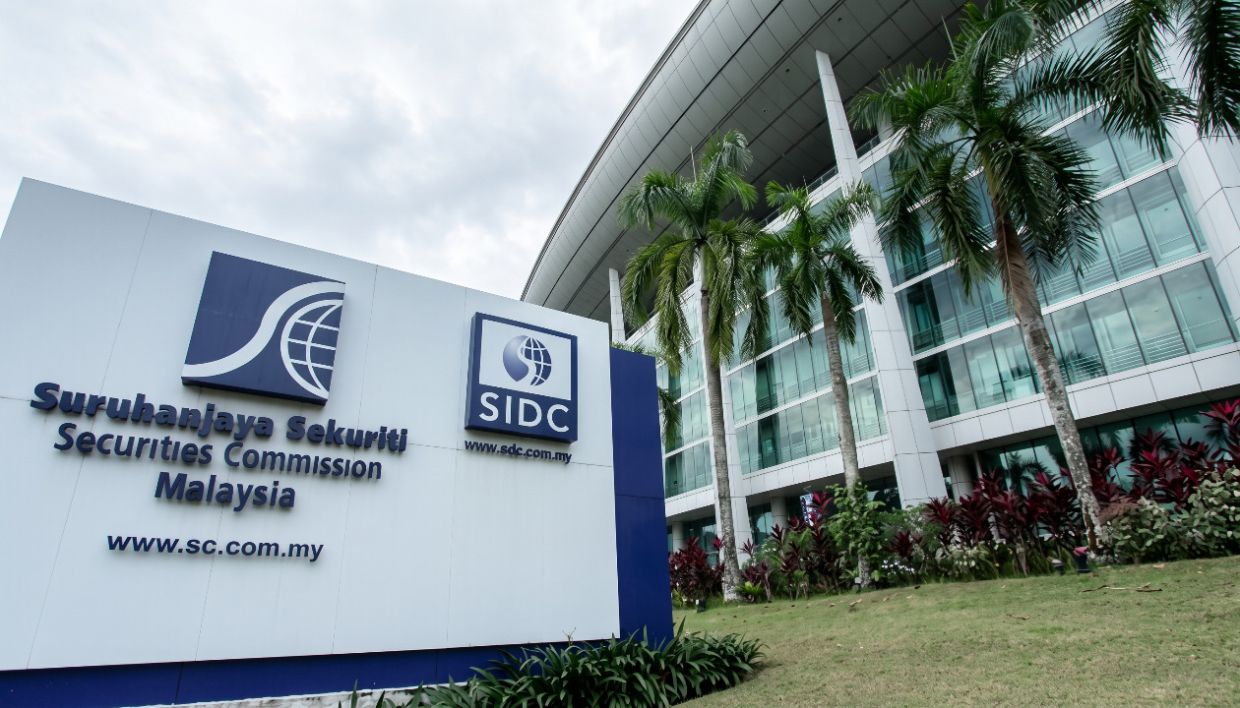
The Securities Commission Malaysia secured the appellate court's backing to maintain the freeze on assets and properties belonging to Wong Shee Kai, his associate Teh Sew Wan, and their corporate vehicle Wong SK Holdings Sdn Bhd. The Court of Appeal's decision, delivered by Justices Datuk Ravinthran N. Paramaguru, Datuk Dr Choo Kah Sing and Datuk Leonard David Shim, also rejected the appellants' attempt to overturn an earlier preliminary injunction that the High Court had issued on May 8, 2020, before a full hearing took place.
The legal foundation for the freeze stems from civil proceedings initiated by the SC in 2020, alleging serious breaches of securities regulations. The High Court strengthened these asset restrictions on April 28, 2022, when it granted a full inter partes injunction—meaning both sides had been heard—cementing the freeze at RM169.2 million pending the outcome of the underlying civil suit. This type of injunction carries considerable weight because it reflects the court's assessment of the case's merits after hearing arguments from both the regulator and the defendants.
Beyond simply preserving assets, the injunction order prevents any third party from knowingly participating in transactions involving the frozen holdings. This sweeping provision creates a protective barrier around the disputed funds, effectively making them untouchable in the financial system without court permission. Such measures are typically deployed in cases where the regulator demonstrates a credible risk that assets might be dissipated or moved beyond judicial reach—concerns that appear particularly acute in Wong's case, given his fugitive status.
The appellate court's decision carries implications extending beyond Wong himself. For Malaysian financial regulators, it underscores judicial support for aggressive asset-preservation tactics in complex fraud investigations. The ruling suggests courts remain willing to lock substantial sums while civil proceedings inch forward, a critical tool for protecting public markets from individuals accused of systematic wrongdoing. For investors and market participants, the case illustrates that regulatory action can effectively immobilize suspect assets even before criminal convictions materialize.
The underlying dispute involves alleged contraventions of Section 179 of the Capital Markets and Services Act 2007, which addresses deceptive conduct and market manipulation. The precise nature of Wong's alleged schemes remains partially obscured by ongoing litigation, but the scale of the frozen assets—exceeding RM169 million—suggests authorities believe the conduct was substantial and sophisticated. The civil trial continues at Kuala Lumpur High Court, with proceedings scheduled to resume on September 1, 2026, indicating a protracted legal battle ahead.
Wong's legal team, led by prominent counsel Tan Sri Muhammad Shafee Abdullah, mounted vigorous arguments to lift the freeze, while Teh Sew Wan was represented by Tan Sri Cecil W. M. Abraham. The SC fielded multiple counsel, including appointed external lawyers from the Lim Chee Wee Partnership, signalling the gravity the regulator attaches to the case. Despite these substantial legal resources arrayed for the defence, the appellate bench found the SC's case sufficiently compelling to maintain the restrictions.
Complicating matters considerably, Wong has disappeared and remains wanted not only in civil proceedings but also on criminal charges under the Anti-Money Laundering, Anti-Terrorism Financing and Proceeds of Unlawful Activities Act 2001, as well as further CMSA violations. His fugitive status transforms the case from a straightforward financial dispute into a matter touching on capital flight and transnational regulatory evasion. The SC's recent public appeal for information about Wong's whereabouts suggests authorities have struggled to locate him, raising questions about whether he has fled Malaysia entirely.
The appellate dismissal required the defendants to pay RM200,000 in costs to the SC, an additional financial burden alongside the frozen assets. While modest relative to the sums at stake, the cost order reinforces the court's view that the appeal lacked merit and may discourage further procedural challenges to the injunction. For regulatory agencies across Southeast Asia watching the case, Malaysia's Courts of Appeal have signalled robustness in protecting asset-freeze orders against appellate attack.
From a comparative regional perspective, the decision reflects broader trends among Asian financial regulators toward more aggressive civil enforcement mechanisms, particularly in cases involving suspected market abuse and cross-border financial crime. As Malaysia positions itself as a regional financial hub, demonstrating effective regulatory muscle—especially through asset preservation during investigation phases—sends important signals to investors and international regulators about institutional commitment to market integrity.
The case also highlights the practical challenges regulators face when dealing with sophisticated actors who exploit legal processes to delay accountability. The trial's scheduled resumption in September 2026 means the underlying merits remain unresolved more than six years after the initial complaint. In this extended timeline, the asset freeze becomes the primary mechanism constraining Wong's ability to use the disputed funds, making the injunction's preservation strategically crucial to the SC's enforcement agenda.
Looking forward, the appellate judgment removes a significant legal barrier that might have unravelled the SC's case. With no further appeal options readily available to Wong—absent extraordinary circumstances—the frozen assets appear secure for the duration of the civil proceedings. This stability may help focus attention on the substantive trial, where the SC will need to prove its securities law violations comprehensively. For Wong, the decision represents a major setback in his legal strategy, leaving asset recovery and potential criminal prosecution as looming concerns.

