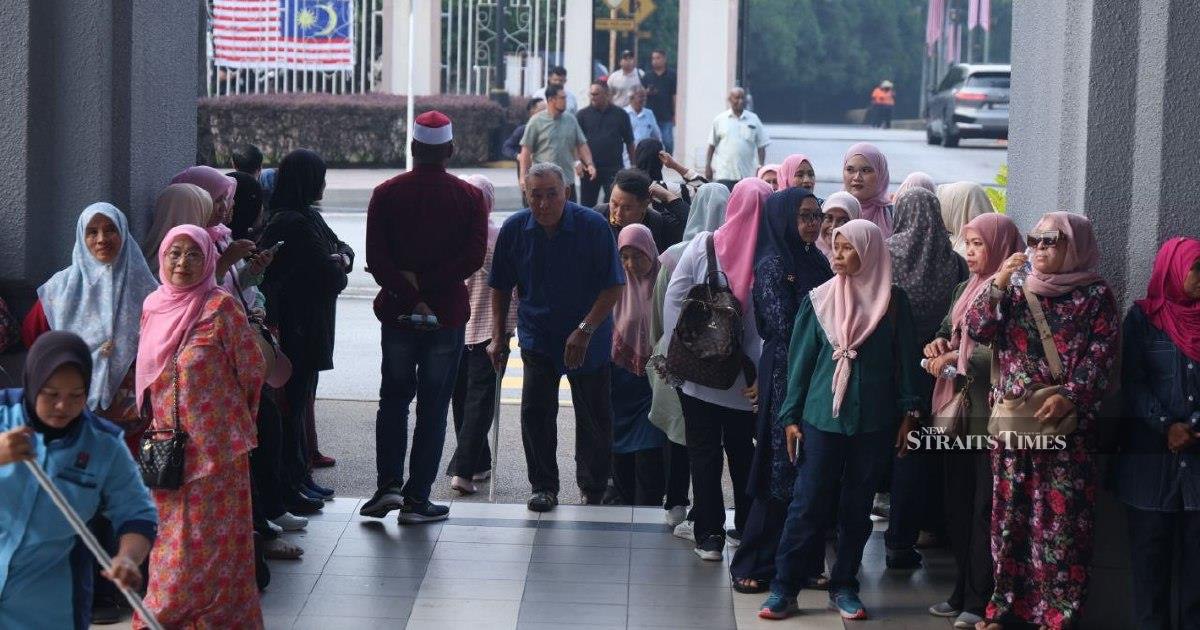
The Kuala Lumpur Court Complex descended into heightened activity as more than three dozen media representatives positioned themselves throughout the building's public spaces, preparing to capture what promised to be one of Malaysia's most significant political court proceedings. The gathering reflected intense public interest in the case involving Datuk Seri Ismail Sabri Yaakob, the former head of government whose unexpected court appearance signalled a fresh chapter in the nation's political accountability narrative.
The assembly of journalists—camped in strategic positions within the lobby and corridors—testified to the media's recognition of the moment's importance. News organisations had deployed their most experienced political correspondents and video crews, suggesting they anticipated substantive developments that would reverberate through Malaysian public discourse. The sheer number of personnel present underscored how closely the nation's news outlets were monitoring the situation, with competing outlets jostling for advantageous positions to ensure comprehensive coverage.
Ismail Sabri's appearance represented a pivotal moment in Malaysian politics, coming at a time when public trust in governance and institutional accountability remains a pressing national concern. His tenure as Prime Minister, which concluded relatively recently, had been marked by considerable political manoeuvrings and significant policy decisions. The circumstances leading to today's court date had not been formally elaborated in widespread public communications, creating a vacuum that intensified media speculation and citizen curiosity about the precise nature of charges and their underlying allegations.
The court complex itself, Malaysia's primary venue for high-profile legal proceedings, had been transformed into a focal point of national attention. Security protocols typically governing such occasions were evidently being implemented, with the institution's administrative staff likely coordinating with law enforcement and judicial officers to manage the anticipated crowds and ensure orderly proceedings. The venue's significance extended beyond its architectural presence—it represented the machinery through which Malaysia's constitutional and legal systems address allegations against individuals, regardless of their former public standing.
For Malaysian readers particularly attuned to political developments, the sight of assembled media personnel conveyed a straightforward message: this was not an ordinary court appearance. The concentration of journalistic resources suggested that news organisations anticipated either significant public statements, detailed legal arguments, or moments that would require immediate dissemination to waiting audiences. Such turnout patterns had become somewhat familiar in recent years as Malaysia navigated complex cases involving political figures, yet each instance retained its capacity to engage public attention and shape political conversations.
The charging of a former prime minister carried constitutional and political resonances that extended well beyond the courtroom itself. It implicated questions about executive accountability, the independence of judicial institutions, and the nation's broader commitment to the rule of law. International observers, along with regional governments monitoring Malaysian political stability, would certainly be watching developments unfold, given the country's significance as Southeast Asia's third-largest economy and a nation with considerable geopolitical influence.
Preliminary reports about why Ismail Sabri faced charges remained limited, with official announcements typically coming through formal judicial channels rather than pre-trial media commentary. This procedural reality meant that journalists stationed at the court complex bore responsibility for capturing authentic courtroom developments and ensuring accurate transmission of information as it became public knowledge. The absence of comprehensive pre-released details actually enhanced the significance of the in-person coverage that only physical presence at the venue could facilitate.
For the broader Malaysian political ecosystem, Ismail Sabri's court appearance represented a moment of potential institutional reckoning. Whether the charges stemmed from alleged financial impropriety, abuse of official position, or other matters affecting public interest remained to be clarified through the legal process itself. The court's handling of the case, the eventual charges' specifics, and the trajectory of proceedings would collectively influence public perceptions regarding governmental accountability mechanisms and whether Malaysia's institutions possessed sufficient independence and capacity to address alleged wrongdoing at the highest levels.
The assembly of media personnel also illustrated how digital-age journalism operates in Malaysia, where television broadcasts, print journalism, and online platforms compete simultaneously to serve audiences demanding real-time information about significant developments. News organisations had invested in sufficient human and technical resources to ensure that whatever transpired within the court complex would be rapidly documented, analysed, and distributed across multiple channels, reaching Malaysians across various demographics and geographic locations.
As Ismail Sabri prepared for his court appearance, the institutional mechanisms designed to ensure public access to justice and media freedom to report on matters of public interest appeared to be functioning. The presence of dozens of journalists represented not merely competitive newsgathering but also the exercise of constitutional protections enabling press scrutiny of governmental processes. Whether viewed as essential democratic accountability or as sometimes excessive political theatre, the media's presence at the court complex reflected Malaysia's fundamental commitment to transparent legal proceedings and public knowledge regarding matters affecting the nation's political leadership.

