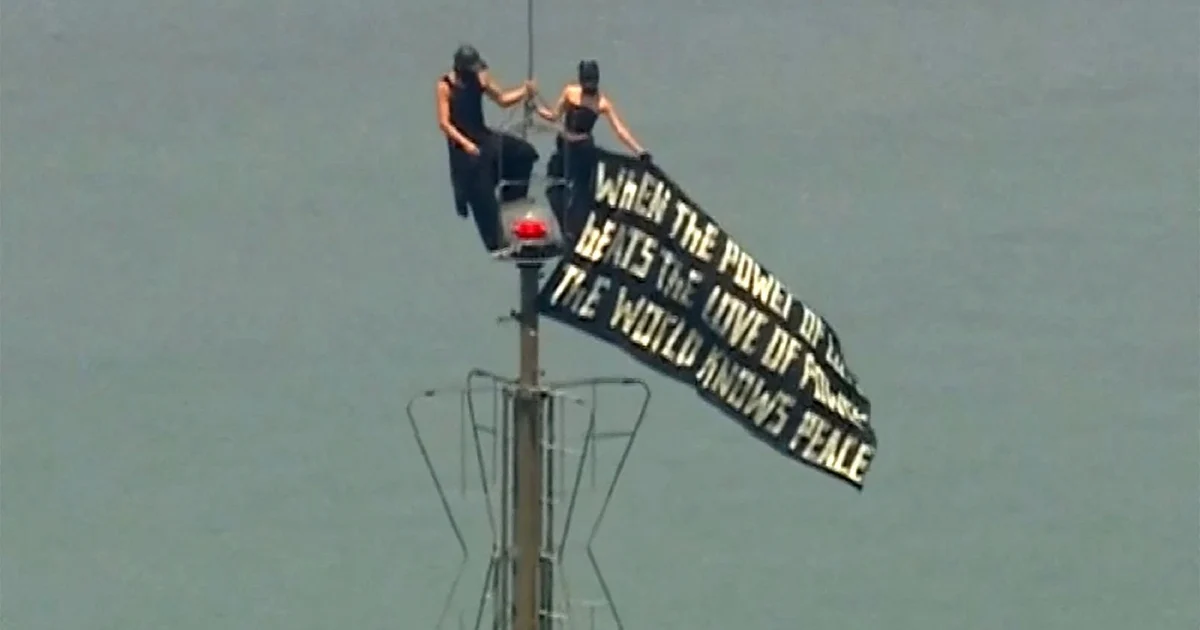
A dramatic scene unfolded atop one of America's most recognisable landmarks on Wednesday when two individuals scaled the antenna installation crowning the Empire State Building, resulting in their arrest by New York authorities. The pair's daring ascent to the building's topmost point, captured in real-time by onlookers and circulated across social media platforms, appeared to be orchestrated as the backdrop for an engagement announcement—a romantic gesture that ultimately culminated in police detention rather than celebration.
The Empire State Building, standing 102 storeys and crowned with its distinctive antenna array, remains one of New York's most visited tourist destinations and most stringently secured locations. Access to the building's roof and antenna structures is strictly prohibited for public safety reasons, making the unauthorised climb a serious breach of facility protocols. The climbers' decision to pursue this highly visible stunt at the building's apex suggests careful planning, despite the obvious legal and safety risks involved in ascending to such a height via an unapproved route.
Security personnel detected the unauthorised intrusion and responded swiftly, apprehending both individuals after they came down from the antenna. The specific charges faced by the pair remain part of the investigation, though climbing or trespassing on protected structures in New York typically results in misdemeanour or felony charges depending on circumstances and prior records. The incident raises questions about security protocols at one of the world's most iconic structures, particularly regarding antenna access points and perimeter monitoring systems.
For Malaysian and Southeast Asian observers, this incident highlights the growing phenomenon of elaborate romantic gestures documented for social media consumption. The trend of staging increasingly dangerous or illegal acts for engagement announcements reflects a broader cultural shift in how couples publicly declare relationship milestones. What might once have been a private, intimate moment has transformed into a spectacle designed for viral circulation and audience approval, occasionally with legal consequences.
The Empire State Building, completed in 1931, holds deeply symbolic significance in American culture and has featured prominently in countless films and literary works. Its status as a protected historical landmark intensifies the severity of any unauthorised access. The building's management maintains strict policies governing rooftop and exterior access, partly to preserve the structure's integrity and partly to ensure visitor safety given the considerable height and exposure involved.
This incident is not the first of its kind at prominent New York landmarks. Over the years, various thrill-seekers and activists have attempted unauthorised climbs on the building and other high-profile structures, generating media attention and triggering enhanced security measures. Each incident prompts facility managers to review their surveillance and response protocols, creating an escalating dynamic between would-be climbers seeking increasingly audacious vantage points and security teams working to prevent such breaches.
The motivations driving individuals to undertake such risky climbs merit examination. Beyond the engagement narrative, the desire for recognition and validation through social media amplification plays an undeniable role. The couple potentially envisioned their proposal as a spectacular, unforgettable moment—one that would generate substantial online engagement and cement their relationship announcement in a particularly memorable fashion. This calculated pursuit of attention, however, intersects problematically with public safety regulations and private property rights.
From a legal standpoint, authorities face a complex situation balancing public curiosity with law enforcement obligations. While some may view the couple's actions romantically or even humorously, the breach of security at a major landmark cannot be dismissed. The incident creates precedent concerns; authorities must respond firmly to discourage copycat stunts that could compromise building security or endanger climbers who might lack the skill or experience of the initial pair.
The incident also reflects broader questions about modern romance and spectacle. Marriage proposals have evolved from intimate moments between two people into public performances designed for maximal social media impact. While such grand gestures capture imagination, they sometimes obscure the personal dimensions of commitment in favour of external validation. The legal jeopardy arising from this particular stunt adds an unwelcome complication to what the couple presumably intended as a joyful milestone.
Looking ahead, the incident will likely prompt a detailed review of security measures at the Empire State Building and other iconic New York structures. Enhanced monitoring of antenna access points, upgraded surveillance technology, and refined response protocols may emerge from this breach. Simultaneously, the couple's arrest serves as a cautionary tale for other would-be romantic grand-gesturers considering rule-breaking as their expression of love.
For visitors and observers in Southeast Asia, the story underscores the gap between romantic aspiration and legal reality. Attempting similar stunts at regional landmarks—whether Malaysia's Petronas Twin Towers, Singapore's Marina Bay Sands, or other iconic structures—would similarly result in arrest and criminal charges. The global nature of social media means inspiration and influence flow across borders rapidly, but legal systems remain stubbornly localised and enforced with consistency.

