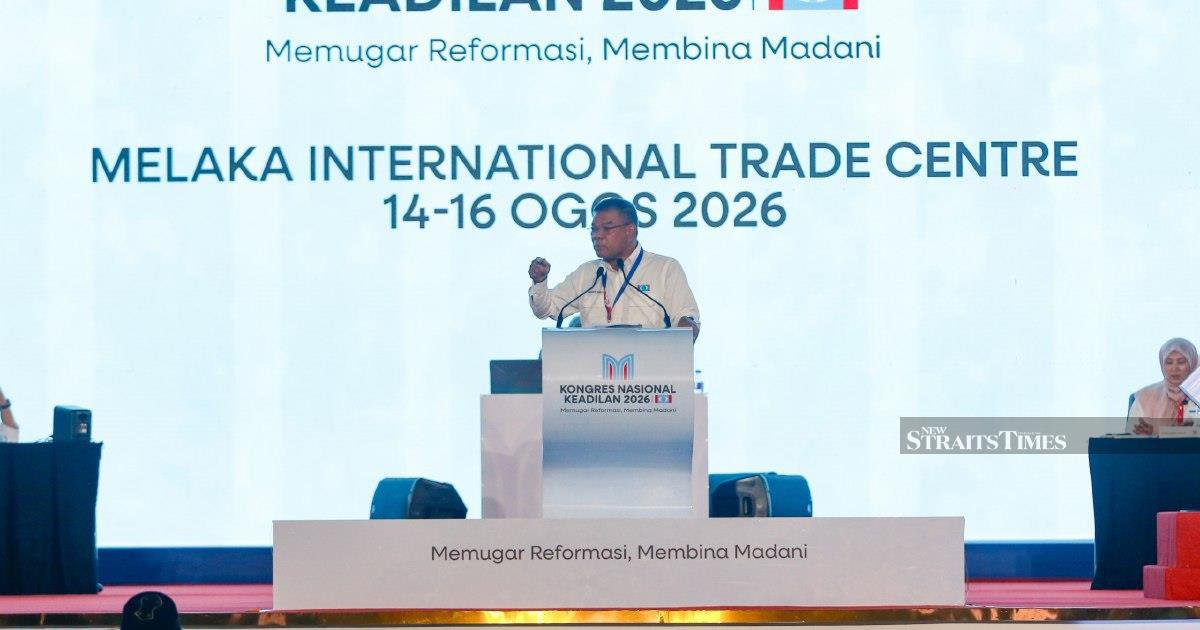
Corruption in Malaysia has long been weaponised as a political tool, with allegations frequently filtered through communal or religious lenses rather than evaluated on their substantive merits as matters of institutional integrity. PKR vice-president Datuk Seri Saifuddin Nasution Ismail has now pushed back against this pattern, insisting that the country's anti-graft agenda must be reframed fundamentally as a question of moral leadership and sound governance—an argument that strikes at the heart of how Malaysian politics has evolved over recent decades.
The remarks, delivered at an event in Ayer Keroh, reflect growing frustration within reform-minded circles about the tendency to dilute serious investigations and enforcement actions by channelling them into communal grievance narratives. This approach, critics argue, obscures the genuine scale of institutional failure and diverts public attention from systemic weaknesses in accountability mechanisms. By elevating corruption above the threshold of partisan or identity-based contestation, Saifuddin is attempting to restore a focus on what should be universal principles: that public office demands trustworthiness, transparency, and an absence of self-dealing, irrespective of the officeholder's background.
The distinction Saifuddin draws is particularly significant in the Malaysian context, where race and religion have traditionally framed almost every substantial policy debate. When corruption cases are processed through those same lenses—with supporters of the accused mobilising along ethnic or faith lines, or critics doing the same—the effect is to soften scrutiny and create a permission structure for inaction. Frames like "this is a witch-hunt against our community" or "they are selectively prosecuting one group" short-circuit the actual examination of evidence and conduct. What should be a straightforward question of whether public resources were misappropriated or abused becomes entangled in claims about majority dominance, minority grievance, or religious bias.
Malaysia's track record on fighting corruption has been mixed at best. Previous administrations saw high-profile arrests and convictions, including of former Prime Minister Najib Razak in connection with the 1MDB scandal, yet broader institutional reform has lagged. Public confidence in the independence of enforcement agencies remains fragile. Part of the reason is precisely the dynamic Saifuddin is highlighting: when each case becomes a referendum on whether a particular community or faction is being treated fairly, the focus shifts from the conduct itself to the identity and motives of investigators and prosecutors. This allows genuine wrongdoing to be clouded by assertions that the real problem is bias rather than the alleged offence.
The governance framing that Saifuddin advocates would require several shifts in how Malaysian society processes these issues. First, it demands that enforcement agencies be perceived—and genuinely operate—as impartial institutions applying consistent standards to all officials. Second, it necessitates civil society and the media treating corruption allegations as matters of institutional and ethical concern, rather than as opportunities for tribal mobilisation. Third, it means political leaders across the spectrum publicly committing to the principle that no politician or official should be shielded from scrutiny based on their communal standing.
Regionally, Malaysia faces particular pressure on this front. Neighbouring countries and international observers monitor corruption metrics closely when assessing governance quality and investment climate. Perceptions that enforcement is selective or contaminated by sectarian considerations weaken Malaysia's standing. By contrast, demonstrating that institutions can police wrongdoing evenhandedly—across party lines, across ethnic groups, across religious affiliations—sends a powerful signal of institutional maturity and reliability.
Saifuddin's call also carries implications for how the ruling coalition manages internal discipline. When party members face graft allegations, the instinct to defend them on communal grounds often wins out over expulsion or censure. This creates a culture where loyalty to one's identity group supersedes commitment to institutional standards. Breaking that pattern requires political leaders to model the behaviour they expect: standing willing to sacrifice electoral advantage in favour of principle.
The opposition, similarly, must resist the temptation to weaponise corruption allegations against rivals purely for political gain, presenting them as evidence of moral rot in their opponents while overlooking similar failings within their own ranks. A truly principled anti-corruption agenda is partisan in its application only insofar as wrongdoing is detected; it cannot selectively activate based on the colour of the politician's party.
Implementing Saifuddin's vision faces substantial headwinds. Decades of identity-based politics have trained voters and politicians alike to process nearly all policy questions through communal filters. The institutional capacity to investigate and prosecute corruption remains limited, with budgets and personnel that constrain the scope of enforcement. And vested interests—those who have benefited from weaker oversight—actively resist stronger accountability mechanisms regardless of their rhetoric about institutional independence.
Nevertheless, the articulation of this principle by a senior government figure matters. It places on the record the assertion that Malaysia's anti-corruption mission stands apart from racial and religious contestation, and it invites civil society, the media, and other political leaders to hold the government—and themselves—accountable to that standard. Whether the country can actually meet it remains to be seen, but the framing itself represents a necessary step toward the institutional maturity that Malaysian governance has long required.

