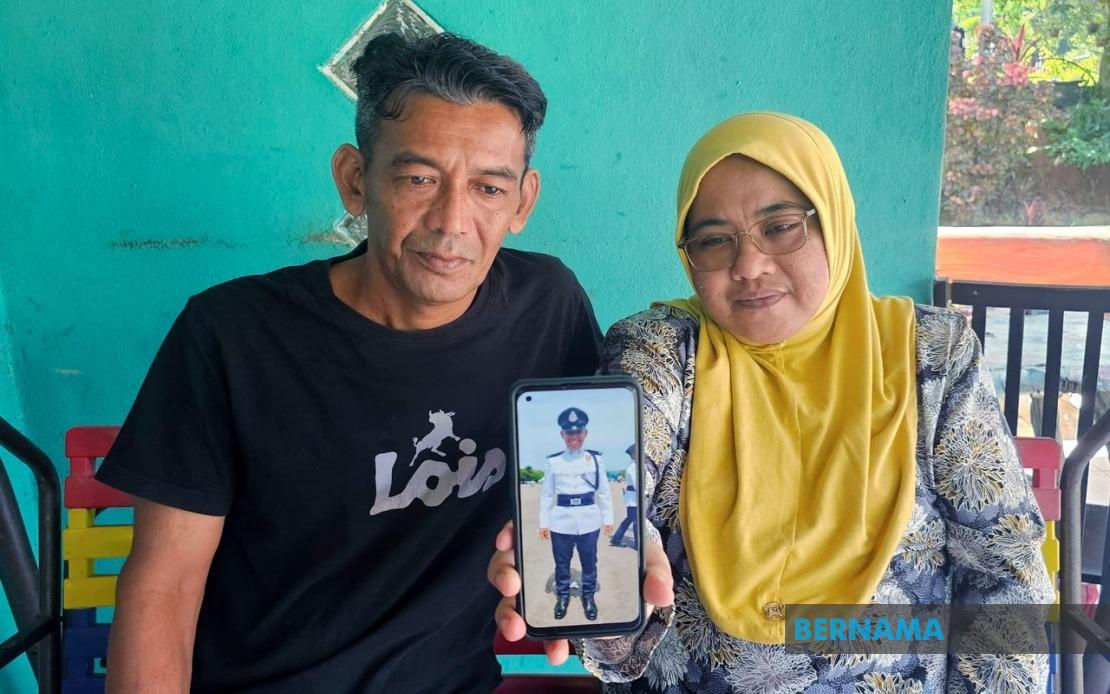
The hopes of a Dungun family transformed into devastating sorrow when they learned that their son, Constable Muhammad Raimi Ismarubee, had been fatally electrocuted during duty at Weston Police Station in Beaufort, Sabah. The 26-year-old officer and two fellow personnel perished in the incident on August 6, marking a tragic loss for the Royal Malaysia Police and a heartbreaking reminder of occupational hazards faced by those in public service.
Parents Ismarubee Ismail and Nor Azila Zakaria had been anticipating their son's homecoming as the month drew to a close. Muhammad Raimi had communicated his desire to take leave in June, though the plan remained tentative as he waited to secure reasonably priced air tickets from Sabah to Terengganu. That hope evaporated when Ismarubee received notification from his son's colleague at 6 pm on August 6, informing him of the fatal accident. The timing added to the family's anguish: Muhammad Raimi had sent a WhatsApp message just four hours earlier, proudly sharing details of a successful drug arrest operation he had been involved in during his shift.
Muhammad Raimi, who enlisted with the police force in September 2024, represented the second of three children in his household. His most recent home visit had occurred during the January holidays, making the planned August return especially meaningful for his family members in Felda Kerteh 2. During his relatively short tenure at Weston Police Station, the young officer had already distinguished himself professionally while maintaining deep family connections. His modest background as the son of a labourer instilled in him a sense of responsibility toward his relatives' welfare and educational advancement.
Beyond his police duties, Muhammad Raimi harboured personal aspirations that extended into the future. He had expressed intentions to become engaged to a woman from Sabah, with marriage plans tentatively scheduled for the following year. However, demonstrating maturity beyond his years, he had consciously decided to postpone the engagement and wedding proceedings until his youngest sibling completed the Sijil Pelajaran Malaysia examinations. This deferment reflected his commitment to prioritizing his family's educational milestones and ensuring that his personal milestone would not overshadow his sibling's important academic achievement.
His mother, Nor Azila, painted a portrait of a dutiful son whose generosity extended beyond simple financial remittances. Muhammad Raimi regularly purchased necessary items for his siblings' education, including a laptop, and maintained a pattern of sending money to his parents and younger brother and sister almost monthly. Such consistency in family support, particularly from a young man earning a junior officer's salary in the police force, underscored his character and sense of filial obligation. His parents' assessment that he was a conscientious, caring son was reflected not merely in sentiment but in documented patterns of behaviour.
The fatal incident occurred while Muhammad Raimi and his colleagues were engaged in a seemingly routine task outside Weston Police Station, situated near Sekolah Kebangsaan Weston. The three officers—Constable Muhammad Raimi Ismarubee, Corporal Chiu Teck Siong (40 years old), and Lance Corporal Mohamad Nur Hafiz Ibrahim (29 years old)—were manoeuvring a metal pole utilized for harvesting coconuts when contact with electrical current proved instantly fatal. The incident raises significant questions regarding workplace safety protocols at police stations and the adequacy of equipment handling procedures, particularly when tasks involve conducting metal objects in outdoor environments where electrical hazards may exist.
The loss of three personnel in a single workplace accident represents a substantial blow to Weston Police Station's operational capacity and morale. Corporal Chiu Teck Siong and Lance Corporal Mohamad Nur Hafiz Ibrahim, possessing considerably more service experience than Muhammad Raimi, represented institutional knowledge and seasoned operational expertise. Their simultaneous loss, alongside a promising junior officer with demonstrated commitment to his work and family, compounds the tragedy's magnitude.
For Malaysian law enforcement and public safety discourse, the incident underscores persistent vulnerabilities in occupational safety management within government institutions. Police stations, despite serving as security bastions for their communities, sometimes operate with safety standards that lag behind private sector benchmarks. The use of metal implements in environments with potential electrical exposure demands rigorous protocols, proper training, and regular equipment safety audits. The deaths of these three officers should catalyze systematic reviews of similar operations across police stations nationwide.
Muhammad Raimi's remains were transported to his hometown of Felda Kerteh 2 for funeral rites and burial at the local Muslim cemetery on August 7, allowing his grieving family and community to pay their final respects. His abbreviated lifespan—just 26 years—and the unfulfilled promises of engagement, marriage, and continued family support represent losses extending far beyond the police service. His younger sibling will complete secondary education without the older brother's promised encouragement and financial assistance; his intended bride never became his spouse; his parents will not experience the joy of a son's homecoming they had anticipated with such tender hope.

