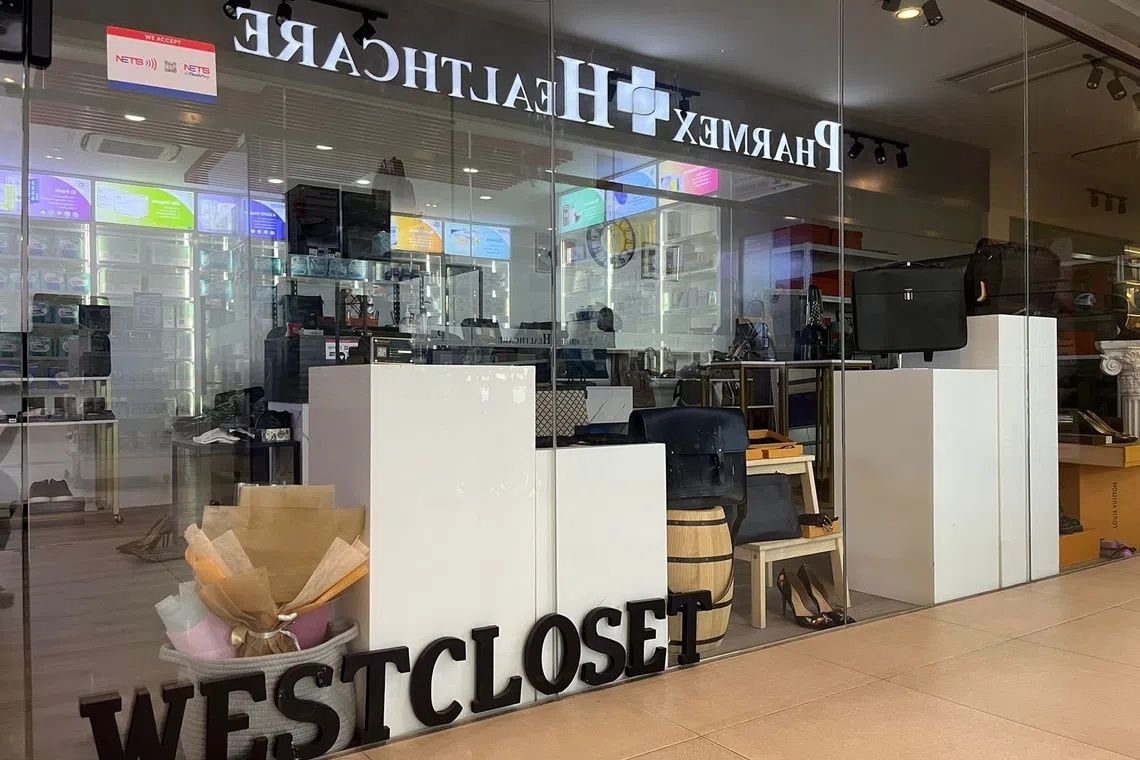
A 36-year-old Indonesian woman has been sent to prison for eight months after systematically misappropriating nearly S$140,000 from customers at her luxury consignment business in Singapore's Shenton Way district. Ringga Dwi Rizky Irianto, the sole proprietor of West Closet located within the OUE Downtown Gallery shopping mall, exploited her position of trust by diverting customer sales proceeds instead of returning them as promised. The case underscores growing vulnerabilities in the online second-hand and consignment retail sector, particularly in Southeast Asia where digital marketplaces have expanded rapidly but regulatory oversight remains patchy.
West Closet operated as a high-end resale service where customers could place designer bags—primarily Hermès and Chanel items—on consignment, with the shop taking a commission ranging from S$200 to S$900 per transaction. The business promoted itself aggressively through Carousell and Instagram, platforms widely used across Malaysia and the region for peer-to-peer sales. Customers were required to leave items at the store for a 60-day holding period or face a S$60 penalty, establishing what appeared to be a legitimate commercial framework. The arrangement offered convenience to affluent consumers seeking to liquidate luxury goods without the hassle of individual sales, yet it created an environment ripe for financial malfeasance given the high-value transactions involved and the trust required from consignors.
Ringga's modus operandi followed a consistent pattern across multiple victims. In July 2022, one customer deposited three bags—two Hermès and one Chanel—with a guaranteed sale value of S$51,000. West Closet issued a formal notice confirming that funds would be credited to the customer's bank account within seven days of sale completion. When all three bags sold as anticipated, generating the promised S$51,000, Ringga instead diverted the entire sum to settle another customer's outstanding order rather than honouring her contractual obligation. This approach allowed her to conceal the theft temporarily by creating the appearance of normal business operations while perpetually rolling customer funds into other transactions—a classic Ponzi-like scheme within a single enterprise.
The pattern repeated with devastating consistency. A second victim lost S$33,500 from the sale of a single Hermès bag, while a third customer was defrauded of S$23,500 under identical circumstances. All three pleaded guilty charges involved criminal breach of trust, with the trio accounting for S$108,000 of the total S$140,000 misappropriated sum. Two additional charges relating to the remaining two victims were taken into consideration during sentencing, indicating that Ringga's dishonesty extended across a broader customer base than those formally prosecuted. The structured nature of her deceit—targeting high-value transactions, exploiting formal documentation systems to create false legitimacy, and systematically redirecting funds—suggests premeditation rather than opportunistic misconduct.
The sentencing hearing on August 13 included a crucial restitution component that provides partial vindication for victims. Ringga has already remitted S$41,000 to those harmed, demonstrating either genuine contrition or legal pressure to mitigate her sentence. The court ordered her to pay an additional S$91,950 in compensation through an investigation officer, with a 24-day custodial penalty accruing for every instance of non-payment. This dual mechanism—combining jail time with financial recompense—attempts to balance accountability with victim recovery, though the practicality of collecting full compensation from an imprisoned Indonesian national remains uncertain. The restitution structure may prove more symbolic than substantive for customers seeking full redress.
Ringga's apprehension in September 2022, roughly two months after the first documented theft, came after victims grew suspicious about delayed payments and began comparing experiences. The 18-month gap between her arrest and formal charging in 2024 reflects the complexity of cross-border financial crime investigation and the administrative procedures required in Singapore's criminal justice system. Her bail was set at S$15,000 upon sentencing, with her jail term scheduled to commence in October—a delay that raises questions about whether she maintained freedom to continue problematic conduct or settle outstanding obligations before incarceration.
The maximum penalty for criminal breach of trust under Singapore law extends to seven years imprisonment, a threshold considerably more severe than the eight-month sentence imposed. This relative leniency likely reflects Ringga's guilty pleas, her restitution efforts, and her lack of prior criminal record, yet it raises concerns about deterrent efficacy in affluent commercial contexts where high-value fraud might yield substantial proceeds despite nominal sentences. For Southeast Asian readers, the case demonstrates how platforms like Carousell and Instagram, while democratising retail commerce, can inadvertently create infrastructure for sophisticated financial crimes when institutional safeguards remain underdeveloped.
The broader implications extend to Malaysia and the wider region, where consignment services, luxury goods trading, and online marketplaces have proliferated substantially over the past five years. Few countries have established comprehensive regulatory frameworks governing digital consignment businesses, leaving customers reliant upon individual merchant integrity rather than systematic consumer protections. The West Closet case illustrates how a sophisticated operator can weaponise the trust inherent in luxury goods transactions, particularly where customers are wealthy enough to place high-value items but may lack detailed contractual safeguards or legal recourse mechanisms. Regulatory authorities across ASEAN would benefit from examining licensing requirements, mandatory escrow arrangements, and transaction transparency standards for high-value consignment operations.
For Malaysian consumers engaging with similar services, the case serves as a cautionary reminder about the risks inherent in surrendering expensive goods to third parties, regardless of how professionally presented their marketing materials appear. The absence of regulatory oversight in many consignment contexts means that due diligence—including background checks, business registration verification, and detailed contractual protections specifying payment timelines and liability provisions—remains the consumer's primary defence against fraud. Malaysia's consumer protection framework, while sophisticated in many respects, contains gaps regarding digital consignment services that this Singapore case has highlighted with particular clarity.

