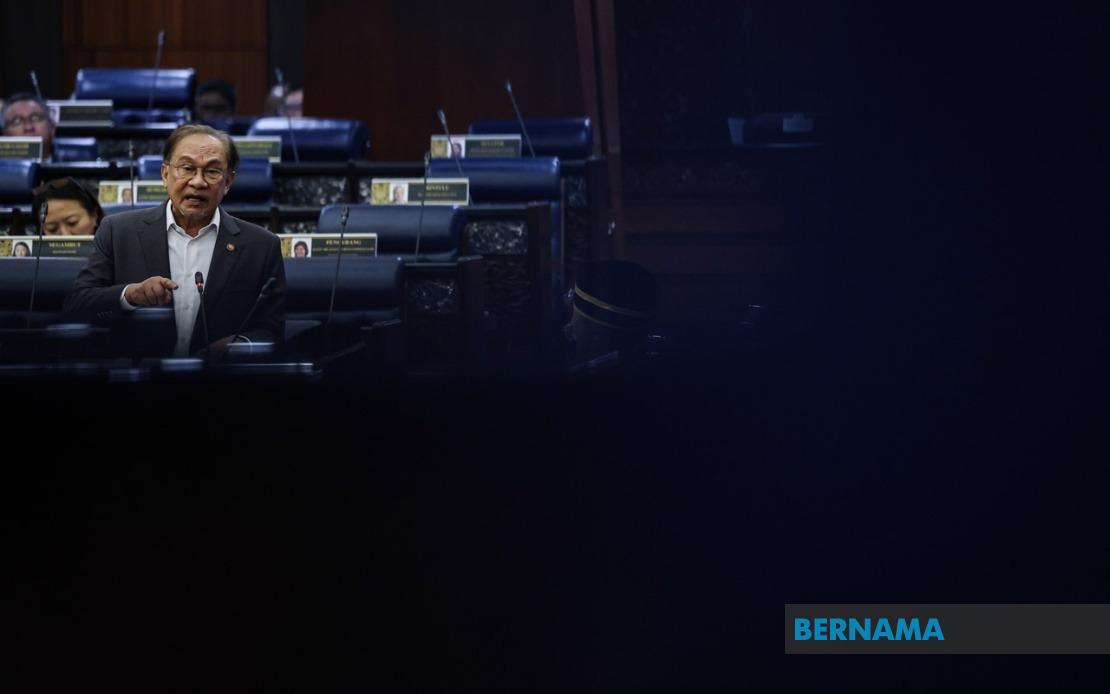
Prime Minister Datuk Seri Anwar Ibrahim has introduced a new procedural safeguard aimed at protecting journalists from hasty legal action, declaring that complaints lodged against media practitioners will no longer automatically trigger investigations or enforcement proceedings. Instead, all such complaints must first be submitted to the Malaysian Media Council for independent assessment, a mechanism designed to introduce greater deliberation into the process before formal action is taken. This announcement, made during Minister's Question Time in Parliament on July 7, represents a significant shift in how the government intends to handle disputes involving the press.
The Prime Minister framed the initiative as a matter of fundamental fairness and institutional transparency. He emphasised that the new arrangement protects journalists from being dragged into legal proceedings simply because their reporting has provoked criticism from government departments or other complainants. Rather than treating every lodged complaint as grounds for immediate investigation, the Malaysian Media Council will now serve as a gatekeeper, tasked with determining whether a complaint merits advancement through the formal enforcement machinery. This intermediary step introduces procedural rigour that previously did not exist, creating space for independent professional judgment before the full weight of state investigative powers engages.
The context for this initiative is Malaysia's existing legal framework governing press freedom and national security. The Sedition Act 1948 and Official Secrets Act 1972 remain potent tools that governments can deploy against journalists, and critics have long contended that these statutes create a chilling effect on media scrutiny of public affairs. By establishing the Media Council as the mandatory first point of review, Anwar Ibrahim has acknowledged these concerns while seeking a middle ground that preserves press freedom without entirely constraining the government's ability to address genuine misconduct or breaches of law.
The Prime Minister was careful to articulate the philosophical foundations of his position, noting that no democratic nation grants absolute, unconditional freedom to the press. Both government officials and journalists, he argued, remain accountable to the law of the land. However, Anwar drew a critical distinction between legitimate legal accountability and the weaponisation of law against journalists for doing their jobs. The new protocol effectively embeds this distinction into institutional practice, ensuring that journalists are not automatically presumed guilty upon the filing of a complaint.
For Malaysia's media landscape, this development carries implications that extend beyond procedural convenience. The country has experienced periodic tensions between government officials and news organisations over critical reporting, particularly during previous administrations when journalists faced prosecution under laws critics regard as outdated. The introduction of the Malaysian Media Council review mechanism suggests an attempt to move away from this adversarial dynamic toward a framework that privileges professional accountability and industry self-regulation. This aligns with international best practices where media councils in democracies worldwide play similar roles, evaluating complaints and issuing ethical guidance without the coercive apparatus of state prosecution.
The Malaysian Media Council itself remains a relatively young institution in Malaysia's governance ecosystem. Its establishment reflects growing recognition among policymakers that institutional independence can serve legitimate public interests more effectively than unmediated government intervention. By investing the Council with the authority to assess complaints against journalists, the government has essentially delegated a portion of its enforcement discretion to a body that includes media professionals, offering some insulation against political manipulation of legal process.
Anwar Ibrahim's articulation of this policy also reveals an underlying tension in contemporary Malaysian politics. The government maintains certain laws—the Sedition Act and Official Secrets Act chief among them—that many international observers regard as incompatible with genuine press freedom. Yet by implementing procedural protections that make invoking these laws more difficult, the government achieves a practical outcome closer to what press freedom advocates seek without formally repealing contested legislation. This represents a pragmatic compromise that may satisfy neither full-throated press freedom advocates nor those who believe government must retain unfettered ability to prosecute journalists.
The mechanism will operate such that media organisations facing complaints will have their cases examined first by the Malaysian Media Council. Should the Council determine that misconduct occurred, the matter may then proceed to appropriate authorities. This layering of review introduces multiple decision points, reducing the likelihood that political animosity or departmental pique will translate directly into criminal prosecution. For journalists working in Malaysia, the change effectively raises the threshold for legal jeopardy, requiring that complaints pass through professional scrutiny before triggering the investigative machinery of state organs.
Regionally, Malaysia's approach may carry significance for other Southeast Asian nations grappling with similar questions about the relationship between state authority and press freedom. As democracies across the region confront pressures to maintain order while respecting freedom of expression, Malaysia's adoption of an industry-led review mechanism offers a model—imperfect though it may be—for channelling complaints through institutions other than courts and police. This could influence how neighbouring countries approach comparable issues, particularly as regional journalists increasingly face legal pressure in countries where rule of law remains contested.
The Prime Minister's comments also reveal something about the current government's self-conception and its relationship with the media establishment. By voluntarily constraining the government's ability to prosecute journalists, Anwar Ibrahim positions his administration as respecting institutional boundaries and professional judgment. This stands in contrast to narratives of authoritarian government power unchecked by procedure or independent review. Whether the Malaysian Media Council will function with genuine independence—free from pressure, political or otherwise—remains to be demonstrated through practice.
Looking forward, the implementation of this policy will require close observation from civil society, journalism organisations, and international observers concerned with press freedom. The measure's actual impact will depend not merely on its formal existence but on how it functions in practice: whether complaints are processed expeditiously, whether journalists genuinely feel protected from arbitrary prosecution, and whether the Malaysian Media Council can maintain legitimacy as an impartial arbiter. The framework represents a meaningful procedural advance, yet its success ultimately rests on institutional behaviour and political commitment to its letter and spirit.

