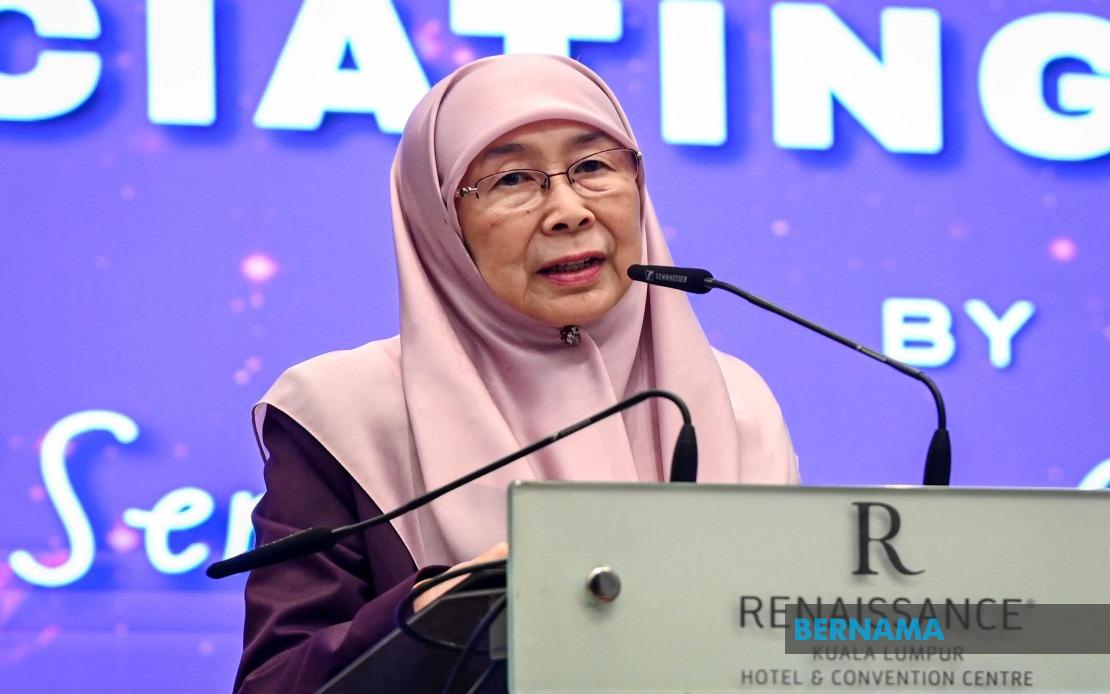
Datuk Seri Dr Wan Azizah Wan Ismail, the Prime Minister's wife, has stressed that the foundation of effective maternal healthcare lies not merely in technological advancement but in the integration of human compassion at every stage of care delivery. Speaking at the launch of the 16th Malaysian Obstetric Anaesthesiology Symposium (MyOASym) 2026 in Kuala Lumpur, she articulated a vision where clinical excellence and emotional support coexist as equal pillars of quality patient outcomes.
The healthcare landscape facing Malaysian mothers and their families has grown considerably more complex in recent years. Advanced maternal age, rising obesity rates, intricate cardiac conditions, and the ever-present risk of obstetric haemorrhage present formidable clinical challenges that demand not only sophisticated medical knowledge but also seamless coordination among specialists. Wan Azizah acknowledged this reality, underscoring the critical need for healthcare systems to evolve in response to these mounting complexities. The mounting prevalence of high-risk pregnancies means that traditional, siloed approaches to medical care can no longer suffice.
Central to her message was a fundamental reorientation of how excellence in maternal healthcare is evaluated. Rather than allowing clinical metrics alone to define success, Wan Azizah advocated for a broader assessment framework that encompasses dignity, respect, and genuine emotional support during pregnancy, labour and childbirth. She contended that the quality of care a mother receives during these transformative life moments extends far beyond laboratory values and clinical procedures, encompassing the psychological and social dimensions of the experience.
Wan Azizah's emphasis on the irreplaceable value of human connection in medicine reflects broader global discourse about healthcare quality. As hospitals and medical centres increasingly invest in cutting-edge technologies and treatment protocols, the risk emerges that the interpersonal aspects of care—the reassurance, the listening, the acknowledgment of a patient's fears and hopes—might be overshadowed. She posited that innovation, regardless of its sophistication, remains hollow without the accompanying commitment to treat each mother as a whole person rather than merely a clinical case.
To operationalise this vision of compassionate, excellence-driven care, Wan Azizah called for the systematic institutionalisation of multidisciplinary simulation training programmes across Malaysian healthcare facilities. Such training would bring together anaesthesiologists, obstetricians, and neonatologists in controlled environments where they can rehearse the management of high-risk scenarios, build familiarity with one another's protocols and communication styles, and refine their capacity to respond swiftly and cohesively when emergencies occur. The benefits of such collaborative exercises extend beyond the immediate clinical outcome; they foster a culture of teamwork and mutual respect among professionals who often operate within departmental silos.
Communication emerged as a cornerstone of her recommendations. Wan Azizah advocated for the establishment of early warning systems and workplace cultures that prioritise transparent, unambiguous communication among all members of the clinical team. By breaking down hierarchical barriers that sometimes inhibit junior staff from voicing concerns, healthcare institutions can catch potential complications earlier and marshal resources more effectively. She suggested that what might otherwise precipitate a crisis can instead become a managed situation with a positive outcome if the team functions as a coordinated unit.
The advice directed toward early-career healthcare professionals underscored mentorship, intellectual humility, and the cultivation of empathy alongside technical competence. Wan Azizah encouraged young doctors and nurses to embrace curiosity, ask questions without fear, and recognise that learning extends far beyond formal training programmes into the lived experience of clinical practice. She emphasised that technical skill, while necessary, must be complemented by the ability to connect meaningfully with patients and understand their perspectives and concerns.
The international dimension of MyOASym 2026 reflects the increasingly collaborative nature of medical progress in Southeast Asia and beyond. The participation of healthcare professionals from Singapore, Hong Kong, and Pakistan alongside Malaysian delegates creates a forum for the exchange of best practices, the sharing of research findings, and the identification of common challenges across diverse healthcare systems. For Malaysian practitioners, such engagement offers opportunities to benchmark their own approaches against regional and international standards whilst contributing Malaysian expertise to broader conversations about maternal health.
The significance of Wan Azizah's address lies in its articulation of a humane framework for healthcare advancement at a moment when digital health technologies and artificial intelligence are rapidly reshaping the medical landscape. Rather than adopting a technophobic stance, she championed a balanced approach wherein innovation serves human needs rather than the reverse. Her emphasis on multidisciplinary collaboration and early warning systems speaks directly to the reality that many maternal deaths and serious complications are preventable when systems function optimally and professionals communicate effectively.
For Malaysian policymakers and hospital administrators, Wan Azizah's message carries practical implications. The investment in simulation training, the redesign of communication protocols, and the cultural shifts necessary to break down departmental silos require sustained funding and institutional commitment. Yet the potential return on such investment is substantial: reduced maternal mortality and morbidity, enhanced patient satisfaction, and a healthcare workforce that derives greater professional fulfilment from delivering truly excellent care.
The broader context of this symposium launch reflects Malaysia's commitment to remaining at the forefront of obstetric and anaesthetic practice in the region. As maternal healthcare systems worldwide grapple with demographic shifts, rising rates of complex pregnancies, and the integration of new technologies, the Malaysian medical community's willingness to engage in regional and international collaboration positions the nation as a serious contributor to advancing standards of care. Wan Azizah's call for compassion-guided innovation serves as both an affirmation of Malaysian values and a practical roadmap for healthcare institutions seeking to deliver maternal care that is simultaneously cutting-edge and deeply humanistic.

