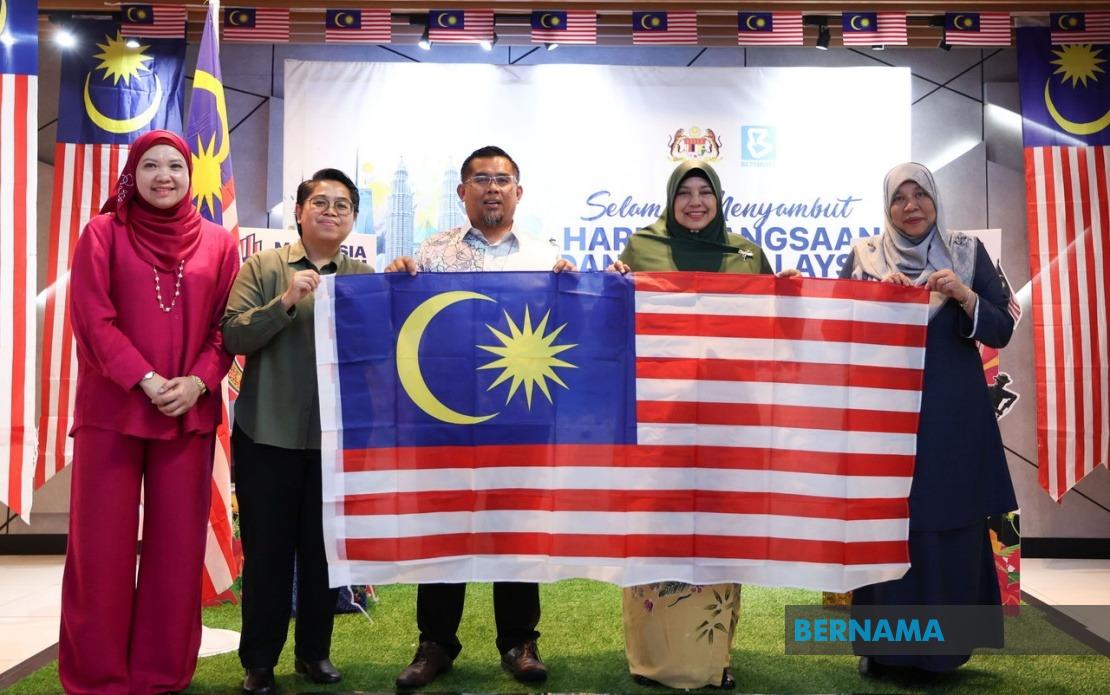
The government has announced an ambitious slate of 16 supplementary programmes intended to enliven the 2026 National Day and Malaysia Day (HKHM) celebrations, marking a concerted effort to deepen patriotic sentiment and social cohesion among Malaysians. According to Harun Ali, secretary of the Communications Ministry's Management Services Division, these initiatives represent a strategic pivot toward inclusive nationwide engagement rather than celebrations confined to the capital region.
The expanded programme calendar encompasses several flagship initiatives designed to mobilise community participation across diverse demographics. Among these are Kembara Merdeka Jalur Gemilang, a nationwide movement promoting the national flag, the National Month Decoration Competition encouraging residents to adorn their surroundings in patriotic colours, Ekspresi Merdeka providing creative outlets for citizens to express national pride, and the Kita MADANI Carnival offering recreational and cultural experiences. Complementing these are numerous community-based and cultural activities tailored to reflect Malaysia's multicultural fabric.
A significant departure from previous years is the decision to relocate the primary Merdeka Eve Celebration from Putrajaya to Stadium Merdeka, a venue steeped in historical significance as the site where Malaysia's independence was first celebrated in 1957. This strategic choice underscores the government's intention to connect contemporary celebrations with the nation's foundational moments, allowing new generations to participate in commemorations at a location imbued with historical resonance. The shift also serves to decentralise festivities, potentially drawing larger audiences to a landmark venue accessible across the Klang Valley.
Prime Minister Datuk Seri Anwar Ibrahim will deliver a special Merdeka Address during the midnight countdown at Stadium Merdeka, positioned to galvanise national resolve and reinforce themes of collective struggle and shared destiny. Such addresses have historically served as key moments for political messaging and the articulation of national priorities, providing an opportunity to frame independence not merely as a historical achievement but as an ongoing project requiring contemporary commitment.
A novel attraction this year is "Melukis Senja," featuring an aerial display by Aero 3 that will incorporate aerobatic manoeuvres generating smoke trails and synchronised fireworks across Putrajaya's skyline. This theatrical innovation reflects growing trends globally whereby national celebrations incorporate sophisticated visual spectacles to create memorable experiences that transcend traditional parades and speeches, potentially enhancing broadcast appeal and social media engagement among younger demographics.
The underlying philosophy animating these programmes emphasises accessibility and broad-based participation. Officials stress that the festivities are designed for Malaysians "from all walks of life," a formulation that acknowledges persistent socioeconomic disparities and seeks to ensure that celebration opportunities are not monopolised by privileged segments of society. By distributing activities across multiple venues and formats—from competitive decorating contests to carnival environments to aerial performances—the ministry aims to create multiple entry points for engagement.
Harun Ali emphasised the philosophical dimension of these celebrations, noting that contemporary Malaysians often take for granted the independence secured through considerable sacrifice by previous generations. His call for citizens to demonstrate patriotism through visible symbols such as the Jalur Gemilang reflects a recognition that national unity requires periodic reinforcement and that symbolic expressions of allegiance serve important cohesive functions in plural societies. The emphasis on flag-flying as a manifestation of "pride and gratitude" frames nationalism in terms of appreciation rather than exclusionary sentiment.
The programme rollout also underscores the government's awareness of Malaysia's regional context. As the nation navigates complex geopolitical dynamics and internal social divisions, strategically choreographed national celebrations serve multiple purposes: they provide occasions for cross-ethnic and cross-religious interaction, they reinforce democratic participation norms, they offer platforms for government messaging around national priorities such as the MADANI framework, and they generate tourism and commercial activity supporting the broader economy.
The Communications Ministry's role in coordinating these programmes reflects Malaysia's ongoing investment in sophisticated public communications infrastructure. Rather than ad hoc approaches to national celebrations, the ministry's structured framework suggests systematic planning to ensure consistency, inclusivity, and thematic coherence across disparate initiatives. This institutional maturation distinguishes contemporary celebrations from earlier iterations that may have been less coordinated.
For Malaysian businesses and community organisations, the 2026 HKHM calendar presents opportunities for commercial engagement and community visibility. The National Month Decoration Competition, for instance, could incentivise consumer spending on patriotic merchandise and decorative items, while the Kita MADANI Carnival provides platforms for vendors and cultural organisations to reach broad audiences. Such economic dimensions, while sometimes overlooked in political analysis, constitute real benefits extending beyond symbolic nationalism.
The decision to emphasise Stadium Merdeka as the central venue carries implications for urban planning and heritage conservation. Historic sites occasionally suffer from underutilisation or deferred maintenance, and their incorporation into major national events can serve dual purposes: celebrating national history while simultaneously drawing attention and resources toward preservation of significant landmarks. The 2026 celebrations thus represent potential catalysts for renewed public interest in Malaysia's architectural heritage.
Looking ahead, the success of the 2026 HKHM celebrations will be measured not only by attendance figures or media coverage, but by whether the programmes succeed in fostering genuine patriotic engagement or merely perform patriotism for official consumption. Critics of nationalism sometimes contend that state-orchestrated celebrations risk producing hollow sentimentalism divorced from substantive commitment to national development and social justice. The government's challenge lies in crafting festivities that authentically resonate with citizens' lived experiences while advancing coherent visions of national purpose and unity.

