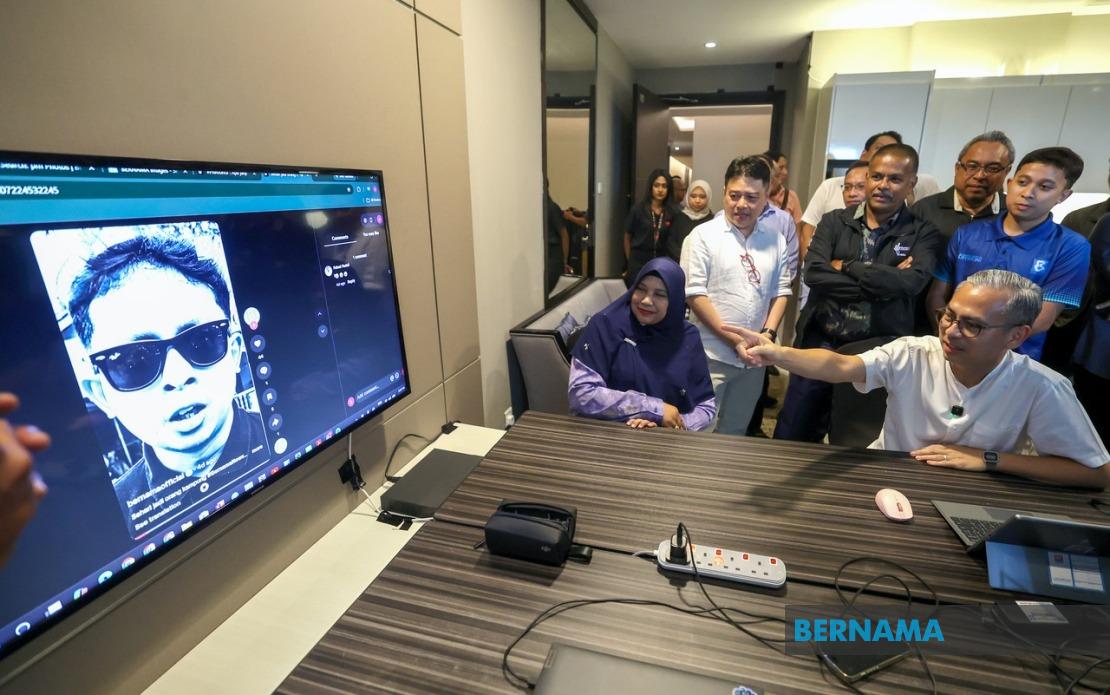
Communications Minister Datuk Fahmi Fadzil has expressed his appreciation for the Malaysian National News Agency's efforts in delivering accurate and thorough coverage of the Johor state election, following a visit to the organisation's operations centre in Johor Bahru on July 7. The minister's inspection of the facility revealed that editorial teams, television crews, and support staff were well-equipped to fulfil their role in keeping the public informed during the polling period.
During his tour of the Bernama Operations Centre, Fahmi observed first-hand the coordination and infrastructure supporting the news agency's election coverage. He found the working conditions and resources available to journalists, sub-editors, editors and broadcast personnel to be satisfactory, enabling them to execute their assignments without significant impediment. The minister's assessment centred on the practical arrangements that allow news organisations to function effectively under the pressures of covering a major political event.
The Bernama team deployed for the Johor election consisted of 44 personnel, including journalists, cameramen and photographers tasked with tracking developments across the entire state. This geographic spread is particularly demanding given Johor's size and the dispersed locations of constituencies stretching from Endau in the interior to Tanjung Surat on the coast, with additional coverage responsibilities extending into the northern regions of the state. Such a deployment requires not only adequate staffing but also functional logistics and communication systems to coordinate reporting across such vast distances.
Fahmi took the opportunity to acknowledge the leadership roles played by Bernama chief executive officer Datin Paduka Nur-ul Afida Kamaludin and editor-in-chief Arul Rajoo Durar Raj in orchestrating the election coverage arrangements. He specifically commended the preparation and coordination work undertaken by both executives, noting that the support mechanisms established for journalists reflected a professional approach to what is ultimately a critical public service during electoral campaigns. The minister's remarks underscored the importance of institutional preparedness in ensuring media operations can meet public information demands.
The visit was substantive rather than perfunctory, with Fahmi spending more than an hour at the operations centre. During this extended engagement, he moved beyond formal inspections to interact directly with journalists and support staff stationed at the facility. Such contact between political leadership and working journalists serves multiple functions, signalling government recognition of the media's role while allowing the minister to gain practical understanding of the challenges newsrooms face during high-intensity news cycles.
The timing of Fahmi's visit coincided with significant moments in the Johor electoral process. Early voting had taken place on July 7, with main polling scheduled for Saturday, July 11. A total of 172 candidates were contesting across the 56 state assembly seats, creating a complex and multi-faceted news landscape requiring coordinated reporting across numerous contests and constituencies. The scale of the election underscored why adequate resources and facilities for news gathering are essential to comprehensive public information.
From a Malaysian media governance perspective, Fahmi's visit and comments reflect the government's ongoing engagement with national news infrastructure. Bernama, as the official national news agency, occupies a particular position within Malaysia's media ecosystem, tasked with providing authoritative reporting to domestic audiences and international stakeholders. The minister's acknowledgment of the agency's work during elections contributes to broader narratives about institutional performance during critical political moments.
The emphasis on facility standards and staff support in Fahmi's remarks also highlights practical considerations often overlooked in media commentary. Election coverage demands sustained intensity over compressed timeframes, requiring not only skilled personnel but also adequate working conditions, equipment, and logistical support to prevent burnout and maintain reporting quality. The minister's positive assessment of Bernama's operational setup suggests the agency had invested appropriately in these fundamentals.
For Southeast Asian observers, Malaysia's approach to official media coverage during elections reflects broader regional patterns of state engagement with news organisations. While editorial independence and journalistic autonomy remain distinct considerations, ensuring that designated news agencies have resources to fulfil their reporting mandates is a separate question about institutional capability. Fahmi's comments positioned the discussion around capacity and professionalism rather than editorial direction.
The Johor state election represented a significant political test in Malaysia's third-largest state by population. Comprehensive news coverage thus carried implications beyond simply informing voters about candidates and issues; it contributed to the overall legitimacy and transparency of the electoral process. By publicly recognising Bernama's efforts, Fahmi was implicitly affirming the importance of institutional news gathering to democratic functioning, even as broader questions about media pluralism and editorial independence remain subjects of ongoing debate within Malaysian civil society.

