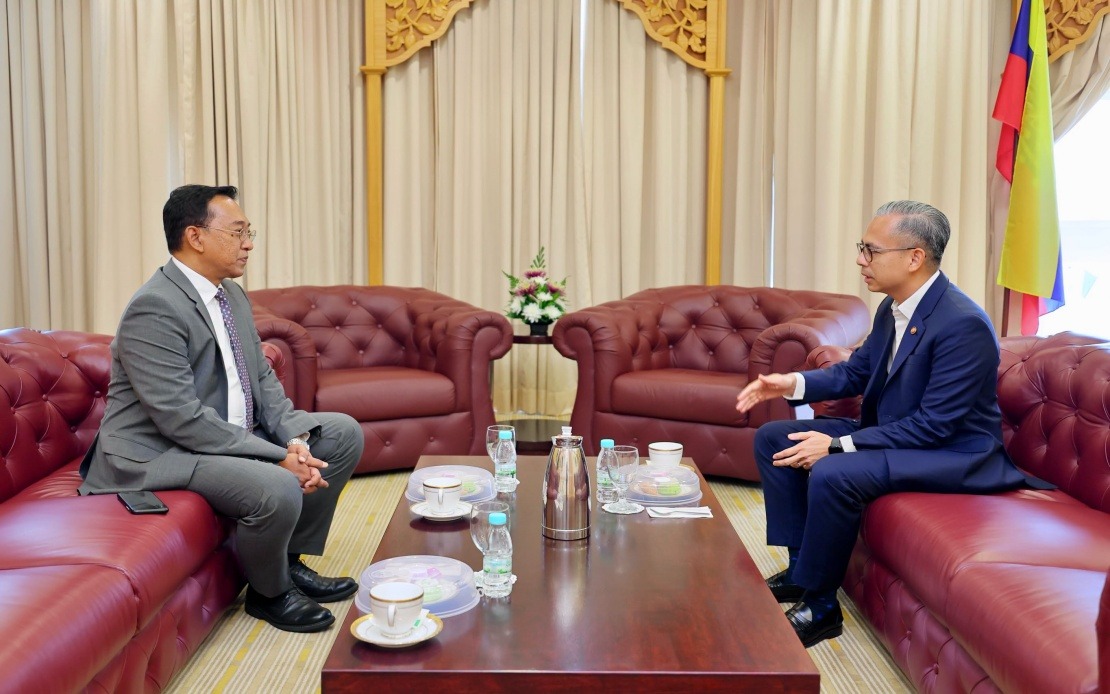
Communications Minister Datuk Fahmi Fadzil has received a courtesy visit from Anwar Udzir, Malaysia's Ambassador to Lebanon, in a meeting aimed at deepening diplomatic cooperation between the two officials. The encounter, which took place in Kuala Lumpur on July 1, reflected the ministry's commitment to maintaining strong institutional ties with Malaysia's diplomatic corps abroad, particularly as the nation navigates an increasingly complex international environment across the Middle East and broader global affairs.
Anwar Udzir's appointment as Ambassador to Lebanon represents an important diplomatic posting for Malaysia, given the nation's strategic interests in the region and its longstanding relationships across the Arab world. The diplomat received his official letter of appointment from His Majesty Sultan Ibrahim, King of Malaysia, on May 18, 2026, formally establishing his mandate to represent Malaysian interests in Beirut. This timing coincides with a period when Malaysia continues to maintain active engagement across multiple Middle Eastern capitals, reflecting the country's broader foreign policy objectives in a region of considerable geopolitical significance.
During their meeting, Fahmi and Anwar discussed the importance of strengthening their working relationship and exchanged perspectives on current developments that bear implications for Malaysia's standing and interests on the international stage. Such courtesy calls between government ministers and ambassadors serve as valuable opportunities to align on priorities, clarify expectations, and establish the personal rapport that often underpins effective diplomatic collaboration. These informal yet purposeful encounters help ensure that Malaysia's communications strategies at home remain coherent with its diplomatic messaging and positioning abroad.
Fahmi's public acknowledgment of the meeting through a Facebook post underscores the government's commitment to transparency and public communication regarding its diplomatic initiatives. By sharing details of the courtesy call, the minister demonstrated that such engagements are not merely procedural formalities but rather substantive interactions worthy of public attention. This approach reflects broader trends in contemporary governance where ministers leverage social media to communicate government activities directly to citizens and stakeholders.
The minister also took the opportunity to express his confidence in Anwar Udzir's ability to effectively discharge his ambassadorial duties. Fahmi's remarks wishing the diplomat success in representing Malaysia in Lebanon carry implicit recognition of both the challenges and opportunities inherent in serving as a senior diplomat in the Lebanese capital. Lebanon itself remains a strategically important country in the Levantine region, with complex political dynamics and significant influence among various communities and international actors operating in the Middle East.
Fahmi's existing familiarity with Anwar Udzir provided an additional foundation for their recent meeting. The two officials had previously worked together when Anwar and his team provided assistance in organizing the Asia-Pacific Telecommunity Ministerial Meeting in Tokyo, Japan, the previous year. This prior collaboration meant that the courtesy call could build upon established professional relationships rather than beginning from a position of unfamiliarity. Such continuity in diplomatic personnel working relationships often facilitates more productive exchanges and reduces the learning curve associated with new assignments.
The Asia-Pacific Telecommunity connection is particularly noteworthy, as it highlights the intersections between Malaysia's communications sector priorities and its broader diplomatic engagement. Telecommunications represents a critical domain of contemporary international cooperation, touching upon infrastructure development, technological standards, digital security, and economic integration across the region. Malaysia's active participation in such ministerial forums reflects its positioning as a technologically engaged nation with interests in shaping regional and global standards for digital communications.
The timing of this diplomatic exchange also carries significance within Malaysia's annual diplomatic calendar. Regular courtesy calls and formal meetings between government ministers and ambassadors help maintain the institutional coherence of Malaysia's foreign service and ensure that career diplomats remain connected to relevant ministries in Kuala Lumpur. For the Communications Ministry specifically, such interactions ensure that telecommunications, digital infrastructure, and communications policy considerations are factored into broader diplomatic strategies.
Looking ahead, Anwar Udzir's tenure in Lebanon will likely involve navigating the complex political landscape of a country that has experienced significant institutional and economic challenges in recent years. Malaysia's diplomatic presence in Beirut serves multiple purposes: advancing bilateral relationships, protecting Malaysian citizens and commercial interests, gathering intelligence relevant to regional developments, and participating in multilateral forums where Lebanese participation shapes regional discourse. The Communications Minister's early engagement with the new ambassador signals ministerial-level attention to these responsibilities.
The courtesy call also reflects the professional standards and protocols that govern Malaysia's diplomatic service. Proper introductions and formal acknowledgments between incoming ambassadors and relevant government ministries help establish clear lines of communication and coordination. These interactions reinforce the principle that ambassadors, while stationed abroad, remain accountable to and coordinated with the Malaysian government structure they represent. The Communications Ministry's particular interest in meeting with the Lebanese ambassador may also reflect specific sectoral interests, whether related to telecommunications infrastructure, media relations, or digital connectivity initiatives that might involve bilateral cooperation.
As Malaysia continues to expand its engagement across the Middle East and strengthen its diplomatic footprint, appointments such as Anwar Udzir's to Lebanon take on heightened importance. The region's evolving geopolitical dynamics, coupled with Malaysia's own strategic realignment in global affairs, mean that seasoned diplomats in key postings play crucial roles in advancing national interests. Fahmi's public support and ministerial attention to Anwar Udzir's new assignment underscore the government's recognition of Lebanon's importance within Malaysia's broader Middle Eastern engagement strategy.

