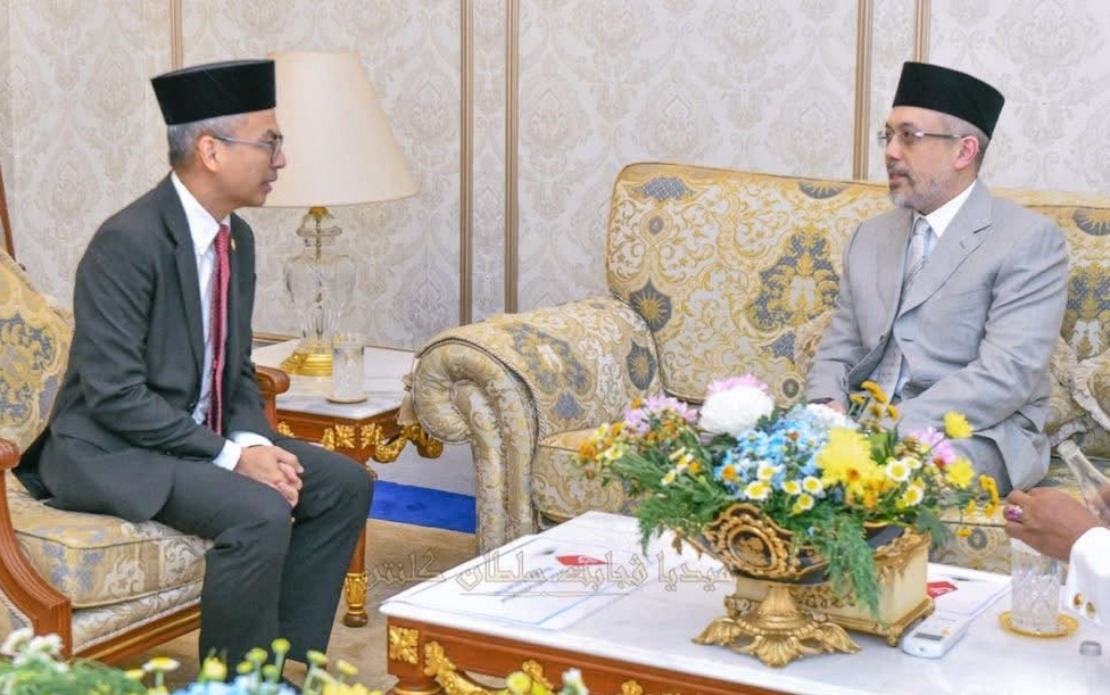
Malaysia's Communications Minister Datuk Fahmi Fadzil held a formal audience with the Crown Prince of Kelantan, Tengku Muhammad Fakhry Petra, at Kota Lama Palace in Kota Bharu yesterday, where the pair exchanged views on urgent matters facing the nation's digital landscape. The hour-long engagement, initiated through the Kelantan Sultan's office, provided a platform for the minister to update the royal household on contemporary challenges within his ministry's purview, particularly those affecting institutional interests and public discourse.
The meeting represented a significant moment of direct dialogue between federal communications leadership and Kelantan's royal establishment. Such formal audiences underscore the monarchy's continuing engagement with ministerial work, and reflect growing acknowledgment at the highest levels of state governance that digital communication challenges demand sophisticated responses. The Crown Prince's decision to receive Fahmi signals institutional concern about the trajectory of online discourse in Malaysia.
At the heart of discussions lay the escalating problem of fraudulent social media accounts proliferating across major platforms. These fake profiles have become increasingly sophisticated in mimicking legitimate voices, enabling coordinated campaigns to distribute misleading content at scale. The phenomenon extends beyond ordinary disinformation; participants focused specifically on content targeting the Malaysian Royal Institution, a domain of particular sensitivity in Malaysian society where legal protections and cultural norms afford royal institutions distinct standing.
The spread of false news through orchestrated fake account networks represents a departure from traditional misinformation challenges. Rather than isolated false claims, these coordinated operations leverage algorithm manipulation and social engineering to amplify narratives with precision targeting. For policymakers, the challenge lies in distinguishing legitimate regulatory responses from measures that risk constraining genuine expression. This tension animated much of the discussion, given Malaysia's existing legislative framework around sedition and institutional respect.
The Communications Ministry's engagement with state-level leadership reflects recognition that solutions to digital problems cannot emerge from federal authorities alone. Kelantan, as a state with significant online engagement across multiple demographic segments, experiences these phenomena acutely. By briefing the Crown Prince directly, Fahmi positioned his ministry as responsive to concerns emanating from the wider governance ecosystem, including royal households whose institutional interests intersect with broader national stability.
From a Southeast Asian perspective, Malaysia's confrontation with coordinated fake account networks mirrors challenges across the region. Thailand, Indonesia, and the Philippines have each grappled with similar phenomena targeting state institutions, religious figures, and political leaderships. The tactics employed—account farming, identity spoofing, and algorithm exploitation—transcend national borders, suggesting that solutions may require coordinated regional approaches alongside domestic regulation. Fahmi's dialogue with the Crown Prince potentially signals Malaysia's willingness to develop more sophisticated frameworks for addressing cross-border digital misconduct.
The negative content targeting royal institutions carries particular weight in Malaysian context. The monarchy commands constitutional protection that extends into digital spaces through laws addressing sedition and defamation. However, distinguishing coordinated disinformation campaigns from legitimate criticism remains legally and philosophically complex. The audience between Fahmi and the Crown Prince likely explored this distinction, examining where enforcement priorities should lie and how state resources might be deployed without creating perception of heavy-handedness that itself generates backlash.
Fahmi's presentation of a memento during the audience followed protocol befitting formal state engagement, yet also served practical purpose: demonstrating respect for institutional prerogatives while securing royal awareness of ministerial initiatives. This reciprocal courtesies format, extending to official photography and broader attendance by senior officers from both the Kelantan Sultan's office and Communications Ministry, illustrated how contemporary policy challenges draw state institutions into collaborations that blur traditional boundaries between political, administrative, and ceremonial functions.
The attendance of ministry officials including Senior Private Secretary MohamadAsif Afifi Mohd Yusof and accompanying officers ensured that detailed briefing materials could be conveyed and technical aspects of digital regulation discussed substantively. This composition suggested the engagement was not merely ceremonial, but working-level discussion where specific policy proposals and enforcement approaches could be assessed against royal institutional concerns and practical governance realities on the ground in Kelantan.
Looking forward, such direct engagement between communications authorities and state-level royal establishments may establish precedent for similar consultations elsewhere. If Kelantan's Crown Prince found value in detailed briefing on digital policy challenges, other state rulers might similarly seek comparable engagement, multiplying opportunities for feedback that incorporates regional perspectives into national communications strategy. This decentralized approach to policy development could yield frameworks better suited to Malaysia's diverse constituencies than centralized mandates alone.
The focus on false news and negative content concerning royal institutions reflects deeper anxieties about social cohesion in plural Malaysia. When coordinated campaigns systematically target symbols of national unity and institutional stability, policymakers perceive not merely individual misinformation but potential catalysts for broader social fracturing. Fahmi's engagement with the Crown Prince acknowledged this elevated concern level, signaling that combating such campaigns rates as priority aligned with core state interests rather than peripheral regulatory housekeeping.
Ultimately, the audience represents Malaysia's continuing evolution in grappling with digital governance in ways that preserve institutional legitimacy while respecting constitutional frameworks. By bringing royal households into dialogue about communications challenges, federal authorities signal that solutions will be negotiated across institutional boundaries rather than imposed unilaterally. Whether this collaborative approach yields more effective responses to fake accounts and coordinated disinformation will likely determine whether similar engagements become regular fixtures of Malaysian governance practice.