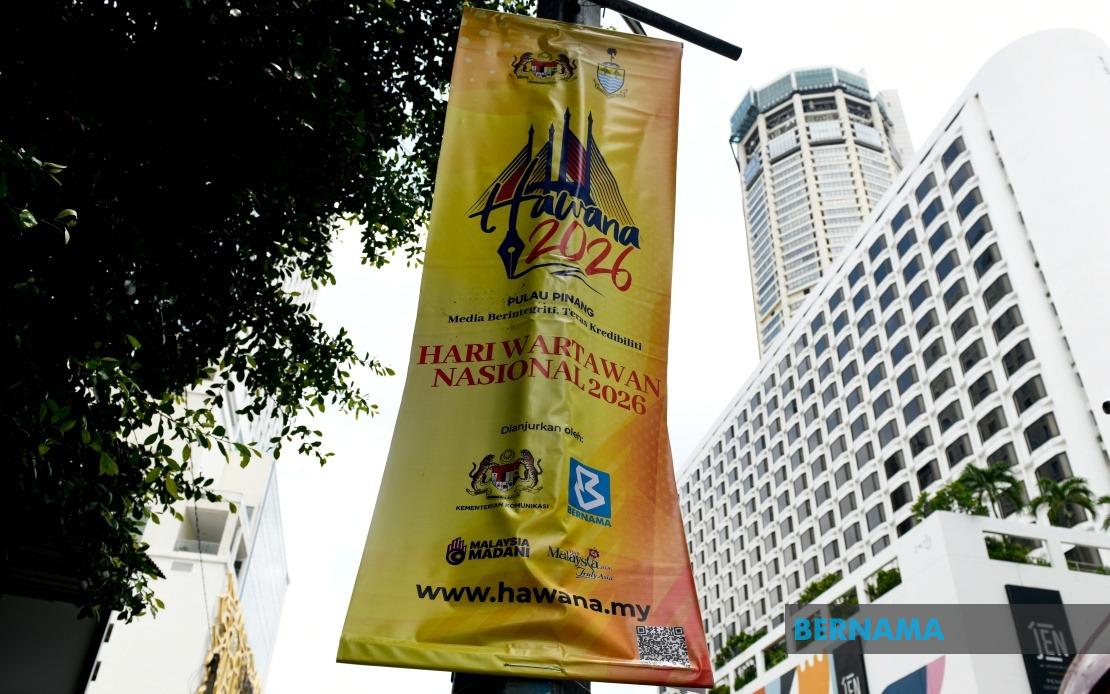
Communications Minister Datuk Fahmi Fadzil has arrived in Penang for a two-day engagement programme focused on the grand finale of National Journalists' Day (HAWANA) 2026, a significant occasion recognising the profession's integral role in Malaysia's progress. The minister's itinerary reflects the government's commitment to acknowledging media practitioners while fostering dialogue on contemporary journalism standards and challenges facing the industry across the region.
Fahmi commenced his visit by attending the Malaysia Media Retreat Programme 2.0 at Seberang Jaya, an initiative designed to bring together editors-in-chief and top management from local and international media organisations. The retreat framework emphasises collaborative problem-solving and knowledge-sharing among senior media figures, creating space for strategic discussions on industry direction. This gathering represents an important opportunity for cross-border media leaders to exchange perspectives on regional journalism trends and the evolving media landscape across Southeast Asia, where digital transformation and audience fragmentation present ongoing challenges.
Following the afternoon programme, Fahmi attended a state government dinner hosted by Penang Yang Dipertua Negeri Tun Ramli Ngah Talib, underscoring the ceremonial and symbolic importance placed on media recognition at the highest political levels. Such engagements demonstrate that media engagement has transcended routine institutional interaction to become a priority matter for state administration, reflecting broader acknowledgment of journalism's democratic function.
The minister joined the RIUH Pi HAWANA Carnival at PICCA Convention Centre @ Butterworth Arena, a three-day festival combining creative industries, entrepreneurship and community engagement. Offering free admission, the carnival features over 24 local creative product brands alongside 20 food and beverage vendors, providing a platform where media practitioners mingle with creatives and business owners. This approach extends HAWANA beyond traditional journalism circles into broader cultural and economic spheres, positioning media professionals within Malaysia's creative economy narrative rather than isolating them as a distinct professional class.
The carnival programme includes diverse artistic workshops spanning cyanotype printmaking, albumen printing and stone-carving, alongside 16 stage performances featuring established and emerging local artistes including Sakura Band, Kaka Azraff, Budak Nakal Hujung Simpang and Chelsea Ng. This fusion of traditional craftsmanship with contemporary performance demonstrates HAWANA's evolution toward recognising journalism as part of broader cultural production and creative expression, rather than purely institutional activity. For regional observers, this integration reflects Southeast Asian societies' increasing recognition that media integrity intertwines with cultural vitality.
On his second day, Fahmi attended the Jiwa@Sembang Santai Special World Cup Edition programme at Seberang Jaya Public Market Food Court, a casual dialogue session held in a public commercial space. This venue choice deliberately breaks from formal government settings, suggesting efforts to connect media dialogue with everyday community spaces. Such accessibility-focused programming indicates ministerial recognition that media discussions need embedding within public discourse rather than remaining confined to professional conferences or government buildings.
The minister subsequently participated in a dedicated Media Dialogue with the Communications Minister held in Butterworth, providing structured opportunity for direct engagement between senior government communications leadership and journalism practitioners. These conversations typically address regulatory frameworks, access to government information, and industry concerns regarding operational freedom and resource constraints facing media organisations across Malaysia and neighbouring countries.
The centrepiece of Fahmi's visit was the HAWANA 2026 Grand Finale at PICCA Convention Centre @ Butterworth Arena, officiated by Prime Minister Datuk Seri Anwar Ibrahim. Themed "Media Integrity Strengthens Credibility," the event convened approximately 1,000 media practitioners domestically and internationally to examine contemporary journalism's trajectory. This theming directly addresses global challenges undermining public trust in news institutions—misinformation, sensationalism, and declining verification standards—making it particularly relevant for Southeast Asian media systems navigating digital-era pressures.
The grand finale's focus on media integrity carries specific significance for Malaysia and the broader region. Southeast Asian democracies increasingly confront challenges distinguishing legitimate journalism from propaganda and misinformation, particularly regarding election coverage, government accountability reporting, and sensitive religious or communal issues. By elevating integrity as HAWANA's central theme, Malaysian policymakers signal commitment to profession-wide standards that transcend individual outlets' commercial or political interests, potentially establishing frameworks other regional governments might emulate.
ORGANISED by the Ministry of Communications with the Malaysian National News Agency (Bernama) as implementing agency, HAWANA functions as Malaysia's premier recognition platform honouring media professionals' contributions, dedication and technical proficiency. The event structure—combining celebration, dialogue and skill-development—reflects sophisticated understanding that profession recognition requires multifaceted engagement spanning ceremonial acknowledgment, peer learning, and community connection. For Southeast Asian readers, HAWANA demonstrates how national governments can positively engage media sectors without controlling editorial direction, establishing collaborative relationships acknowledging journalism's democratic essentiality.
The timing and scale of HAWANA 2026 suggest Malaysian media leadership's confidence that strengthened industry-government relations serve mutual interests. Media practitioners gain formal recognition, access to policymakers, and platforms for addressing professional concerns, while government benefits from improved press relations and opportunity to articulate communications priorities directly to journalism professionals. This balanced engagement model contrasts sharply with authoritarian approaches that marginalise media input in policy discussions, positioning Malaysia's media environment as relatively progressive within regional context.
Penang's selection as the grand finale venue reflects the state's significance within Malaysia's media and creative industries landscape. As an established commercial and cultural hub, Penang hosts numerous regional media operations and creative enterprises, making it appropriate venue for national-level journalism celebrations. The carnival integration further positions Penang as incubator for creative economy initiatives, linking journalism recognition to broader cultural development and entrepreneurial ecosystems the state nurtures.

