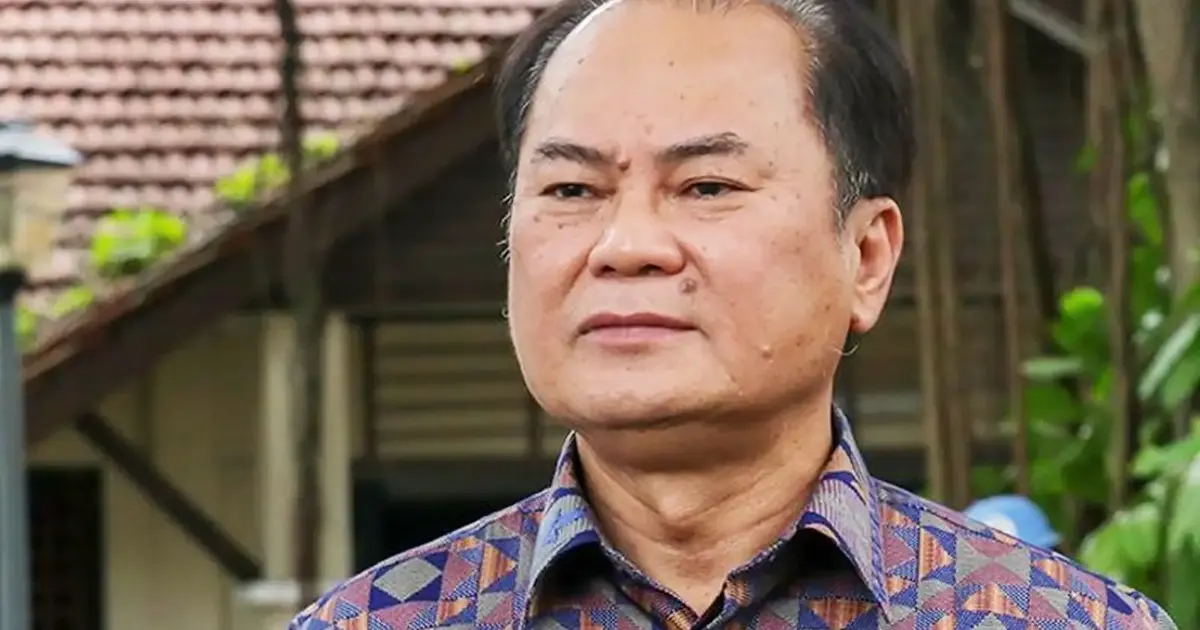
The fragile unity between Barisan Nasional and Perikatan Nasional appears destined for breakdown, according to political analyst and former DAP leader Liu, who contends that both Umno and PAS possess sufficient electoral confidence to pursue a confrontational stance rather than continue their current partnership. His assessment reflects growing tensions within Malaysia's ruling coalition as the sixteenth general election draws closer, presenting a vastly different political landscape from the structured two-bloc competition that has defined recent electoral contests.
Liu's prognosis hinges on a fundamental incompatibility in the ambitions of the two Malay-Muslim dominant parties. Umno, as the traditional custodian of Malay-Muslim interests and the oldest party in Barisan Nasional, has long wielded the largest parliamentary contingent among its coalition partners. PAS, meanwhile, has undergone significant transformation since its alliance with Perikatan Nasional, capturing 49 parliamentary seats in the 2022 general election and substantially increasing its influence in Peninsular Malaysia following strong showings in several state elections. This recalibration of power dynamics has created a competitive rather than complementary relationship between the two parties.
The electoral mathematics underlying this rivalry are particularly instructive for understanding Malaysian politics. Both Umno and PAS draw substantially from the same demographic pools: rural and semi-urban Malay voters, small-town business owners, and conservative Muslim constituencies. Rather than operating as complementary forces targeting distinct voter segments, they find themselves increasingly pursuing identical voter bases across the same constituencies. Barisan Nasional's traditional strategy of allocating seats to coalition partners to avoid internal competition becomes untenable when two parties within the broader alliance system compete directly for the same supporters.
Umno's perspective on this matter is shaped by its historical dominance and institutional infrastructure. The party commands extensive grassroots networks, considerable financial resources, and the machinery of federal government. Leadership within Umno increasingly questions whether continued partnership with PAS serves its interests, particularly given that the party could potentially recapture seats in states and constituencies where PAS has gained ground since 2020. The party's internal dynamics suggest growing confidence among certain factions that electoral success is achievable through independent competition rather than as a junior coalition partner.
PAS, conversely, views its 2022 electoral performance as validation of its independent political viability. The party's transformation from a relatively marginal opposition force to a significant parliamentary player has fundamentally altered its negotiating position within any coalition arrangement. Senior PAS figures have signalled ambitions to expand further, suggesting that the party sees the next general election as an opportunity for consolidation and growth rather than a period of constraint within a coalition framework.
The implications for Malaysian politics are profound and destabilising. A fracture within the governing coalition would reshape the electoral contest fundamentally. Rather than a contest between Barisan Nasional and opposition forces, the fourteenth and fifteenth parliaments have accustomed voters and analysts to a three-cornered competition involving Barisan Nasional, Perikatan Nasional, and opposition coalitions. A split between Umno and PAS would eliminate the notion of any coherent centre-right Malay-Muslim bloc, creating what observers increasingly refer to as a completely open electoral environment.
The previous general election demonstrated how coalition fragmentation can produce volatile and unpredictable outcomes. When the traditional two-party system fractured in 2022, Malaysian politics lurched into institutional instability that persisted for months following the election, generating hung parliaments, shifting alliances, and ultimately an unusual governing arrangement. A similar or more severe rupture could occur if the Barisan Nasional-Perikatan Nasional partnership disintegrates ahead of the next election, leaving individual parties and coalition blocs to negotiate seat allocations and government formation after voting concludes.
Regional implications should not be overlooked in this analysis. Southeast Asian observers and analysts watch Malaysian political developments closely, as stability in the region's third-largest economy influences broader regional dynamics. Extended periods of coalition negotiations, governmental uncertainty, or even repeated elections represent risks to investor confidence and economic policy continuity. Additionally, the personalised nature of Malaysian coalition politics means that individual leadership transitions within Umno or PAS could accelerate or decelerate the timeline toward any formal alliance rupture.
The structural conditions favouring coalition dissolution appear increasingly entrenched. Neither party faces existential threats that would compel continued cooperation, both command sufficient parliamentary representation to compete independently, and both claim constituent bases that overlap substantially. Historical precedent suggests that such conditions typically precede coalition breakdowns, particularly when one or more partners perceive opportunities for electoral gains through independent competition.
Liu's prediction, while not universally accepted among Malaysian political observers, reflects an assessment grounded in the material interests and structural incentives facing both Umno and PAS. Whether coalition breakdown occurs before or after the next general election remains uncertain, but the trajectory appears established. The Malaysian political landscape entering the final years before the sixteenth general election suggests increasing likelihood of a more fragmented and unpredictable contest than either the Barisan Nasional-dominated system of previous decades or the more recent three-bloc arrangement.

