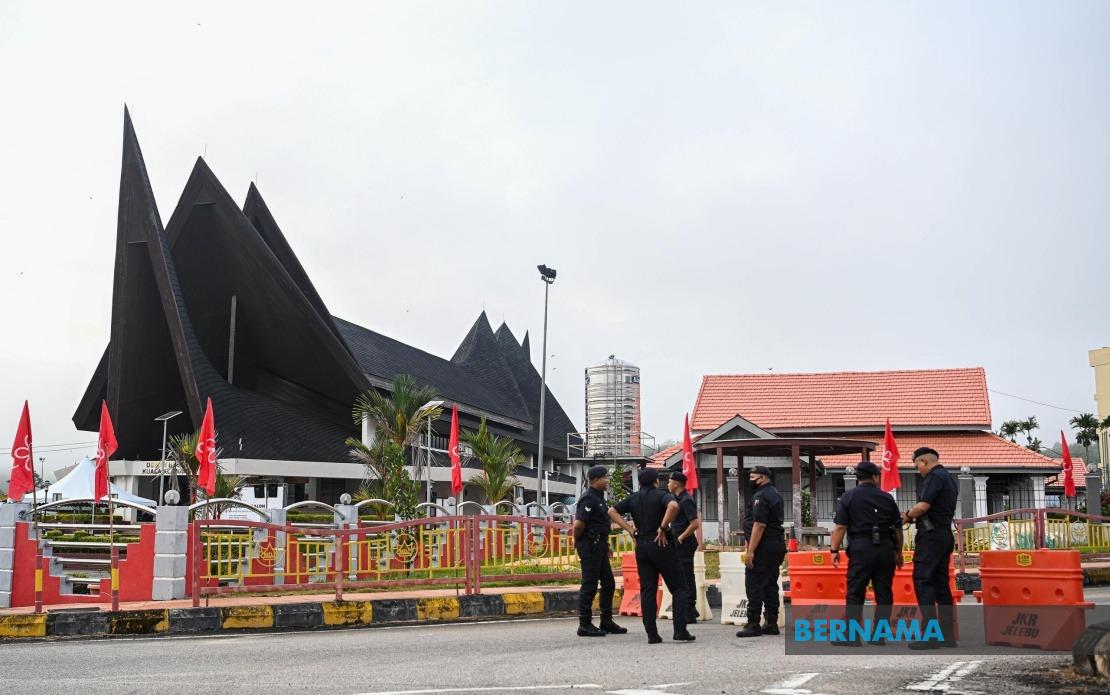
The sixteenth Negeri Sembilan State Election began its formal candidate registration phase on July 18 as Election Commission officials opened nomination centres across the state under clear skies and ideal meteorological conditions. The one-hour nomination window, scheduled between 9 am and 10 am, provided the necessary opportunity for political parties to formally lodge their candidacies for the 36-seat assembly contest. Election officials conducted final preparations at all eight nomination venues before dawn broke, with administrative teams positioned to process registrations swiftly and accurately. The favourable weather eliminated potential disruptions that sometimes plague nomination exercises, allowing both party representatives and media observers unimpeded access to the centres.
The broader electoral framework for this state contest took shape following the dissolution of the Negeri Sembilan State Assembly on June 5. The Election Commission subsequently announced July 28 as the early voting date, providing opportunity for designated constituencies including military and police personnel to cast ballots before the general polling day. The commission set August 1 as the date when the 889,490 eligible voters—comprising 867,151 ordinary citizens, 16,884 military personnel with spouses, and 5,455 police officers—will determine the state government's composition for the coming term.
Pakatan Harapan demonstrated maximum ambition by announcing its intention to contest every single seat in the assembly, signalling confidence in its electoral prospects and previous 2023 performance. The coalition's comprehensive strategy contrasts with competing blocs taking more targeted approaches to seat distribution. Barisan Nasional determined to contest 25 seats, representing a significant but calibrated commitment reflecting strategic calculations about viability and resource allocation. Perikatan Nasional fielded candidates in 11 seats, maintaining a visible presence while acknowledging electoral realities across different constituencies. Smaller parties including Parti Orang Asli Malaysia, Parti Sosialis Malaysia, and Parti Barisan Jemaah Islamiah Se-Malaysia each registered for single-seat contests, underscoring the electoral landscape's ideological diversity.
The participation of Parti Pribumi Bersatu Malaysia merits particular attention as the party opted for an independent contest rather than formal coalition alignment, announcing its intention to contest 24 state seats. Bersatu's decision positioned it as a significant electoral force capable of influencing outcomes across multiple constituencies. Notably, the party accommodated Parti Bersepakat Hak Rakyat Malaysia through an arrangement permitting Urimai candidates to contest two seats while utilising the Bersatu political identity and electoral machinery. This structural arrangement demonstrates how contemporary Malaysian electoral competition increasingly involves tactical partnerships and logo-sharing arrangements that blur traditional coalition boundaries while maintaining technical independence.
The 2023 state election results provided crucial context for assessing competitive dynamics in this election cycle. Pakatan Harapan emerged as the dominant force, securing 17 of 36 seats and establishing the foundation for its current governing position. Barisan Nasional's 14-seat tally positioned it as credible opposition, though substantially behind the leading coalition. Perikatan Nasional's five seats demonstrated its developing capacity to compete for state-level representation, though with limited impact on overall government formation. This previous outcome established baseline expectations against which observers assess shifting voter sentiment and tactical repositioning by competing parties.
The nomination process drew substantial attention from political supporters arriving at centres to demonstrate backing for their respective candidates. Media practitioners assembled in significant numbers beginning from 7 am, several hours before the formal commencement, reflecting the election's regional significance and competitive intensity. The gathering of journalists, photographers, and broadcast crews at nomination compound perimeters indicated substantial newsroom deployment dedicated to covering the developing electoral story. Their early arrival permitted comprehensive documentation of candidate presentations, party official statements, and emerging electoral narratives during the opening moments of formal campaigning.
From a Malaysian electoral perspective, the Negeri Sembilan contest assumes particular importance given its status as a swing state with genuine competitive balance among major coalitions. Unlike several Malaysian states where single dominant parties have established substantial electoral supremacy, Negeri Sembilan demonstrates fluid voter behaviour and responsive electoral outcomes reflecting broader national sentiment. The state's composition of relatively educated urban voters in Seremban and surrounding areas alongside more traditional rural constituencies creates a genuinely contested political terrain. Previous shifts between governing coalitions underscore that no force has consolidated hegemonic control, making this election a meaningful test of voter sentiment regarding both state and national political direction.
The campaign period ahead will prove critical in determining whether Pakatan Harapan consolidates its position as the dominant state force or whether Barisan Nasional, Bersatu, or Perikatan Nasional gain traction through focused messaging and ground mobilisation. Bersatu's independent strategy particularly warrants monitoring, as its substantial seat contestation creates potential for significant vote fragmentation, potentially advantaging whichever coalition successfully consolidates its support base. The timing of this state election during a period of substantial national political realignment suggests that state-level outcomes may reflect and reinforce patterns emerging at the federal level.
For Malaysian voters and regional observers, the Negeri Sembilan election represents more than a routine state contest. The seven-week campaign period will test whether recent constitutional amendments, ongoing judicial proceedings involving prominent political figures, and evolving coalitional arrangements influence voter decision-making. The state's voter composition and geographic distribution make it representative of broader Malaysian electoral dynamics, potentially foreshadowing trajectories that may eventually manifest at the federal level. As nomination processes completed successfully and candidates became formally registered, the practical groundwork for intensive campaigning commenced, setting conditions for determining which coalition will govern Negeri Sembilan through the coming term.

