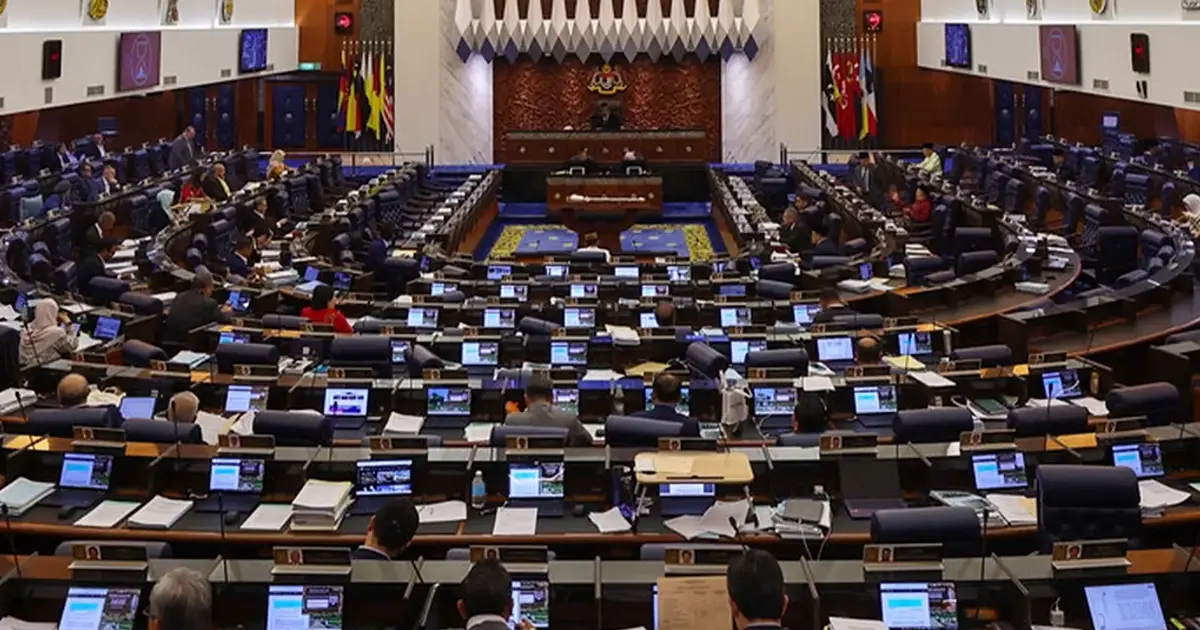
Malaysia's civil society organisations have made a unified push for political stability, urging the government to allow Parliament to complete its full constitutional term while simultaneously pursuing a comprehensive cross-party reform framework. The advocacy reflects growing concern within the NGO sector about the country's political trajectory and the window of opportunity for implementing institutional improvements before GE16.
The call represents a notable intervention by non-governmental actors in Malaysia's political discourse at a critical juncture. Rather than taking sides in partisan disputes, these organisations are attempting to forge consensus around the principle of constitutional completion and collaborative governance. This approach acknowledges the reality that meaningful reforms often require buy-in across political divides, particularly when they involve constitutional amendments or changes to fundamental institutions that typically demand supermajority support.
Central to the NGO position is a proposal that the prime minister convene a high-level summit specifically designed to bring government and opposition stakeholders to the negotiating table. Such a gathering would serve multiple purposes: demonstrating commitment to consensus-building, identifying areas of genuine agreement on reform priorities, and establishing timelines for implementation. The emphasis on opposition participation is significant, as it recognises that reforms commanding broad political support are more likely to endure beyond individual government cycles.
The timing of this advocacy is not coincidental. Malaysia faces a complex electoral calendar with GE16 representing a potential turning point for national direction. Civil society actors are evidently concerned that political instability or premature elections could derail reform efforts that require sustained institutional focus. By advocating for term completion now, NGOs are essentially arguing for a stability-first approach that preserves space for deliberate policymaking rather than reactive electoral calculations.
Regional context amplifies the stakes of these recommendations. Southeast Asian democracies have increasingly faced challenges related to institutional credibility and public trust in governance. Countries that have demonstrated capacity for bipartisan reform efforts on issues like anti-corruption, judicial independence, or electoral integrity have generally enhanced their democratic legitimacy. Malaysia's ability to model such cooperation could have demonstration effects across the region, particularly among younger democracies wrestling with similar institutional questions.
The reform agenda implicit in these calls likely encompasses several contested areas of Malaysian governance. Anti-corruption mechanisms, electoral system transparency, parliamentary independence, and the relationship between executive and legislative branches are perennial reform priorities for Malaysian civil society. Some NGOs have also emphasised the need for constitutional modernisation to address digital-age governance challenges that existing frameworks may inadequately contemplate.
Parliamentary term completion carries particular symbolic weight in Malaysian politics. Full terms signal respect for constitutional processes and public mandates, while early dissolutions often trigger accusations of strategic manoeuvring for electoral advantage. By emphasising this principle, NGOs are making a meta-argument about the kind of political culture Malaysia should cultivate: one where constitutional norms matter more than short-term tactical considerations.
The opposition's role in any such summit would be crucial. Government parties alone cannot implement reforms requiring constitutional changes, making cross-party negotiation not merely desirable but functionally necessary for substantive institutional revision. Opposition engagement also provides legitimacy that reforms cannot otherwise obtain, particularly among constituencies sceptical of government initiatives. History suggests that opposition participation in reform design increases the probability of implementation durability regardless of which coalition eventually controls Parliament.
Implementation timelines present a distinct challenge that the proposed reform pact would need to address. Some reforms can be enacted through legislation or executive action relatively quickly, while constitutional amendments require extended parliamentary procedures and public consultation. A credible reform agenda would need to sequence initiatives strategically, targeting those amenable to faster implementation while building longer-term consensus on more profound institutional changes.
For Malaysian businesses and investors, political stability and predictable governance matter significantly. The NGO advocacy implicitly addresses this concern by emphasising constitutional continuity and rational institutional development over electoral uncertainty. Companies operating across Southeast Asia increasingly factor governance quality into location decisions, making Malaysia's ability to demonstrate mature political processes a competitive advantage.
The civic space within which Malaysian NGOs can make such calls has fluctuated considerably over recent years. That organised civil society is now publicly advocating for specific governmental approaches reflects a degree of political opening, though NGO actors remain acutely conscious of boundaries and power dynamics. Their emphasis on consensus and constitutional propriety rather than challenging fundamental government authority suggests strategic navigation of these constraints.
International observers following Malaysian governance developments are likely to view this NGO intervention positively as evidence of mature civil society engagement. However, real-world traction for these recommendations ultimately depends on political actors perceiving tangible benefits from the proposed approach. Whether the prime minister will act on the summit proposal, and whether opposition parties will engage substantively if convened, remains uncertain but represents a crucial test of Malaysian political receptiveness to cross-party cooperation on governance improvement.

