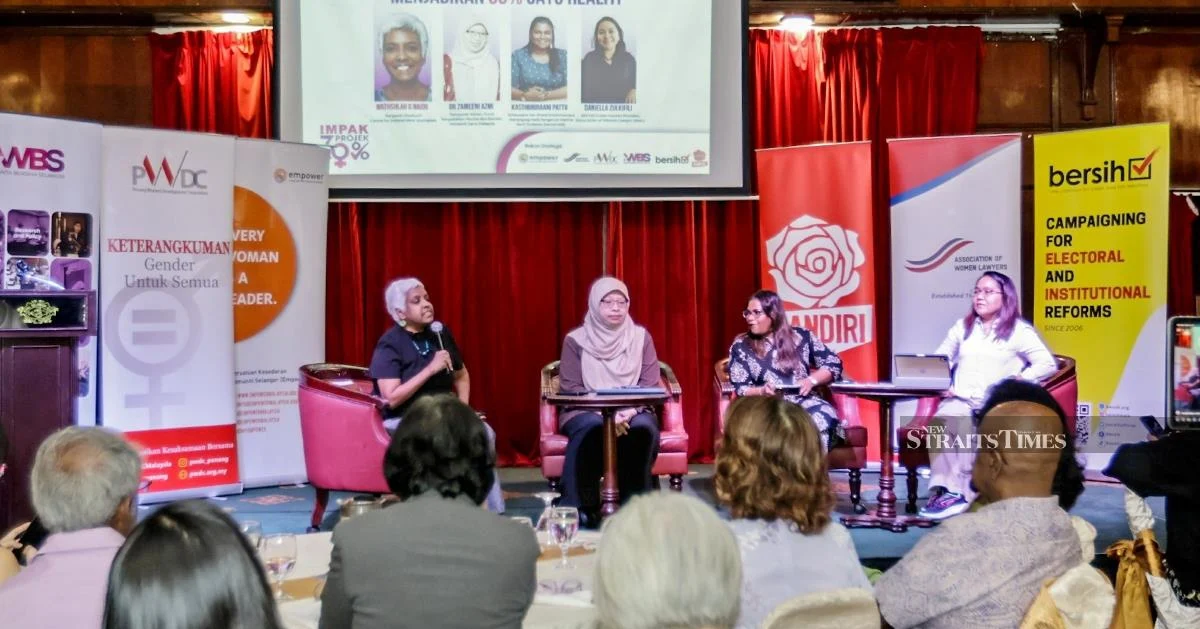
A broad coalition of civil society organisations submitted formal proposals to the Malaysian government today, pushing for legislative action to ensure political parties nominate at least 30 per cent women candidates for the next general election. The memorandum and accompanying draft legislation represent a concerted effort by advocacy groups to embed gender parity requirements into the nation's electoral framework before polling day, marking a significant intervention in the country's ongoing debate about women's political representation.
The submission reflects growing momentum among Malaysian civil society to address the persistent underrepresentation of women in Parliament and state assemblies. Despite women constituting roughly half the electorate, their presence in the lower house has remained below 20 per cent for decades, a gap that civil society argues has skewed policy priorities and overlooked crucial perspectives in lawmaking. By proposing the 30 per cent threshold ahead of the next general election, the coalition hopes to create a meaningful window for political parties to adjust their candidate selection processes and recruitment strategies.
The draft law represents more than symbolic advocacy; it seeks to establish concrete, enforceable mechanisms that would make gender quotas mandatory rather than voluntary. This distinction matters significantly in the Malaysian context, where political parties have historically resisted binding requirements while sometimes acknowledging gender diversity as an aspirational goal. The legislation would need parliamentary approval to take effect, placing the onus on legislators themselves to vote on measures that could reshape candidate selection protocols across all contesting parties.
The 30 per cent figure aligns with international benchmarks used by other democracies attempting to accelerate women's political advancement. Countries including Bangladesh, the Philippines, and Indonesia have implemented various forms of candidate quotas, with outcomes that civil society groups cite as evidence that legislative frameworks can produce measurable change within electoral cycles. Malaysia's civil society has studied these comparative models while developing proposals tailored to the country's specific constitutional structure and political environment.
Political parties across Malaysia's ideological spectrum have approached gender quotas with varying degrees of enthusiasm. Some have introduced internal guidelines encouraging greater female representation, while others maintain that candidate selection should remain merit-based without prescribed gender ratios. The submission of formal draft legislation effectively challenges parties to move beyond non-binding commitments, forcing a public debate about whether merit and gender representation are genuinely incompatible principles or whether both can coexist within candidate selection frameworks.
The timing of this submission carries strategic importance, arriving during a period when electoral boundaries and campaign preparations are moving into motion. Civil society groups recognize that building consensus around the proposal now could influence party decisions about candidate lists before nominations close. The memorandum likely includes substantive arguments about the political feasibility and implementation mechanisms that could make the transition to 30 per cent representation logistically manageable for parties across various party structures and sizes.
For Malaysian voters, particularly women's rights advocates and gender equality campaigners, the submission signals that institutional change is being actively pursued through formal legislative channels rather than remaining confined to civil society advocacy. This represents an important shift from awareness-raising to concrete policy proposals that would require parliamentary deliberation and potentially cabinet consideration. The outcome of this submission will significantly influence whether women's representation becomes a central issue in pre-election discourse or remains peripheral to party platforms.
The broader implications extend beyond individual legislative success or failure. The submission demonstrates capacity within Malaysian civil society to mobilize across organizational lines around specific policy objectives, translating diffuse concern about women's political marginalization into codified legal proposals. This model of engagement—moving from advocacy to legislative drafting—potentially establishes a template for how organised civil society can participate in shaping electoral law and political processes more generally.
Regionally, Malaysia's trajectory on this issue will be observed by civil society groups in neighbouring countries pursuing similar gender representation goals. Southeast Asia displays considerable variation in women's parliamentary representation, with some nations ahead of Malaysia in achieving higher percentages through quota systems. The response to this memorandum and draft legislation could position Malaysia either as a regional leader adopting progressive electoral reforms or as lagging behind regional peers in institutionalizing gender parity commitments.
The submission also reflects evolving conversations within Malaysian feminist movements about whether women's political advancement should be pursued primarily through political party internal reform, through legislative mandates, or through a combination of approaches. Different advocacy organisations within the coalition likely hold varying views on optimal strategies, yet their ability to unite around the 30 per cent proposal suggests a pragmatic consensus that legislative intervention represents a viable pathway deserving serious pursuit alongside other reform efforts.
Government response to the memorandum remains pending, though the formal submission ensures the proposal enters official policy channels where it must at minimum receive acknowledgment and formal consideration. Whether government entities will endorse the proposal, modify it before potentially introducing it to Parliament, or resist it will substantially shape the proposal's prospects. The submission has effectively placed the matter squarely before decision-makers who previously might have deprioritized women's candidate representation relative to other electoral concerns.