Malaysia's government has achieved tangible financial gains from its paperless initiative in the civil service, with cost savings of RM1.99 million and the elimination of 116,405 reams of paper since the programme's rollout began in February. The milestone demonstrates that the modernisation of government administration—a critical component of the country's broader digitalisation strategy—is yielding measurable results beyond mere technological advancement. Chief Secretary to the Government Tan Sri Shamsul Azri Abu Bakar revealed the savings during the Digital Economy and Fourth Industrial Revolution Council (MED4IR) meeting held under Prime Minister Datuk Seri Anwar Ibrahim's chairmanship, signalling that efficiency gains are being tracked and reported at the highest levels of government decision-making.
The paperless initiative represents a deliberate shift in how the Malaysian civil service conducts routine administrative work. Beginning on February 9, government departments commenced a transition away from paper-based processes for straightforward transactions, a move designed to accelerate the broader digitalisation agenda within the public sector. The programme's success in reducing paper consumption by over 116,000 reams speaks to the scale of implementation across Malaysia's extensive bureaucracy, which spans federal, state, and local government bodies. For a nation with millions of annual administrative interactions, the cumulative environmental and financial benefit of such a reduction cannot be overstated, particularly as Malaysia seeks to balance economic growth with sustainability objectives.
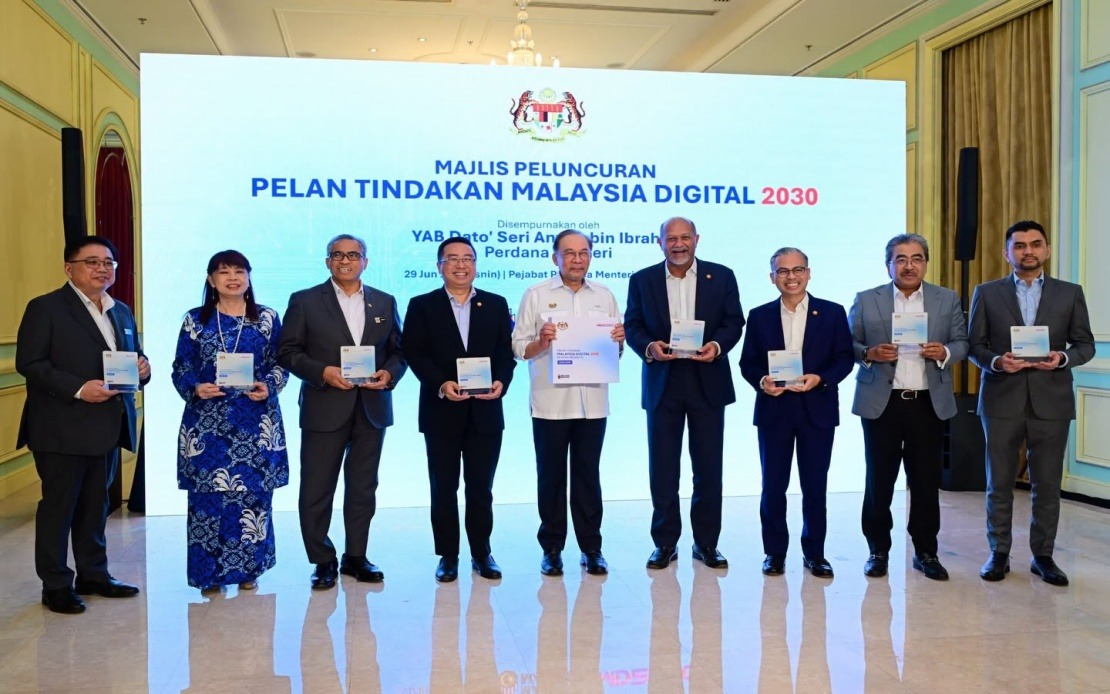
Beyond the immediate cost savings, the paperless initiative forms part of a comprehensive digital transformation framework outlined in Malaysia Digital 2030, which was officially launched on the day of the MED4IR meeting. This ambitious policy document sets out the government's vision for positioning Malaysia as an Artificial Intelligence nation within the next six years. The strategic ambition extends far beyond internal government efficiency; it reflects recognition that digital capability and AI readiness are prerequisites for Malaysia to remain competitive in regional and global markets. The paperless initiative, while administratively modest in scope, serves as a practical demonstration that government institutions are capable of adopting digital-first approaches and deriving concrete benefits from doing so.
The MED4IR council's focus during the reported meeting encompassed several interconnected digital priorities. Alongside the paperless initiative, officials discussed the MyDigital ID system—a cornerstone of the government's digital identity infrastructure—and the MyGov platform, which aims to consolidate government services into a single digital access point for citizens. These initiatives represent attempts to simplify citizen-government interaction and reduce friction in service delivery. The expansion of digital access across higher education institutions also featured prominently, recognising that universities serve as incubators for digital talent and innovation. By ensuring robust digital infrastructure and capability within tertiary education, the government acknowledges that building an AI-capable workforce requires investment upstream in the education system.
A particularly significant dimension of Malaysia's digital strategy is the establishment of the MyMAHIR National AI Council for Industry, which the MED4IR meeting endorsed for further development. This body represents an effort to create more systematic and comprehensive pathways for developing digital and artificial intelligence talent across Malaysian industry. The recognition that Malaysia requires expanded pools of AI-skilled workers reflects sobering reality: without deliberate cultivation of domestic expertise, the country risks becoming dependent on foreign talent and losing the economic advantages that flow from controlling advanced technological capabilities. The council's proposed role in talent development across sectors suggests a government intent on building broad-based AI literacy rather than concentrating expertise in narrow technology clusters.
The timing of these announcements carries significance beyond the immediate policy sphere. Regional competition for digital and AI leadership has intensified across Southeast Asia, with neighbouring countries investing heavily in comparable initiatives. Singapore's transformation into a global AI hub, Vietnam's aggressive digital strategy, and Thailand's digital economy initiatives all represent competitive pressures that Malaysia must respond to effectively. By publicising the paperless initiative's concrete savings alongside announcements of broader digital ambitions, Malaysian officials signal that the government is serious about digital transition and can demonstrate practical returns on such investments. This messaging matters for both domestic audiences, who may harbour scepticism about government digitalisation efforts, and international observers assessing Malaysia's readiness as a technology investment destination.
The success of the paperless initiative also carries organisational implications for the civil service itself. Successful implementation across government departments suggests that sufficient digital infrastructure, training, and change management exist to support broader digital transitions. This capability will prove essential as more sophisticated digital programmes—such as AI-driven service delivery and data analytics applications—are rolled out across government. The paperless initiative essentially functions as a proving ground for demonstrating that civil servants can adapt to digital workflows and that government systems can be transformed at scale. These practical demonstrations reduce the perceived risk for subsequent, more ambitious digitalisation projects.
The RM1.99 million saving, while substantial, represents only a fraction of the potential longer-term economic gains that digital transformation could unlock for Malaysia. Reduced administrative costs, faster service delivery, lower error rates, and improved citizen satisfaction would compound the value as digital systems become more sophisticated. The paperless initiative's achievement therefore merits attention not primarily for the absolute quantum of savings but for what it reveals about the government's capacity to execute digital transformation and extract measurable value. For Malaysian businesses and investors, such demonstrations of government capability in managing digital transition build confidence that Malaysia can reliably support digital economy development.
Looking forward, the integration of paperless administration, MyDigital ID, MyGov, and the MyMAHIR talent council suggests a joined-up approach to digital development rather than isolated pilot projects. This systemic thinking distinguishes Malaysia's strategy from piecemeal digitalisation efforts that sometimes characterise government technology adoption. By connecting internal government efficiency (paperless systems), citizen-facing services (MyGov and MyDigital ID), and workforce development (MyMAHIR), Malaysian officials appear to recognise that lasting digital transformation requires alignment across multiple organisational and societal dimensions. The paperless initiative's RM1.99 million saving is thus a marker of progress within a much larger strategic repositioning.

