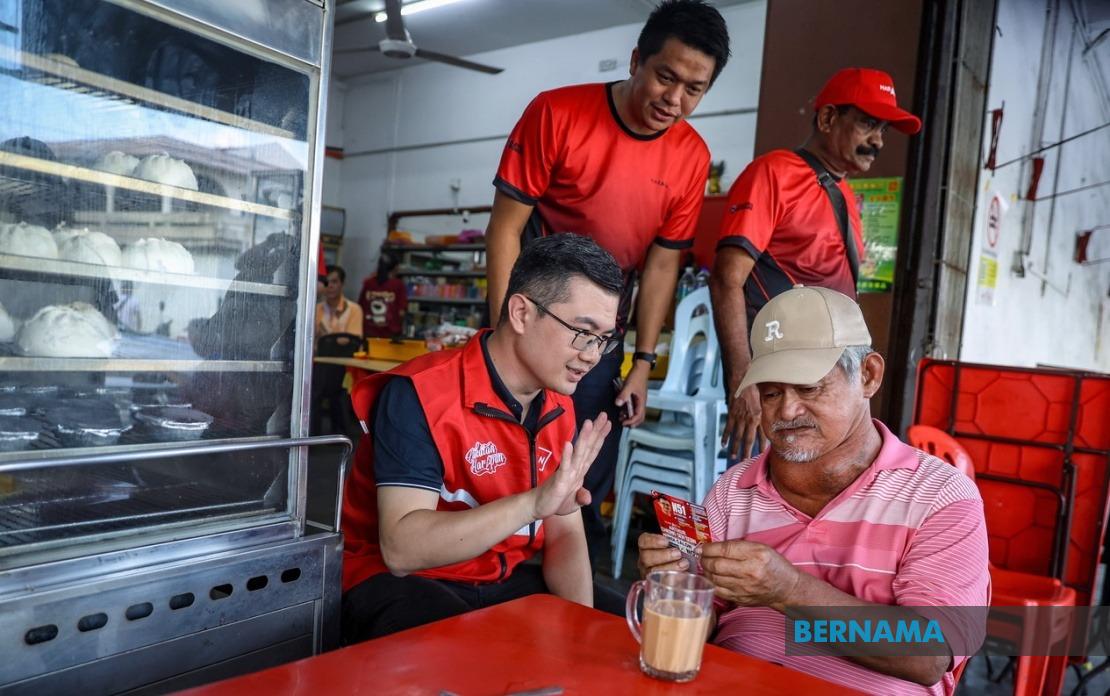
Arthur Chiong Sen Sern, the serving Bukit Batu assemblyman representing Pakatan Harapan, is mounting a bid to retain his state seat with an expanded majority in the 16th Johor State Election scheduled for July 11. The 36-year-old politician's campaign strategy centres on demonstrating tangible results from his work across the constituency since first taking office just over two years ago, a period he describes as formative in shaping his approach to public service.
Chiong's previous victory was far from commanding—he secured the seat with a margin of merely 137 votes from a field of four candidates in 2022, collecting 9,439 votes. That narrow outcome has become a wellspring of motivation, he says, driving him to expand his presence at the grassroots level and deepen connections with residents regardless of their ethnic background, religion, or political leanings. The assemblyman's focus has been on concrete problem-solving rather than rhetoric, addressing persistent issues such as deteriorating infrastructure and seasonal flooding that plague certain neighbourhoods within his constituency.
The Bukit Batu seat encompasses 49,963 registered voters spread across a diverse mix of urban and rural areas. This composition necessitates a multifaceted approach to governance, something Chiong appears to recognise. His efforts have included regular visits to Felda settlements, where many residents depend on agricultural income and often feel geographically separated from state-level policy attention. Beyond simple politicking, he has channelled resources to community organisations, including RM20,000 directed towards installing lights at a futsal court, an initiative that continues to benefit young people and has created a visible legacy of his tenure.
Flood management has emerged as a signature issue for Chiong's administration. Traditional flash-flood hotspots such as Kampung Rahmat and Kampung Seri Paya have reportedly shown measurable improvement following coordinated efforts between his office and the Department of Irrigation and Drainage. Rather than delegating responses to subordinates, Chiong says he personally mobilises during flooding incidents, ensuring his visibility and responsiveness when residents face genuine hardship. This hands-on approach, while potentially costly in terms of personal time, has cultivated familiarity and goodwill among affected communities.
Chiong has acknowledged the backing of Prime Minister Datuk Seri Anwar Ibrahim, who chairs Pakatan Harapan, in his nomination to defend the seat. This endorsement carries strategic weight within the party ecosystem and signals confidence in his ability to consolidate gains in what remains a marginal constituency. The PH leadership's decision to field him again suggests confidence that his ground-level work has genuinely shifted perceptions, moving beyond the paper-thin victory of 2022.
The electoral contest in Bukit Batu has grown more complex, with four opponents now contending for the seat. The Barisan Nasional candidate is R. Kumaran, who holds the position of PKR Kulai chief—a detail underscoring factional competition within the broader political landscape. M. Premanand represents Ikatan Demokratik Malaysia (MUDA), reflecting the growing salience of younger-oriented political movements. G. Tamili carries the colours of Bersama, while independent candidate Kamaruzaman Ali rounds out the field. This quartet of alternatives could fragment opposition votes, potentially benefiting the incumbent if Chiong successfully mobilises his base.
Chiong's narrative hinges on demonstrating that his investment in the constituency has translated into visible improvement. His messaging does not rely on grand promises but rather on documented actions: development projects completed, relationships fostered with state and federal agencies, and responsive engagement whenever crises emerge. For a politician who scraped through in 2022, this grounded approach reflects pragmatism about what persuades swing voters in a marginal seat.
The Johor electorate more broadly has shown itself responsive to competence and attentiveness rather than purely ideological positioning. Chiong's emphasis on infrastructure, flood management, and youth facilities taps into concerns that resonate across demographic lines. His repeated references to serving constituents irrespective of political affiliation suggests an understanding that narrow victories demand coalition-building beyond strict party boundaries. In a state where racial and religious sensitivities remain salient, his inclusive framing of constituent service attempts to foreclose accusations of partisan bias.
Early voting is set for July 7, providing a window for those unable to vote on polling day. The compressed election timeline means campaigns must move quickly to consolidate support. For Chiong, the challenge is converting two years of accumulated goodwill and documented projects into sufficient additional votes to comfortably exceed his 2022 tally. The four-way contest offers both opportunity and risk: while fragmented opposition could help him, any erosion of his own voter base could prove catastrophic given his previous razor-thin margin.
Chiong's re-election campaign ultimately rests on a simple proposition: consistent presence, responsive governance, and demonstrated commitment to addressing community needs. In an era when voters increasingly judge representatives on tangible delivery rather than party affiliation alone, this approach carries genuine persuasive force. Whether his efforts have truly shifted sentiment sufficiently to produce a more comfortable victory will become apparent when Johor voters cast their ballots on July 11.

