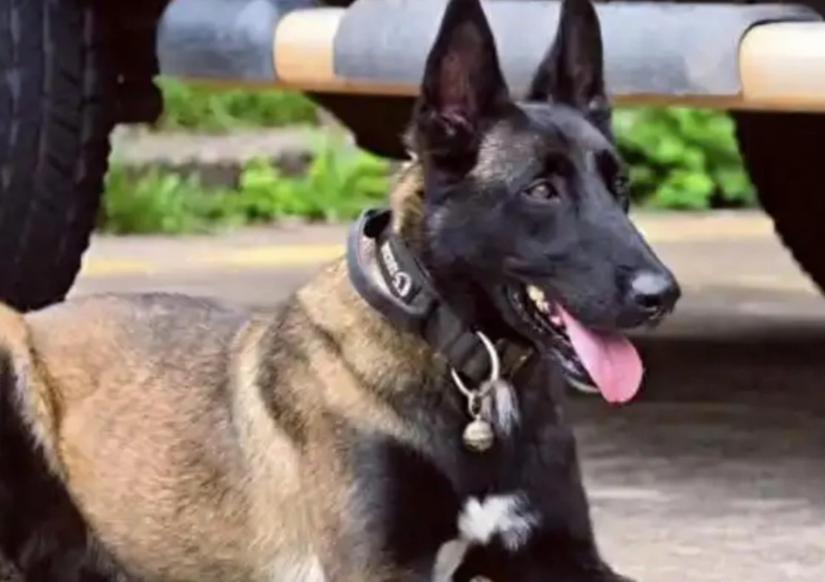
A German shepherd police dog in Yunnan province has become an unlikely symbol of loyalty across mainland China after video of its reunion with an injured handler accumulated over 10 million views on social media platforms. The canine, identified as Bulu, spent approximately six months separated from its partner Awei, a narcotics officer based in Chuxiong, during which the animal reportedly rejected food and water while awaiting his return. The remarkable bond between the handler and his four-year-old trained detection dog has resonated deeply with online audiences and sparked broader discussions about the role and welfare of working animals within China's law enforcement system.
The incident that sparked their separation began in November when Awei and Bulu were deployed to an abandoned building where authorities suspected drug manufacturing and trafficking operations. During the subsequent search, Bulu's acute sense detected suspects attempting to flee the premises, prompting the animal to pursue them with Awei trailing behind. The officer's attention, however, was divided between tracking the dog and navigating the deteriorated structure, causing him to lose his footing in the darkened corridor. He plummeted from the second storey, landing heavily among debris. The fall proved devastating, leaving him unconscious with severe trauma across multiple body systems.
First responders discovered Awei in critical condition, convulsing and expelling blood while drifting between consciousness and unconsciousness. Footage captured at the scene preserved the moment an attending officer addressed him with words of encouragement, telling him "Hold on. We still have battles to fight together." Throughout this crisis, Bulu remained with his handler, displaying signs of distress by circling repeatedly and attempting to nuzzle Awei back to awareness. The dog's instinctive response to his injured partner would prove to be merely the beginning of an extraordinary emotional journey.
Medical evaluation at hospital revealed extensive trauma including multiple fractures to Awei's head and chest region. The severity of his injuries necessitated an induced coma lasting five days to allow his brain and body to stabilize. During this period, Bulu was transferred to a police training facility to remain under professional care, creating an involuntary separation that would extend far beyond initial expectations. The dog's response to this separation began subtly but grew progressively evident to handlers at the base who noted his declining appetite and increasing restlessness.
Throughout the six-month recovery period, Bulu exhibited behaviour patterns suggesting deep psychological attachment to his absent partner. Security footage documented the animal making repeated visits to locations associated with Awei, including the handler dormitory, the main gate where officers would enter and exit the facility, and the training routes where they had worked together. The dog demonstrated what observers described as searching behaviour, apparently seeking any sign of his handler's return. On at least one occasion, Bulu reacted with visible excitement when a police vehicle arrived at the base, only to experience what appeared to be disappointment when informed that Awei was not among those exiting the car.
When Awei finally cleared medical restrictions and received approval to return to active duty, his commanding officers arranged an informal reunion with Bulu at the training facility. The moment proved emotionally charged and immediate, with Bulu barking and racing toward Awei at full sprint. The handler, moved by the animal's obvious recognition and joy, set down his belongings and knelt to embrace his canine partner. The scene was captured on video, and when posted to mainland social media platforms, the footage resonated with millions of viewers who appreciated both the emotional authenticity of the moment and the underlying message about partnership and fidelity.
The video's explosive online popularity generated substantial engagement, accumulating more than 580,000 likes within days of posting. Social media commentary reflected viewers' emotional investment in the story, with one widely shared observation noting that Bulu had not merely been waiting for his handler but waiting for a comrade in arms with whom he had shared dangerous operations. The narrative of the dog's loyalty and refusal of sustenance during separation struck a chord with audiences across generational and regional divides, transforming a local police story into a national talking point about human-animal bonds.
Simultaneously, the wider investigation that had prompted Awei and Bulu's deployment continued under the supervision of other officers. Their colleagues ultimately apprehended 11 suspects connected to the drug manufacturing and trafficking operation, recovered 4.4 kilos of narcotics, and seized over 500,000 yuan (approximately US$75,000) in illicit financial resources. The successful conclusion of the case, achieved during Awei's recovery, underscored the criticality of police dog units within China's drug enforcement apparatus and provided context for understanding why Bulu's commitment to his handler represented more than personal attachment.
The viral story has catalysed increased public awareness of China's police dog programmes and the operational challenges these animals face. According to CCTV News data, mainland China maintains approximately 29,000 active police dogs as of 2024, distributed across various law enforcement agencies and specializing in functions ranging from narcotics detection to search and rescue. These animals typically serve for approximately eight years, yet the intensity of their deployment often results in cumulative physiological damage, particularly to joints and vertebral structures. Understanding these occupational realities has informed public perspective on Bulu's behaviour during separation, with some commentators viewing the dog's food refusal as a stress response to extended isolation from familiar handlers and operational partnerships.
The post-career trajectory for working police dogs varies considerably across jurisdictions and circumstances. Most animals, including those that have worked extensively in drug operations, remain with their original handler or unit for the remainder of their lifespan, effectively retiring to peaceful domestic arrangements. However, some facilities have begun exploring public adoption programmes for suitable animals, allowing these experienced working dogs to transition into civilian family environments. The story of Awei and Bulu has indirectly raised questions within Chinese civil society about the welfare standards for retired working animals and the psychological dimensions of separation between handlers and their canine partners.

