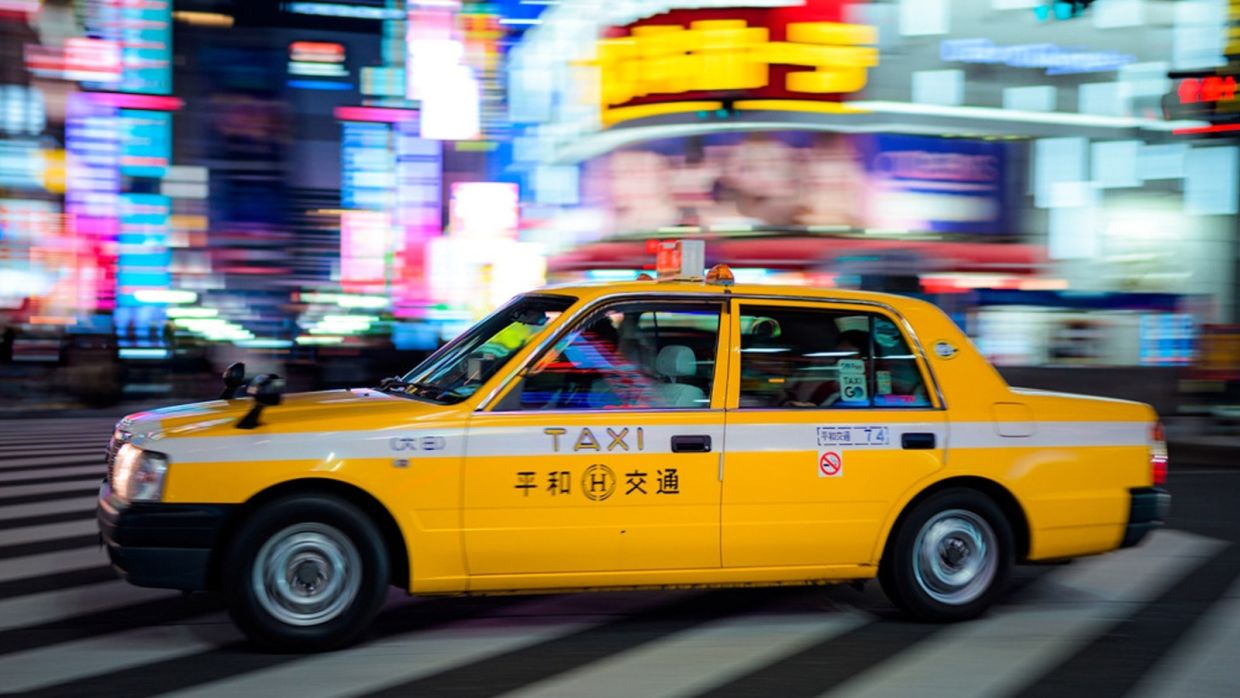
Japanese authorities have arrested Wang Xiaoyu, a 41-year-old Chinese national, on suspicion of orchestrating an illegal taxi operation that exploited regulatory gaps in Tokyo's transportation licensing system. Wang is accused of leasing vehicles registered under the commercial vehicle framework to non-employees who then operated unlicensed taxi services targeting Chinese tourists and other visitors between February and April this year. The operation represents a sophisticated abuse of Japan's transportation oversight, raising questions about how easily illegal commercial services can flourish in one of the world's most regulated markets.
The scheme operated through Phoenix Kokusai, a chauffeur service company that Wang effectively controlled. Rather than operating the vehicles himself or through properly vetted employees, Wang allegedly extended green licence plates—the designation for authorised commercial vehicles in Japan—to unaffiliated drivers who then accepted passengers on demand. This arrangement masked what amounted to an underground taxi operation as a legally compliant urban hire service. The vehicles were technically registered in the correct category, making detection difficult for casual observers or even enforcement officials relying on visual inspection alone.
Japan's "urban hire" classification, introduced in 2014, was designed to create a middle ground between traditional taxi services and private vehicle rentals. The category permits commercial transportation but with strict conditions: passengers must book in advance and commit to a minimum two-hour charter. This framework was intended to stimulate tourism and provide flexibility in the transportation market without undermining the licensed taxi industry. However, the investigation reveals how easily the system can be weaponised by operators willing to ignore the advance-booking requirement and minimum contract terms, essentially converting regulated hire vehicles into de facto street taxis.
According to Tokyo Metropolitan Police, Wang extracted approximately 38 million yen (roughly $233,000) from eighteen drivers as fees for using Phoenix Kokusai's corporate name and vehicle registrations between November 2024 and May 2026. The fee structure suggests a systematic operation rather than an isolated incident—Wang was effectively franchising his illegal transportation network, taking a cut from each driver in exchange for access to properly registered vehicles. This arrangement insulated Wang from direct involvement in passenger transport while maximising his profit margins through what amounted to a licensing-fraud middleman service.
The investigation began after legitimate taxi drivers filed complaints with authorities about urban hire vehicles engaged in illegal solicitation at Haneda Airport, Tokyo's busiest international gateway. These complaints suggested the illegal operation was visible enough to attract the attention of competitors who understood the regulatory violations occurring. Haneda's position as Japan's primary entry point for international tourists made it a natural concentration point for an operation targeting visitors unfamiliar with local transportation rules. The airport complaints ultimately proved instrumental in unravelling what police now believe was a broader network of unlicensed transport provision.
Police have also arrested three drivers, all identified as Chinese nationals, on suspicion of violating the Road Transportation Act in their capacity as operators of these illegal services. The involvement of multiple drivers underscores that this was not a one-man operation but rather a coordinated scheme with clear roles: Wang as the architect and administrator, independent drivers as the frontline service providers. Wang has partially denied the allegations, suggesting either a dispute over the extent of his involvement or disagreement about whether his actions constituted unlicensed operation under the strict reading of Japanese law.
The regulatory environment that enabled this operation reflects a broader challenge facing Japan's transportation authorities. Green licence plates, while necessary to distinguish commercial vehicles from private cars, are notoriously difficult to monitor effectively. Enforcement officials cannot reliably determine from appearance alone whether a green-plated vehicle is operating within its permitted parameters or breaching the advance-booking and minimum-contract requirements. This enforcement gap creates space for operators like Wang to position their services as compliant while operating them as traditional taxis. The police acknowledge this weakness, with authorities widely recognising the green plate system as vulnerable to exploitation.
The expansion of Japan's urban hire sector reflects tourism boom dynamics that have transformed the country's transportation landscape. The number of registered urban hire vehicles grew significantly from 3,868 in fiscal 2013 to 8,850 in fiscal 2024, according to the Ministry of Land, Infrastructure, Transport and Tourism. This tenfold increase in registered vehicles occurred against a backdrop of record inbound tourism, creating legitimate demand for flexible transportation options. However, the same growth creates regulatory challenges, as the system scales faster than enforcement capacity can accommodate, generating opportunities for operators willing to operate in legal grey areas.
For Malaysia and Southeast Asia, this case offers instructive lessons about the vulnerabilities in rapidly expanding transportation-sharing ecosystems. As countries across the region grapple with regulating ride-hailing services, private vehicle rentals, and charter operations, the Tokyo case demonstrates how easily licensing frameworks can be exploited when enforcement infrastructure lags behind regulatory design. The involvement of Chinese nationals in an operation targeting Chinese tourists also highlights transnational dimensions of transportation fraud, where networks exploit shared linguistic and cultural familiarity to operate services that might be detected more quickly by local operators. As Southeast Asian nations develop their own transportation regulations to manage tourism-driven growth, the challenge will be creating systems that are both flexible enough to serve evolving market demands and robust enough to prevent the type of regulatory arbitrage that Wang's operation exemplifies.

