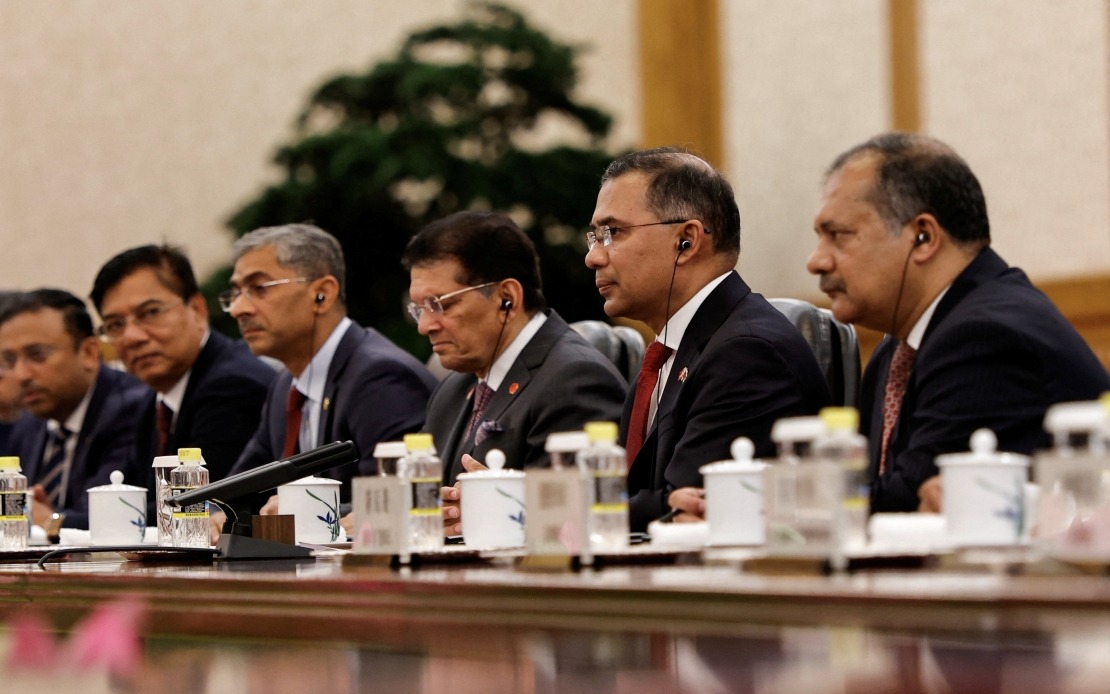
A consortium of twelve Chinese enterprises has outlined plans for approximately US$9.2 billion in investment across Bangladesh, signalling a significant deepening of economic ties between the South Asian nation and Beijing. The investment proposals emerged during Prime Minister Tarique Rahman's official visit to China from June 22 to 26, with details subsequently confirmed through Bangladesh's state media channels on Sunday. The diverse portfolio of projects spans multiple strategic sectors including energy generation, port modernisation, industrial development, and manufacturing, with Bangladesh officials projecting that these undertakings will generate substantial employment opportunities across the country.
The broader cooperation framework between the two nations has been formalised through a joint communiqué released on Friday, which underscores China's commitment to strengthening bilateral partnerships in trade, e-commerce, industrial chains, and foreign direct investment. From Beijing's perspective, the expanded engagement represents an opportunity to bolster Bangladesh's export capabilities while simultaneously reinforcing support for multilateral trading mechanisms. For Bangladesh, the influx of Chinese capital addresses a pressing need to modernise critical infrastructure and diversify the economic base beyond traditional sectors. The investments come at a moment when Bangladesh faces considerable infrastructure deficits and seeks to position itself as a competitive manufacturing hub within South Asia and beyond.
Port development constitutes a cornerstone of the bilateral investment agenda, with particular focus on Mongla Port, located in southwestern Bangladesh. The two countries have committed to jointly upgrading and expanding the facility's operational capacity, recognising its strategic importance for regional trade corridors. Within this framework, China Civil Engineering Construction Corporation has proposed a US$650 million initiative to establish the Mongla Port Economic Zone, complete with comprehensive warehousing and logistics infrastructure designed to facilitate seamless cargo handling and supply chain operations. This project directly addresses Bangladesh's need for modern port facilities capable of handling increased container traffic and supporting industrial zones that depend on efficient maritime access.
The largest individual commitment originates from Sichuan Road and Bridge Group, which has proposed investing US$4.5 billion toward developing the Dhaka-Chattogram highway corridor through a public-private partnership structure. This project carries profound implications for Bangladesh's domestic connectivity, as the route links the capital city with the major port city of Chattogram and serves as a critical artery for both passenger and freight transportation. Modern highway infrastructure along this corridor would reduce transit times, lower logistics costs for businesses, and facilitate the movement of goods destined for export. Complementing this initiative, the two nations have additionally agreed to establish a dedicated Chinese industrial park in Chattogram, which would provide Chinese manufacturers with purpose-built facilities for production and operations within Bangladesh.
Energy sector investments represent another significant component of the proposed commitments. Shanghai SUS Environment Company plans to deploy US$890 million in developing waste-to-energy conversion plants, a technology area where Bangladesh faces considerable environmental challenges amid rapid urbanisation. By converting municipal and industrial waste into electricity, these facilities would simultaneously address waste management deficits whilst generating renewable power supply. Separately, China Future Energy Group Holding Limited has outlined a US$250 million venture focusing on gas field exploration and development, tapping into Bangladesh's hydrocarbon resources and potentially reducing the nation's energy import dependence.
Manufacturing and industrial development receive substantial attention within the investment portfolio. Huaxin Textile Industry Company Limited plans to construct a 200 megawatt captive solar power plant within the Payra economic zone whilst simultaneously expanding operations in recycled cotton and yarn production and manufacturing cylindrical lithium batteries, with total investment projected at US$190 million. This multi-faceted approach reflects the investor's recognition of Bangladesh's textile heritage and emerging battery storage market potential. Separately, Zhongxin Environmental Protection Group has committed to a US$1.65 billion e-waste recycling and processing facility in the Payra Port Industrial Zone on the Bay of Bengal, positioning Bangladesh as a regional hub for electronic waste valorisation and resource recovery.
Logistics and supply chain infrastructure modernisation feature prominently in the proposed investments, with SF Express committed to a US$180 million cold-chain logistics and warehouse development project centred on Mongla, approximately 230 kilometres north of Dhaka. This initiative directly supports Bangladesh's aspirations to develop value-added agricultural and pharmaceutical export sectors that depend on temperature-controlled storage and transportation. Additionally, Shenzhen Kaifa Technology has proposed investing US$250 million in manufacturing facilities for electric smart metres, reflecting broader regional trends toward digitisation of power distribution systems and demand for advanced metering infrastructure.
From Bangladesh's economic perspective, Commerce Minister Khandakar Abdul Muktadir highlighted on Saturday that expanded Chinese investment would meaningfully contribute to narrowing the nation's persistent trade deficit with China. This observation underscores a fundamental reality within Bangladesh-China trade relations: the Southeast Asian nation imports far greater value from China than it exports, creating foreign exchange pressures. By attracting Chinese manufacturing investments that utilise local resources and labour for export-oriented production, Bangladesh potentially reconfigures this asymmetry. These investments could catalyse the development of competitive supply chains capable of serving global markets, thereby generating export revenues and improving the current account balance.
For Malaysian observers and businesses, these developments carry significant implications. The scale and diversity of Chinese investment flowing into Bangladesh present both opportunities and competitive considerations. Malaysian firms operating in manufacturing, logistics, and renewable energy sectors may face intensified competition as Chinese enterprises establish regional operations within Bangladesh. Conversely, the investments could create opportunities for Malaysian service providers, technology suppliers, and companies seeking partnerships within the expanding Bangladesh market. The emphasis on port modernisation and industrial parks particularly resonates with Malaysia's own experience in implementing similar models through initiatives like the Port Klang Free Zone and various domestic industrial parks, offering lessons in effective implementation and governance.
The Bangladesh investment announcements also reflect broader Chinese strategic positioning across South Asia. By deepening economic interdependence with Bangladesh through port development, industrial zones, and infrastructure projects, China simultaneously strengthens its connectivity to Southeast Asia and Indian Ocean trade routes. These initiatives align with China's Belt and Road Initiative objectives whilst positioning Bangladesh as an important node within regional and global supply chains. For Southeast Asia more broadly, the trajectory suggests an acceleration of Chinese investment flows into the region, potentially reshaping competitive dynamics across manufacturing, logistics, and energy sectors. Malaysian policymakers and businesses must accordingly calibrate responses to ensure they maintain competitive advantages in attracting foreign investment whilst maximising benefits from regional integration trends.

