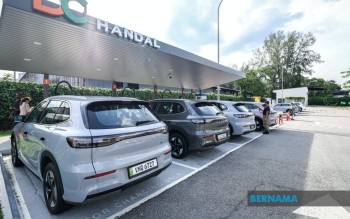
China's expertise in electric vehicle charging infrastructure is beginning to take root in Malaysia, but success will depend on how effectively foreign technology providers adapt their solutions to local conditions rather than simply transplanting what works in their home market. As Malaysia's EV sector gathers momentum over the coming years, the relationship between vehicle availability and charging infrastructure has emerged as a critical bottleneck. Xi'an LINCHR New Energy Technology Co Ltd, a major player in Chinese smart charging solutions, is making precisely this point while expanding operations in Southeast Asia through partnerships with local manufacturers and standards bodies.
Yuan Qingmin, chairman of LINCHR, emphasises that EVs and the infrastructure to charge them are inextricably linked, and gaps in either domain will inevitably slow the adoption of both. However, he cautions against the temptation to implement proven Chinese models wholesale. Instead, meaningful technology transfer requires careful customisation to suit Malaysia's unique environment, consumer behaviour, regulatory landscape, and technical standards. This nuanced approach reflects a broader lesson from global industrial development: what works at scale in one market often requires substantial modification before delivering equivalent results elsewhere.
LINCHR's participation in the Global Automotive and Technology Expo (GATE 2026) at the Malaysia International Trade and Exhibition Centre from August 26 to 28 reflects the company's commitment to engaging with Malaysia's broader automotive and energy ecosystem. The exhibition has provided a platform for dialogue with government bodies, utility companies, infrastructure operators, and industry stakeholders who collectively shape the trajectory of Malaysia's charging network. These conversations are essential because charging infrastructure development involves coordination across multiple jurisdictions and sector interests—energy regulators, city planners, property developers, and EV owners all have stakes in how the system takes shape.
On the commercial side, LINCHR is collaborating with Swift Bridge Technologies Sdn Bhd, a local EV charger manufacturer, to jointly develop and deploy charging infrastructure across Malaysia. This partnership extends beyond simple component supply; it encompasses the full spectrum of charging infrastructure development, from technical standards and product specifications to detailed engineering design and installation protocols. Such deep collaboration allows knowledge to flow in both directions, with LINCHR contributing its vast experience from China's EV boom while Swift Bridge brings localised understanding of Malaysia's regulatory environment, supply chains, and customer preferences.
The company's testing technology solutions command more than 70 percent of the market share in China, a position earned through years of refinement in one of the world's most demanding and rapidly evolving EV markets. Yet this dominance back home does not automatically translate to overseas success. Yuan recognises that international expansion demands genuine technology transfer to local partners, coupled with dedicated local research and development efforts. Simply replicating Chinese designs might technically satisfy baseline requirements, but such an approach risks creating infrastructure that fails to optimise for Malaysia's specific circumstances.
A concrete example of this localisation philosophy is evident in LINCHR's design modifications for the Malaysian environment. The company has adopted oil-immersed insulation technology for the printed circuit boards in its charging stations, a choice specifically intended to enhance resistance to salt spray corrosion in Malaysia's hot and humid climate. This seemingly technical adjustment reflects deeper thinking about durability and long-term reliability in tropical conditions—factors that may be less pressing in northern China's drier regions. Such details matter enormously for infrastructure that will sit exposed to weather and must function reliably across decades.
Standardisation and testing protocols form another critical dimension of this localisation process. LINCHR, in partnership with Swift Bridge and the Standards and Industrial Research Institute of Malaysia (SIRIM), signed a tripartite cooperation agreement in March of last year. Since that agreement, the three parties have collaborated on developing charging infrastructure testing and certification standards tailored to Malaysian conditions, while simultaneously upgrading the testing laboratories and equipment needed to validate compliance. This institutional groundwork is essential for building a robust and trustworthy charging network that meets international quality benchmarks while reflecting local requirements.
The evolution of EV charging technology points toward an increasingly sophisticated future. As vehicles become more connected and intelligent, charging patterns will shift from simple unidirectional flow—grid to vehicle—toward bidirectional interaction. EVs will eventually be charged opportunistically at home, in workplace parking facilities, or during idle periods, with surplus stored energy potentially flowing back into the grid. This vision of vehicles serving as distributed energy resources, sometimes termed "mobile energy," requires charging infrastructure far more sophisticated than today's simple plug-and-charge stations. It demands integration with smart grid systems, vehicle telematics, and real-time energy management platforms.
For Malaysia, these developments carry significant implications. As the country pursues net-zero carbon commitments and seeks to position itself as a regional clean energy leader, the role of EV infrastructure in enabling transport decarbonisation cannot be overstated. However, adopting cutting-edge Chinese technology is only part of the solution. The real challenge lies in building local capabilities to adapt, maintain, upgrade, and ultimately innovate around these systems. By choosing partners like LINCHR that recognise the importance of genuine localisation rather than mere replication, Malaysia's EV ecosystem has a stronger foundation for sustainable, long-term growth that serves both environmental and economic objectives.
The partnership model emerging between foreign technology leaders and local manufacturers represents a pragmatic middle path. It allows Malaysia to leverage decades of Chinese innovation and scale while ensuring that solutions align with local realities. As more EV charging providers adopt this collaborative, adaptation-focused approach, the prospects for a well-functioning, reliable charging network supporting Malaysia's growing EV fleet improve significantly.

