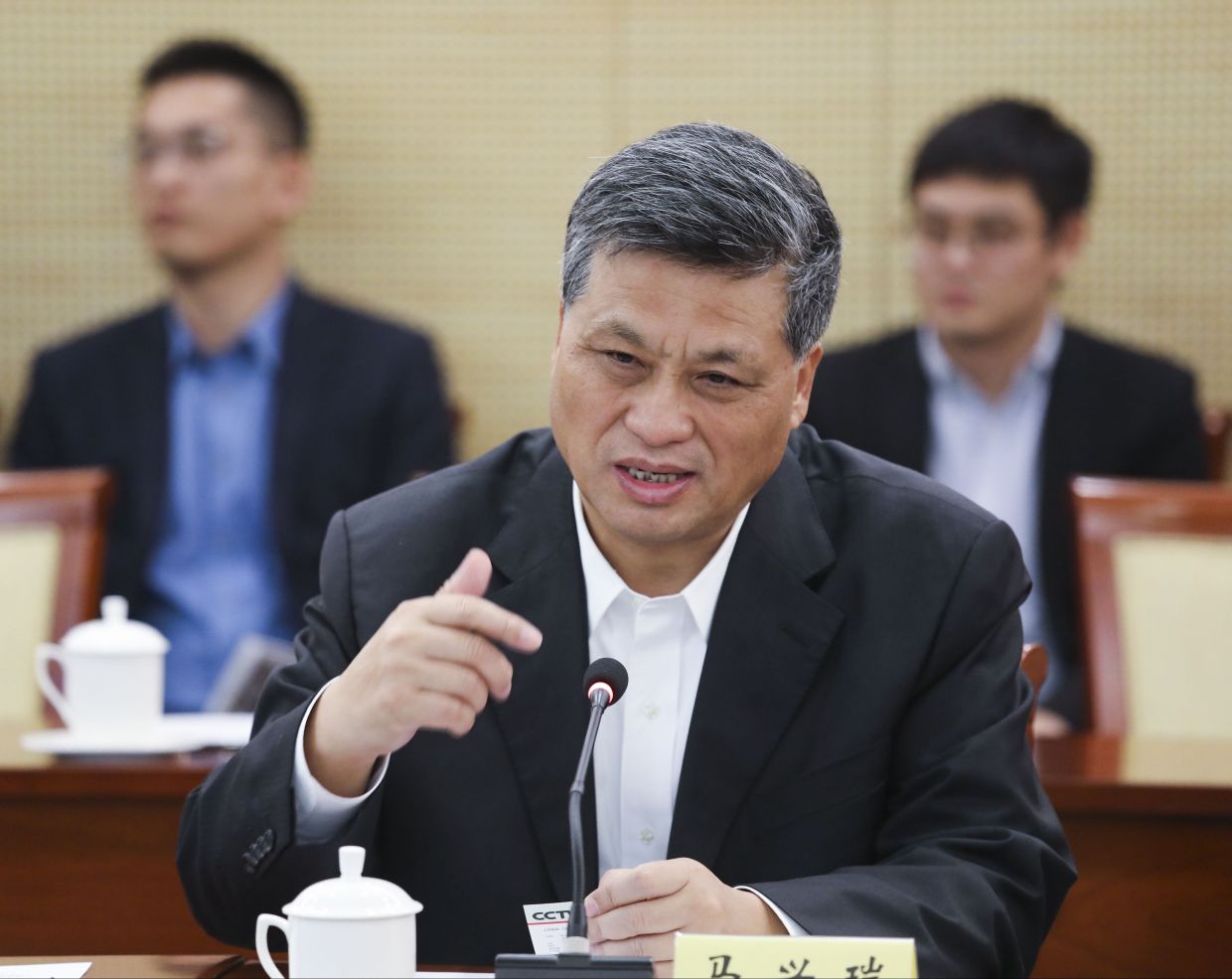
China's disciplinary apparatus has now ensnared a third member of its elite Politburo in the current administration, marking an unprecedented purge within the party's highest circles. Ma Xingrui, aged 67, has been formally charged with pervasive corruption spanning his administrative tenure, with the Communist Party's top disciplinary body detailing allegations of bribery, family misconduct, and systematic abuse of power. The Politburo formally reviewed and ratified the graft investigation on June 30, according to state media, effectively sealing Ma's political fate as he faces potential prosecution and removal from party ranks.
The breadth of Ma's alleged transgressions extends far beyond conventional financial impropriety. Investigators determined that the former Xinjiang administrator facilitated purchasing arrangements whereby his relatives acquired residential properties at artificially reduced rates, while simultaneously engaging in what authorities characterised as coercive exchanges of sexual favours in return for official favours or monetary compensation. Most damning among the charges is the assertion that Ma knowingly permitted his immediate family members to weaponise his administrative position, creating what the Central Commission for Discipline Inspection termed a culture of "rampant corruption" within his household that penetrated multiple levels of provincial governance.
Ma's professional trajectory before his downfall traced a remarkable ascent through China's technological and governmental hierarchies. He spent over two decades at the China Aerospace Science and Technology Corporation, including a lengthy stewardship as general manager between 2007 and 2013. During that period, he simultaneously held the positions of deputy commander-in-chief overseeing the country's crewed space initiatives and chief architect of the programme developing China's next-generation carrier rocket systems—roles reflecting his substantial influence over strategically vital defence and space sectors. This aerospace background distinguished him within the party leadership and appeared to position him for continued advancement.
Transitioning from the technology sector, Ma secured appointment as deputy party secretary of Guangdong province in 2013, marking his formal entry into the regional political apparatus. His subsequent promotions followed a traditional pathway through China's provincial administrative structure: elevation to party boss of Shenzhen, then advancement to provincial vice-governor and ultimately provincial governor. This accumulation of positions in one of China's most economically dynamic regions provided unprecedented opportunity to leverage bureaucratic influence for personal enrichment, according to disciplinary investigators who traced layers of illicit transactions spanning his entire tenure in the southern province.
By 2021, Ma's credentials and track record secured his appointment as party secretary of Xinjiang Uygur Autonomous Region, succeeding Chen Quanguo in this strategically critical administrative post. His elevation to Politburo membership followed the subsequent year during the 20th Party Congress, positioning him among the party's most senior decision-makers. Yet this apex of his political trajectory proved tragically short-lived, as investigations that commenced publicly in April ultimately produced a comprehensive indictment that party authorities deemed sufficiently grave to warrant removal from the elite governing body.
The disciplinary commission's findings paint a portrait of institutional corruption extending well beyond individual malfeasance into systematic family-based networks of improper enrichment. Ma allegedly weaponised his administrative authority to secure business advantages for associates, orchestrate favourable contract allocations and subcontracting arrangements, and engineer career advancement for political allies and subordinates through manipulation of personnel selection mechanisms. His relatives and designated proxies accumulated what investigators characterised as "huge amounts of money and property" through channels that circumvented legal acquisition procedures, effectively establishing shadow economic interests that paralleled and profited from his official responsibilities.
A particularly troubling dimension of Ma's misconduct involved his supervisory failures regarding subordinate personnel. The investigation determined that he negligently overlooked and failed to adequately discipline serious violations of party regulations and suspected criminal activities perpetrated by officials under his administrative jurisdiction, thereby enabling broader institutional corruption and allowing consequences to cascade throughout affected provincial and regional bureaucracies. This systemic neglect transformed isolated infractions into entrenched patterns of misconduct that required years of remedial investigation to fully expose.
Ma's behaviour during the investigative process itself proved additionally damaging, as he failed to provide truthful accounting during initial interrogations conducted by disciplinary authorities. This lack of candour—particularly egregious given that his misconduct persisted and potentially intensified following President Xi Jinping's 2012 announcement of transformative anti-corruption measures and enhanced ethical standards for officials—compounds the severity of his ultimate culpability. The persistence of his illicit activities long after the party's top leadership explicitly prohibited such conduct suggests brazen disregard for institutional norms and deliberate circumvention of heightened oversight mechanisms.
The removal of Ma alongside two prominent military figures—specifically He Weidong, the former vice-chairman of the Central Military Commission who was expelled from both party and military ranks in October—has reduced the Politburo's membership from its traditional complement to just 21 representatives. This attrition within the party's innermost decision-making body reflects the unprecedented intensity of Xi's anti-corruption campaign, which has systematically targeted officials across military, aerospace, regional government and party administration sectors with relatively uniform severity. The frequency and prominence of Politburo-level purges remains historically anomalous, with contemporary observers noting that such concentrated removals of elite-tier officials have not occurred in recent decades.
Xinjiang itself has become a particular focus of the broader disciplinary effort, with multiple senior administrators from the region facing investigation and prosecution in rapid succession. Chen Weijun, who previously served as executive vice-chairman of Xinjiang's regional government, entered the investigative pipeline in December, while Li Xu, former deputy commander of the Xinjiang Production and Construction Corps, saw his case publicised in January. This concentration suggests potential systemic corruption within the region's administrative structures, or alternatively reflects heightened scrutiny of Xinjiang governance as part of broader policy priorities under Xi's leadership.
The consequences for Ma personally extend beyond political elimination to potential criminal prosecution and comprehensive asset forfeiture. Disciplinary authorities have determined that his ill-gotten gains accumulated through corrupt practices will be confiscated and transferred to state coffers, while Ma himself has been referred to judicial authorities to face formal criminal charges related to his accumulated violations. The severity of characterisation employed by the discipline commission—describing his conduct as "extremely serious in nature" and constituting an "extremely bad influence" on party institutional integrity—signals that authorities intend to pursue maximum permissible penalties as a deterrent to other potentially corrupt officials.
The Ma case exemplifies how technological expertise and administrative advancement, rather than insulating prominent officials from corruption investigations, may instead create enhanced opportunities for large-scale misconduct while simultaneously amplifying reputational damage to institutional credibility when exposure occurs. His trajectory from aerospace programme leadership through provincial governance to Politburo membership ultimately demonstrates that no level of professional accomplishment or political seniority provides immunity from Xi's anti-corruption framework, a message that resonates throughout Southeast Asian governing circles where Chinese political stability and leadership continuity carry significant regional implications.

