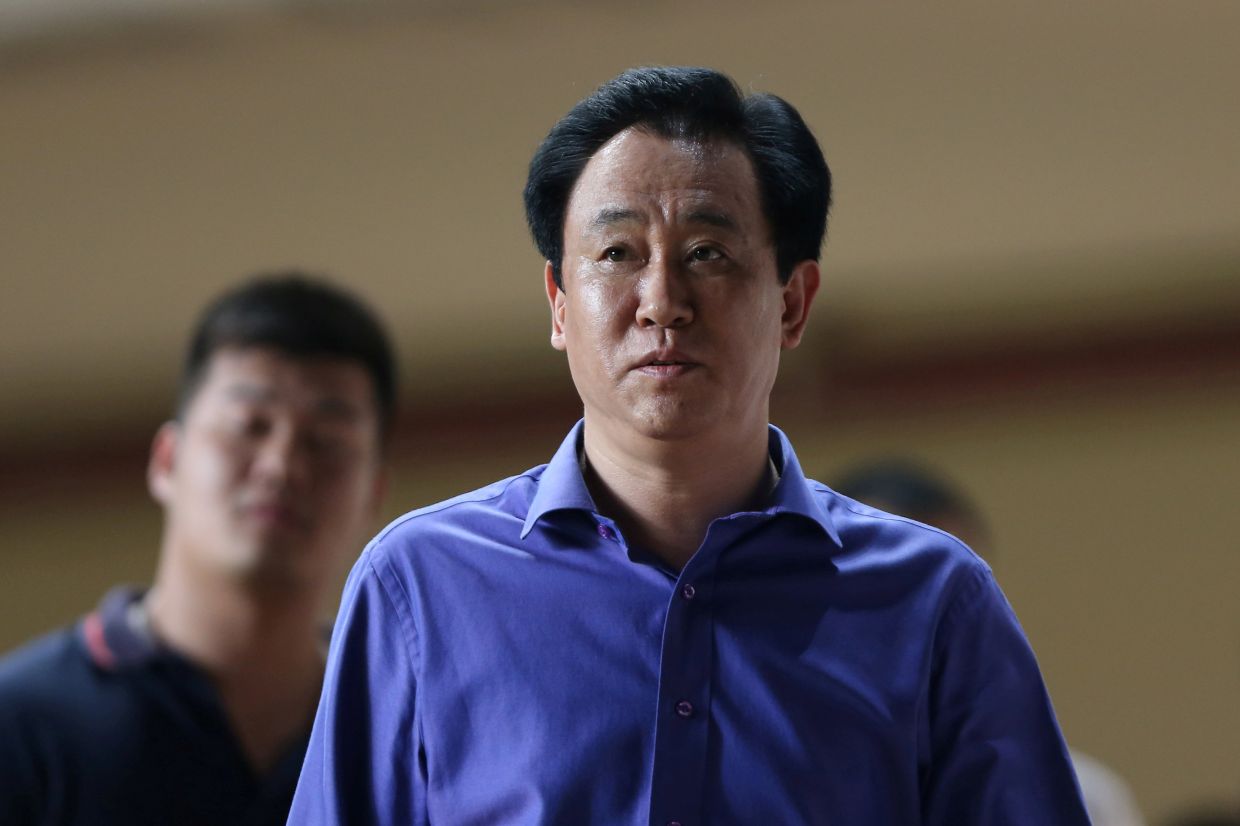
A Chinese court has delivered its verdict in one of the country's most significant corporate scandals, sentencing Xu Jiayin, the founder and former chairman of property developer Evergrande Group, to life imprisonment and imposing steep financial penalties on the company. The Shenzhen Intermediate People's Court in Guangdong province announced on Thursday that it had fined Evergrande and its real estate subsidiary a combined total of 15.82 billion yuan, equivalent to approximately US$2.4 billion. The severe punishment concludes a legal proceeding that exposed the depths of financial misconduct at a firm once synonymous with China's seemingly unstoppable property expansion.
Evergrande's downfall represents one of the most dramatic reversals in modern Chinese business history. For nearly three decades, the company epitomised the nation's real estate boom, accumulating assets and market capitalisation that made it a household name across the country. The developer became a symbol of the property-driven growth model that had propelled China's economy forward, with Xu cultivating an image as a visionary entrepreneur who promised ordinary citizens access to homeownership at an unprecedented scale. The company's collapse five years ago therefore shattered not merely investor confidence but the broader narrative of China's perpetual economic ascendancy that had come to dominate both domestic and international discourse.
The trajectory of Evergrande's decline began in earnest when Beijing implemented sweeping regulatory restrictions on real estate borrowing and speculation. These policy interventions, introduced to prevent systemic financial risk, fundamentally altered the competitive landscape that had allowed companies like Evergrande to expand with remarkable velocity. As credit tightened and access to financing became increasingly constrained, the structural vulnerabilities hidden beneath years of rapid growth became impossible to conceal. The company found itself unable to service its mounting obligations to creditors, ultimately triggering a formal default that exposed the chasm between its reported financial health and underlying reality.
According to the court's findings, Xu and senior company officials engaged in systematic financial deception spanning from 2016 through 2021. The court determined that Evergrande and its leadership deliberately inflated asset values while simultaneously concealing substantial liabilities, creating a false picture of financial stability that enabled continued borrowing and investor confidence. This coordinated misrepresentation violated fundamental corporate governance principles and Chinese financial regulations, establishing a pattern of fraud that operated at scale across multiple business units and financial transactions. The deliberate nature of these actions distinguished the case from simple operational failures or market miscalculations.
Beyond financial fraud, the investigation uncovered evidence of systematic bribery through which Evergrande executives cultivated control over financial institutions. Though prosecutors declined to name the specific banks and financial entities involved, this revelation underscores how corporate misconduct extended beyond the company's own operations into the broader financial system. By exercising improper influence over credit providers, Evergrande secured access to capital that more rigorous institutional procedures would likely have denied, thereby amplifying the company's ability to undertake risky expansion while obscuring escalating risks from stakeholders and regulators.
Xu Jiayin's crimes encompassed far more than financial fraud. The life sentence reflects convictions on charges including embezzlement and bribery, offences that suggest personal enrichment alongside corporate-level misconduct. Having pleaded guilty in April to these allegations, Xu now faces not only lifetime imprisonment but permanent revocation of his political rights and the confiscation of all personal assets. This sweeping forfeiture represents a decisive break from his previous position as one of China's wealthiest entrepreneurs and underscores the severity with which Beijing views the combination of financial crime and corruption that his case represents.
Five additional senior executives of Evergrande received prison sentences ranging from six to eighteen years, demonstrating that the fraud was not concentrated in the actions of a single individual but rather reflected a culture of misconduct permeating the company's leadership structure. These coordinated sentences indicate that multiple executives consciously participated in or facilitated the scheme to misrepresent Evergrande's finances and secure inappropriate credit. The breadth of convictions suggests that fraudulent practices had become normalised within the organisation rather than representing isolated incidents of individual wrongdoing.
For Malaysian and Southeast Asian readers, the Evergrande collapse offers crucial lessons about property market dynamics and corporate governance risks. Malaysian developers with exposure to the Chinese market or pursuing similar rapid-expansion strategies should examine whether structural vulnerabilities have accumulated in their own operations. The case demonstrates how quickly apparent stability can evaporate when regulatory environments shift and credit availability tightens. Regional financial institutions that extended credit to Evergrande or its affiliates have themselves faced significant losses, serving as a sobering reminder about due diligence standards when evaluating large corporate counterparties operating in volatile markets.
The sentencing also reflects Beijing's determination to hold corporate elites accountable when their conduct threatens broader financial stability. Unlike some high-profile cases that have been quietly settled or where connected individuals received lenient treatment, the Evergrande verdicts imposed maximum penalties despite Xu's former prominence and business acumen. This consistency in enforcement sends a signal that even the largest domestic corporations cannot rely on political protection to escape serious legal consequences when their actions pose systemic risks. For the Malaysian business environment, this underscores the importance of maintaining ethical practices that can withstand regulatory scrutiny.
The fines imposed on Evergrande itself, while substantial in nominal terms, represent only a fraction of the losses incurred by investors, creditors, and property buyers who entrusted funds to the company. Countless homebuyers with deposits in unfinished projects, bondholders holding defaulted debt, and financial institutions with exposure to the company have suffered tremendous losses that no court-ordered penalty can adequately compensate. This disparity between the punishment administered and the actual harm inflicted highlights the limitations of legal remedies when addressing large-scale financial misconduct and the importance of preventive regulatory frameworks.
Looking forward, the Evergrande case will likely accelerate China's push toward more stringent corporate disclosure requirements and stricter oversight of property sector financing. These regulatory shifts may reshape investment and credit patterns not only within China but across Southeast Asia, as Chinese companies and financial institutions adjust their risk assessments and operational strategies in response to heightened regulatory uncertainty. Malaysian policymakers and business leaders should anticipate downstream effects as Chinese capital flows shift and regulatory compliance standards become more demanding for all companies seeking access to Chinese finance.
The life sentence handed to Xu Jiayin represents the definitive end of a chapter in which inadequate corporate governance and aggressive financial manipulation enabled the construction of an illusory empire. What remains is a cautionary narrative about the dangers of prioritising short-term expansion over transparent accounting and sustainable business practices. As Evergrande begins its long transition toward restructuring and creditor recovery, the company's trajectory will continue to influence how regulators, investors, and businesses across Asia evaluate risk, enforce accountability, and design institutions capable of preventing similar catastrophes.

