China's foreign ministry has moved swiftly to praise Prime Minister Datuk Seri Anwar Ibrahim for his explicit endorsement of the one-China principle, a statement that reflects the delicate diplomatic balance Malaysia maintains between its strategic partnerships and its international commitments. The public commendation came through official channels, signalling Beijing's satisfaction with the Malaysian leader's consistent articulation of a position that carries significant weight in regional geopolitics.
The timing of China's approval is noteworthy, following Anwar's recent interview with Al Jazeera in which he unambiguously stated that Taiwan constitutes part of China and that this position commands universal acceptance across the international community. His remarks, delivered to one of the world's most widely watched news networks, carried particular significance given Malaysia's position as a Southeast Asian nation with substantial economic ties to both Beijing and the island of Taiwan. By making such a direct statement to global media, Anwar positioned Malaysia clearly within the framework that Beijing has long sought to establish regarding the cross-strait question.
China's Ministry of Foreign Affairs formally registered its appreciation through a statement posted on social media platform X on Wednesday, underscoring official Beijing's careful attention to how regional leaders publicly address the Taiwan issue. The ministry's spokesperson further reinforced that nothing will prevent China from achieving reunification, framing this not merely as a political objective but as an inevitable historical process. This language reflects the increasingly assertive tone that Chinese officials have adopted when discussing Taiwan's future, moving beyond diplomatic circumspection towards declarations of inevitability.
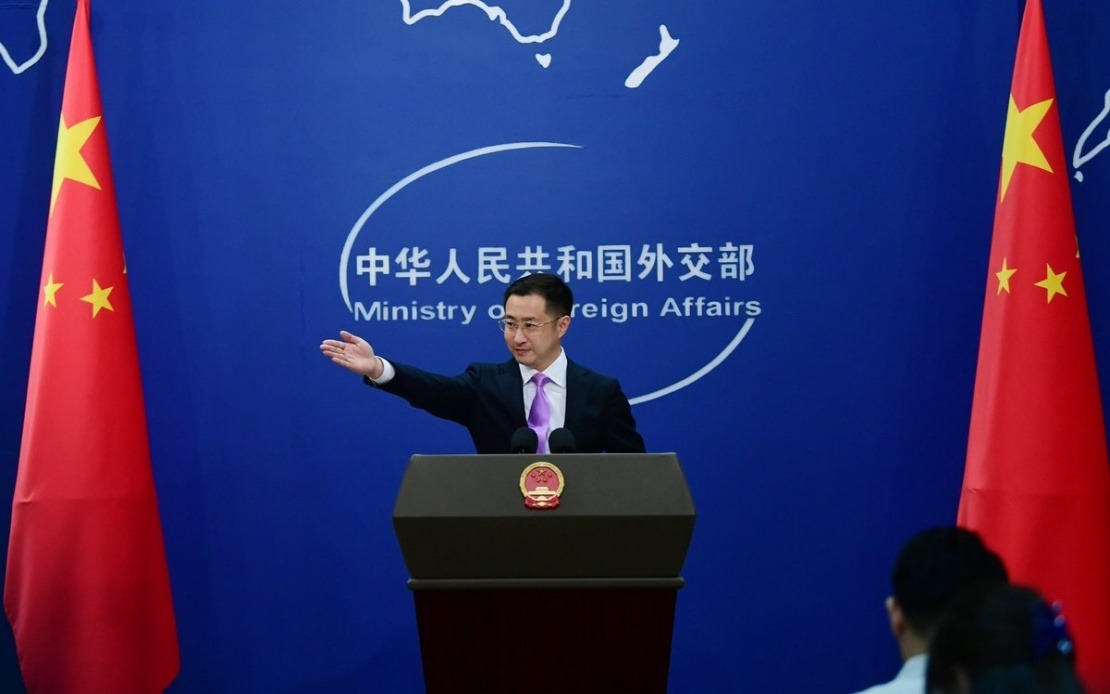
In a subsequent briefing in Beijing, Chinese Foreign Ministry spokesperson Lin Jian elaborated on the government's perspective, asserting that adherence to the one-China principle aligns with popular sentiment and represents the morally righteous position. Lin emphasised the foundational principle that Taiwan remains an inseparable component of China's territory, reinforcing claims that have been contested by Taipei and complicate the diplomatic landscape across the Taiwan Strait. The official characterised China's reunification aspirations as an unstoppable historical trajectory, language that strips the question of its contingent nature and presents it as beyond negotiation.
Malaysia's approach to the one-China principle reflects the nation's broader foreign policy orientation, which seeks to maintain pragmatic relations with all major powers while avoiding explicit alignment that might provoke regional instability. However, Anwar's recent public statements suggest a willingness to articulate Malaysia's position with greater clarity than some of his predecessors, potentially signalling a recalibration in how Kuala Lumpur addresses this sensitive geopolitical question. For observers of Southeast Asian diplomacy, such statements carry implications that extend beyond bilateral Malaysia-China relations into the wider question of how regional nations position themselves amid great power competition.
The international community's relationship with the one-China principle remains contested despite decades of diplomatic effort to establish it as customary international law. While many nations, including Malaysia, recognise the People's Republic of China and maintain the diplomatic position that Taiwan is part of China, the practical reality of Taiwan's distinct governance, military, and democratic institutions complicates this recognition. Malaysia's repeated affirmation of the one-China principle thus serves multiple functions: it honours commitments made at the time of establishing diplomatic relations with Beijing, it respects a principle endorsed by the United Nations, and it potentially signals Malaysia's desire to maintain strong relations with China amid broader economic uncertainties.
For Taiwan and its supporters, Malaysia's public restatement of the one-China principle represents a diplomatic setback, though hardly an unexpected one given the island's limited formal diplomatic recognition and its exclusion from most international organisations. Taipei has long struggled against the tide of international statements affirming one-China positions, even as it has quietly deepened informal relationships with many nations, including some in Southeast Asia. The Malaysian government's unambiguous framing leaves little room for the kind of strategic ambiguity that has sometimes characterised regional responses to cross-strait questions.
The broader context for these diplomatic exchanges involves China's intensifying efforts to consolidate international support for its positions on Taiwan, particularly as tensions across the strait have escalated in recent years. Military incursions, political pressure, and economic measures have accompanied Beijing's rhetorical campaign to reshape the international environment surrounding Taiwan. Malaysia's reaffirmation, filtered through official Chinese commentary, contributes to Beijing's narrative that the international community stands increasingly united behind the one-China principle, even if such unity masks significant nuances and reservations held privately by various governments.
Anwar Ibrahim's willingness to make explicit statements about Taiwan to international media likely reflects confidence in Malaysia's ability to maintain pragmatic relations with multiple stakeholders simultaneously. As a leader who has navigated complex domestic and international politics throughout his career, Anwar appears positioned to manage the diplomatic consequences of clarity on this issue, though whether such clarity enhances or complicates Malaysia's regional standing remains an open question. The public appreciation from Beijing suggests that at least one major party to these diplomatic interactions views his remarks as reassuring.
Looking forward, Malaysia's diplomatic positioning on Taiwan will likely continue to reflect the broader strategic environment in which Southeast Asia operates. The region remains caught between competing pressures from China's growing assertiveness, the United States' commitment to the status quo, and internal desires to avoid forced choices that could destabilise the region's delicate balance. How Malaysian leaders navigate these pressures while maintaining credibility and pursuing national interests will shape not only bilateral relations with key partners but also Malaysia's influence within regional institutions and groupings that increasingly find themselves navigating similar diplomatic challenges.

