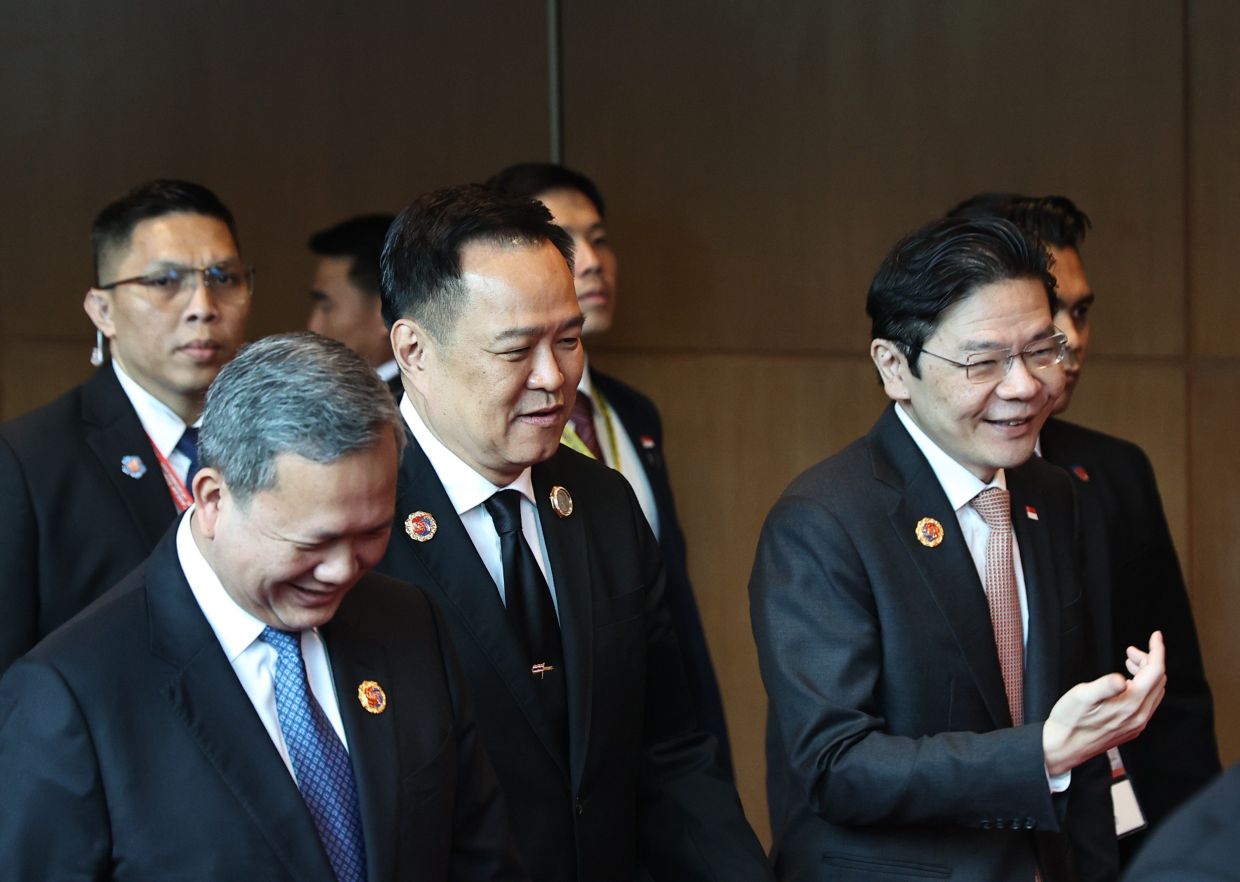
The possibility that China might step into the role of peacemaker between Cambodia and Thailand has become a subject of growing diplomatic speculation, driven by a series of high-level encounters in Beijing this week that suggest both Southeast Asian neighbours are receptive to Beijing's involvement should it materialise. The question carries significance for regional stability and reflects the delicate balancing act required when managing longstanding territorial disagreements in one of Asia's most strategically important zones.
Prime Minister Hun Manet seized the opportunity during his visit to Beijing to brief Chinese Premier Li Qiang directly on the latest developments affecting Cambodia's border with Thailand. The discussions took place on July 16 whilst Hun Manet was attending the 2026 World Artificial Intelligence Conference, a gathering that has unexpectedly become a venue for important diplomatic conversations. During these talks, Hun Manet underscored Cambodia's fundamental position that any resolution must occur through peaceful channels and remain grounded in international law and the existing framework of bilateral agreements between Phnom Penh and Bangkok.
What makes these exchanges particularly noteworthy is the timing and the parallel positioning of Thailand's leadership. Prime Minister Anutin Charnvirakul, who was simultaneously in China for the same technology conference, made clear that Bangkok harbours no fundamental objection to Chinese mediation efforts. Speaking to Thai journalists, Anutin articulated a carefully calibrated message: whilst Thailand has not formally sought Chinese intervention, it remains receptive to any diplomatic assistance Beijing might voluntarily offer. This phrasing is diplomatically significant, as it preserves Thailand's autonomy whilst simultaneously signalling flexibility—a crucial distinction in Southeast Asian diplomacy where saving face and maintaining strategic independence remain paramount.
The Cambodia-China relationship itself provides important context for understanding these manoeuvres. Li Qiang characterised the two nations as "ironclad friends," a phrase reflecting decades of close strategic alignment. For Cambodia, maintaining this partnership whilst also addressing border tensions requires careful communication. By personally raising the issue with China's second-highest-ranking official, Hun Manet demonstrated that Phnom Penh views Beijing as sufficiently influential and neutral to warrant detailed briefings on such sensitive matters. The choice to elevate the border discussion to this level of leadership conversation marks one of the most formal occasions since tensions escalated last year that Cambodia has discussed the issue with Beijing at the highest echelons of power.
Beijing's track record in regional diplomacy suggests it has long contemplated such a role. Last year, Chinese Foreign Minister Wang Yi explicitly stated China's willingness to adopt an "objective and fair position" and contribute constructively to harmonious coexistence between the two neighbours. Rather than making formal mediation offers, China has adopted a calibrated approach, hosting trilateral meetings between senior officials from Cambodia, Thailand, and itself, whilst consistently advocating for peaceful dialogue. This strategy allows Beijing to maintain relationships with both parties whilst avoiding the complications that come with being formally designated as a mediator—a status that typically demands greater accountability and clarity about impartiality.
The broader Southeast Asian context adds another dimension to this unfolding situation. Cambodia has demonstrated openness to international involvement by welcoming Asean observer missions and pursuing legal mechanisms rooted in international law. This approach reflects Phnom Penh's recognition that in the modern era, border disputes cannot be resolved through military means without triggering international complications and domestic instability. Thailand, despite its historical reluctance to internationalise border matters, appears to be softening its stance—though notably, Anutin maintained that direct bilateral dialogue remains Bangkok's preferred pathway, suggesting Thailand wishes to avoid appearing to relinquish agency over its own territorial concerns.
The current diplomatic configuration reveals how great-power involvement in regional disputes operates in practice. China does not need to formally declare itself a mediator to exercise significant influence over the trajectory of negotiations. By maintaining open channels with both capitals, consistently emphasizing peaceful resolution, and hosting forums for dialogue, Beijing advances its interests in regional stability without incurring the formal responsibilities associated with official mediation. For Cambodia and Thailand, having a powerful neighbour that maintains relationships with both parties provides a degree of security and suggests that escalation beyond current levels risks international complications neither can afford.
The absence of an announced bilateral meeting between Hun Manet and Anutin during their simultaneous presence in Beijing is notable, though perhaps unsurprising given the sensitivity surrounding direct negotiations when both parties are still consolidating their positions. That neither country publicly requested Chinese mediation, and that China has not formally offered it, suggests all three nations are proceeding cautiously. This careful approach reflects an understanding that premature formalisation of mediation could inadvertently lock both sides into positions from which retreat becomes difficult.
For Malaysia and other Southeast Asian nations, these diplomatic developments carry implications for regional security architecture. If China successfully positions itself as a mediator in the Cambodia-Thailand dispute, it would reinforce Beijing's role as the region's paramount diplomatic power, capable of managing conflicts that more traditional regional institutions like Asean struggle to resolve. Conversely, if Cambodia and Thailand resolve tensions through direct negotiations with Chinese facilitation at the background level, this might suggest a hybrid model where great-power involvement remains implicit rather than explicit—an arrangement that preserves Asean's formal authority whilst acknowledging Beijing's practical influence.
The coming weeks will likely determine whether Beijing formalises its mediation role or continues its current approach of behind-the-scenes facilitation. The fact that both Cambodia and Thailand have signalled openness suggests the diplomatic groundwork has been prepared. Whether actual resolution of the underlying territorial dispute follows remains uncertain, as mediation can reduce tensions without necessarily settling the underlying disagreement. What appears clear is that Cambodia, Thailand, and China have collectively created space for Beijing to play a more active diplomatic role should circumstances warrant it—a development that reflects both the persistence of border tensions and the complex dance of regional diplomacy where appearances, strategic relationships, and careful communication carry as much weight as formal agreements.

