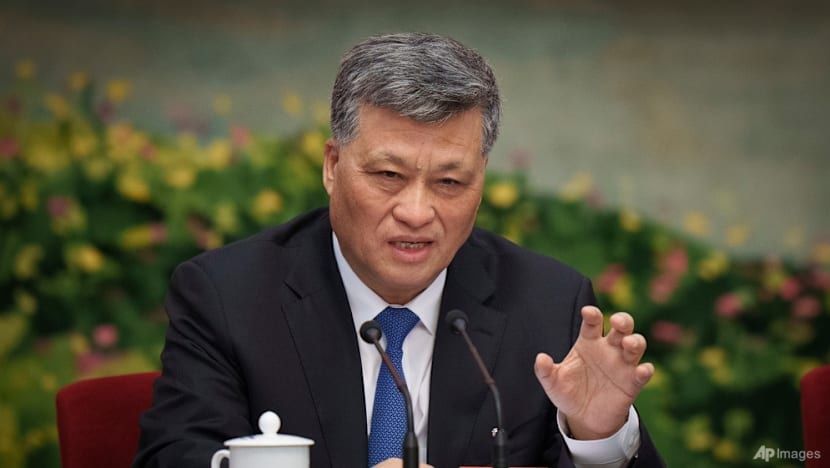
China's ruling Communist Party has purged one of its senior leaders, expelling Ma Xingrui from the party and stripping him of all official positions following a corruption investigation that uncovered an extensive catalogue of misconduct. The 66-year-old former official, who previously served as Politburo member—a position that places him among China's most powerful decision-makers answerable directly to President Xi Jinping—now faces the consequences of an anti-corruption probe initiated in April, according to announcements by the party's anti-graft body via state media on Tuesday.
Ma's downfall represents a significant development within China's political establishment, particularly given his elevated status within the Communist Party hierarchy. The Politburo comprises the country's most influential officials, tasked with steering the nation's strategic direction. His removal signals that even those at the apex of power remain vulnerable to the sweeping anti-corruption campaign that Xi Jinping has prioritised as a cornerstone of his leadership strategy since taking office more than a decade ago. The allegations against Ma extend far beyond simple financial impropriety, painting a picture of systematic abuse of authority and personal enrichment at the expense of public trust.
Investigators uncovered that Ma leveraged his official position to facilitate property purchases for family members at below-market rates, effectively converting public office into personal financial advantage. More damaging still were findings that he engaged in transactional sexual relationships facilitated by his power and wealth, described in official statements as both power-for-sex and money-for-sex arrangements. Such allegations strike at the moral foundations that the party claims to uphold, particularly in an era where Xi Jinping has repeatedly emphasised ethical governance and party discipline.
Beyond personal misconduct, Ma's corruption extended to enabling relatives to weaponise his political influence for substantial personal gain. Family members allegedly exploited his standing to secure lucrative business opportunities, contracts, and employment positions that would otherwise have been unavailable. The investigation identified instances where Ma accepted enormous sums of money and valuable assets in exchange for using his governmental authority to benefit third parties seeking advantages in commercial operations and infrastructure projects. Authorities characterised the scale and nature of his transgressions as particularly egregious.
Ma's tenure as Xinjiang's leader from 2021 through 2025 places his leadership during a period of intense global scrutiny regarding the region's policies. Xinjiang has experienced substantial changes over the past two decades, from its status as a flashpoint for civilian violence attributed to separatist and militant Islamic organisations during the 2000s and early 2010s, to its current position as a region under comprehensive security protocols justified by counterterrorism rationales. The Chinese government attributes the earlier violence to armed groups seeking independence or promoting extremist ideology, though this narrative remains contested internationally.
The transformation of Xinjiang under Chinese state direction has generated considerable controversy beyond China's borders. Over the past decade, the region has witnessed increasingly stringent oversight measures, surveillance infrastructure, and restrictions predominantly affecting the Uyghur Muslim population, whom Beijing associates with the historical security challenges. International human rights organisations have issued repeated criticisms of these policies, arguing that the scale and intensity of restrictions exceed what counterterrorism objectives would reasonably justify.
In 2022, Michelle Bachelet, then serving as the United Nations' chief human rights official, released a detailed assessment documenting concerns that the security measures in Xinjiang potentially constituted crimes against humanity. The report drew on extensive testimony, documentation, and analysis to suggest that the scale of detention, surveillance, and restrictions targeting Uyghurs raised fundamental questions about compliance with international humanitarian law. Though the report stopped short of making conclusive determinations—remaining within the mandate of a monitoring body rather than a judicial entity—its findings represented the most authoritative international analysis of Xinjiang's governance model.
Ma Xingrui's expulsion occurs within this contentious backdrop, though his removal focuses specifically on personal corruption rather than policies pursued during his administrative tenure. Nevertheless, his experience heading Xinjiang during a particularly sensitive period may have provided opportunities for the kinds of abuse uncovered—leveraging state resources and official authority for personal enrichment in a region where power operates with exceptional scope. The case underscores how anti-corruption enforcement, while advancing Xi Jinping's governance agenda, can intersect with geopolitically sensitive appointments and regional administration.
The timing and severity of Ma's punishment reflect the Communist Party's commitment to anti-corruption as a policy priority, yet they also illustrate the selective application of accountability within China's political system. High-level expulsions generate significant domestic and international attention, demonstrating the party's willingness to discipline even senior officials. However, critics note that such campaigns often serve simultaneously as mechanisms for consolidating power and eliminating potential rivals, raising questions about whether anti-corruption efforts function primarily as governance tools or as instruments of factional politics within the party's upper echelons.
For Malaysia and Southeast Asia, Ma Xingrui's case carries implications for understanding China's internal governance dynamics and the stability of its political leadership. As China remains a significant economic and geopolitical actor for the region, developments affecting the competence and integrity of its administrative apparatus merit attention. The Xinjiang situation itself involves Malaysia indirectly, given the presence of Uyghur diaspora communities in the country and periodic diplomatic tensions arising from international criticism of regional policies.
The expulsion also illustrates the Communist Party's capacity for internal correction, at least selectively, and its emphasis on meritocratic accountability—however inconsistently applied. This contrasts with some external perceptions of Chinese governance as entirely personalised around Xi Jinping, suggesting more institutional resilience than such critiques allow. For regional observers, Ma's removal indicates that factional competition and institutional checks continue to operate within the Chinese political system, even as ultimate authority concentrates in the hands of the paramount leader.

