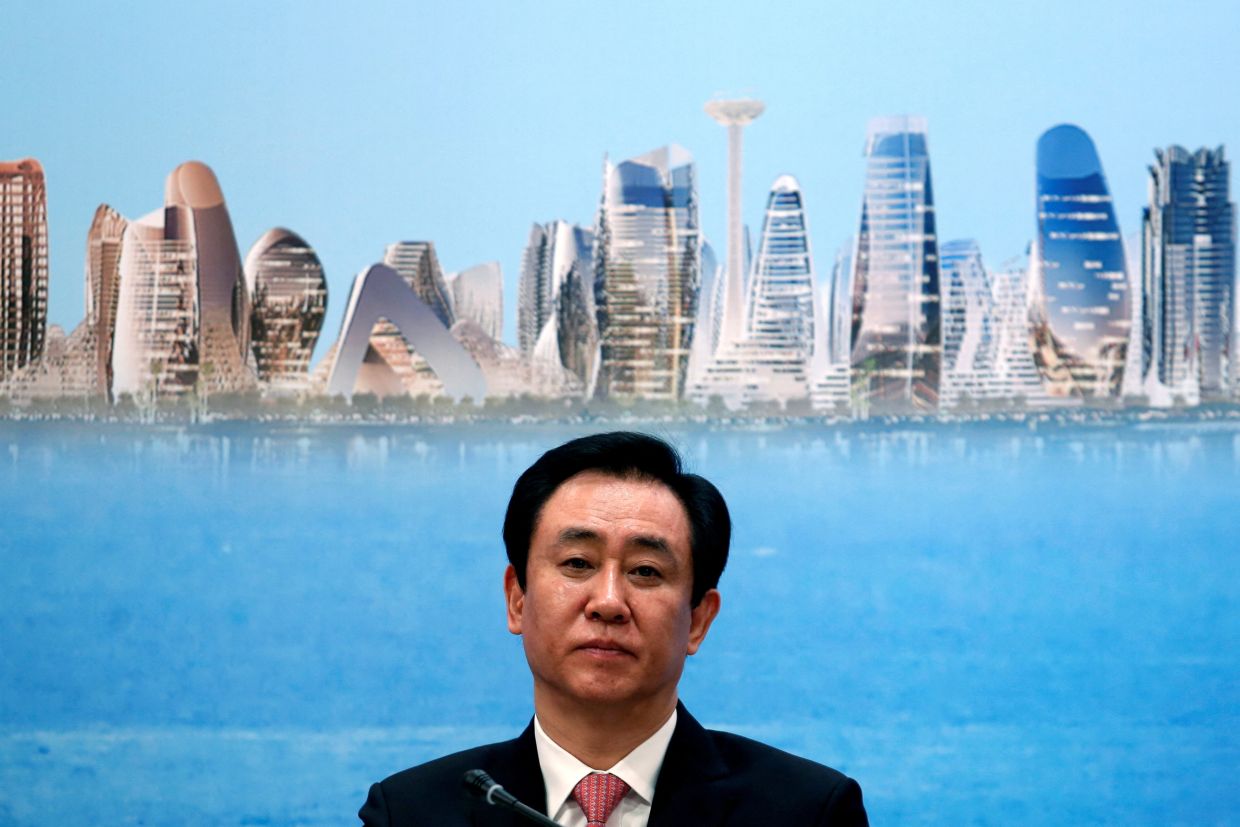
Hui Ka Yan, the former steel technician who rose to become Asia's richest billionaire, now faces life behind bars following a Shenzhen court's sentencing on Thursday. The founder of China Evergrande Group, the world's most-indebted property developer, pleaded guilty in April to a sprawling catalogue of financial crimes encompassing misuse of funds, fraudulent fundraising, illegal deposit-taking, unlicensed lending, bogus securities issuance and bribery. His dramatic fall from grace represents one of contemporary Asia's most striking reversals of fortune, capping a five-year unravelling that has exposed systematic governance failures within China's property sector.
The 67-year-old Hui, pictured in court photographs with grey hair flanking two uniformed officers, will forfeit all personal property as part of the sentence. Beyond the founder's punishment, authorities have imposed fines totalling 15.82 billion yuan (approximately $2.36 billion) across Evergrande and its principal subsidiary Hengda Real Estate, whilst sentencing five other senior executives to terms ranging from six to eighteen years. State broadcaster CCTV reported that fifty-six individuals connected to the organisation received sentences on the same day, underscoring the sweeping nature of legal accountability pursued by Chinese authorities.
The court's statement regarding Hui and his associates emphasised the unprecedented scale and gravity of misconduct. Judicial officials noted that criminal activities spanning the conglomerate involved "particularly huge amounts and egregious circumstances," had inflicted "particularly significant economic losses" and provoked "particularly serious social harm." Such language reflects judicial acknowledgment that Evergrande's collapse transcended corporate failure, instead constituting a breach of public trust affecting millions of ordinary citizens who invested life savings into wealth-management products that subsequently evaporated.
Evergrande's trajectory from China's premier property developer to defaulter on approximately $300 billion in accumulated liabilities traces directly to Hui's aggressive expansion strategy throughout the 2000s and 2010s. Founded in 1996 by Hui, the developer aggressively multiplied contracted sales whilst accumulating staggering debt loads that ultimately became unserviceable. At its apogee in 2017, Hui commanded a personal net worth of $45.3 billion according to Forbes, positioning him as the wealthiest individual across Asia and cementing his reputation as a visionary entrepreneur. That same aggressive capital deployment, however, contained the seeds of catastrophic failure.
The financial consequences reverberated across Chinese society in ways that challenged social stability. When Evergrande defaulted on billions of dollars in wealth-management products, countless lower-income investors who had entrusted retirement funds and life savings discovered their holdings entirely eliminated. Protests erupted across Chinese cities as aggrieved purchasers confronted the reality that promised returns had evaporated along with company viability. Social media commentary from affected homeowners encapsulated the bitter sentiments pervading communities devastated by the collapse: one observer lamented that "all ordinary citizens have paid the cost," whilst another darkly suggested that imprisonment paradoxically provided Hui protection, noting that "if he comes out, his life is in jeopardy." Creditors and investors remain far more preoccupied with recovering lost capital than witnessing judicial punishment.
The liquidation proceedings initiated by authorities have exposed the staggering disconnect between creditor claims and recoverable assets. When Hong Kong courts ordered Evergrande's liquidation in 2024, followed by its delisting from the Hong Kong Stock Exchange, the conglomerate's value had already collapsed catastrophically. As of August last year, liquidators had successfully sold only approximately $255 million in assets despite creditors submitting claims totalling $45 billion, yielding a recovery rate of less than six percent. This glacial pace of asset realisation reflects the byzantine complexity of unwinding a multinational conglomerate whilst simultaneously navigating conflicting legal jurisdictions across mainland China and international financial centres.
Beyond mainland territories, liquidators engage in protracted litigation aimed at freezing and recovering offshore assets accumulated by Hui and his former spouse, pursuing approximately $6 billion in dividends and executive remuneration distributed to company leadership before insolvency. These international asset-recovery efforts represent crucial mechanisms for maximising returns to defrauded investors, though such proceedings frequently extend across multiple years and jurisdictions, multiplying legal costs and delaying compensation.
Regulatory authorities have pursued parallel enforcement actions complementing criminal prosecution. China's securities regulator fined Hui $6.6 million in 2024 whilst imposing lifetime banishment from securities markets after determining that Evergrande's flagship unit had systematically inflated earnings reports and perpetrated securities fraud. Such regulatory findings substantiate criminal allegations whilst reinforcing the deliberate and systematic nature of financial misrepresentation underlying the company's projected growth narratives.
Hui's sentencing carries profound implications for China's property sector and broader financial system governance. The severity of judicial punishment telegraphs that authorities view the property crisis not as simple market failure but as criminal conspiracy requiring exemplary sentencing. For multinational investors and companies operating within Chinese markets, Evergrande's trajectory illustrates governance risks embedded within enterprises exhibiting aggressive expansion strategies dependent on sustained debt financing. The case demonstrates that even commanding entrepreneurs with celebrated track records remain vulnerable to judicial consequences when financial activities violate statutory requirements, though such accountability arrives only after ordinary citizens have borne substantial losses.
For Southeast Asian property developers and investors, the Evergrande saga offers cautionary lessons regarding leverage management, investor transparency, and the regulatory environments within which Chinese enterprises operate. Several regional developers have faced pressure from Chinese regulatory tightening since Evergrande's default, as authorities implemented stricter financing standards and debt-to-assets caps intended to prevent replication of similar failures. Malaysia's property sector, which encompasses both domestic developers and substantial Chinese investment flows, remains attentive to evolving Chinese regulatory frameworks that may redirect capital flows and reshape cross-border development ventures throughout the region.

