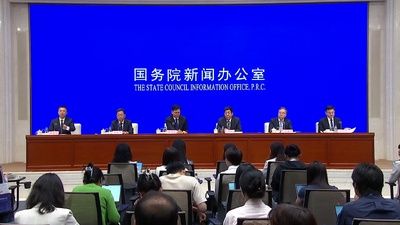
China has firmly rejected accusations that forced labour practices occur in the Xinjiang Uygur Autonomous Region, with Chen Ruifeng, Minister of the National Ethnic Affairs Commission, dismissing the allegations as baseless during a public address on Wednesday, June 24. The minister characterised claims made by various Western organisations and international media outlets as entirely without foundation, emphasising that China's constitutional framework explicitly prohibits all forms of coerced labour and that the country is bound by comprehensive legal protections in this area.
The timing of Chen's statement coincides with the imminent implementation of new legislation. The Law on Promoting Ethnic Unity and Progress, which received parliamentary approval on March 12, enters into force on July 1. According to Chinese authorities, this legislation contains expanded provisions designed to protect the rights of workers who migrate across regional boundaries, guaranteeing legal support and safeguarding the interests of labourers from all ethnic communities. The government framed this law as evidence of its commitment to strengthening institutional protections rather than undermining them.
According to Chen, individuals from Xinjiang who seek work opportunities beyond the region make such decisions entirely of their own volition. The minister asserted that workers are motivated by personal aspirations to enhance their families' economic circumstances and to acquire new professional skills that could increase their earning potential. This characterisation stands in sharp contrast to international concerns, which have suggested that employment transfers may involve elements of coercion or government pressure on workers to relocate. Chen dismissed such concerns as absurd, a rhetorical move that reflects China's broader strategy of delegitimising criticism rather than engaging substantively with specific allegations.
The employment transfer programmes themselves, according to the minister, operate with full respect for the preferences and autonomy of participants from diverse ethnic backgrounds. Officials maintain that these initiatives exist principally to expand job availability and raise incomes across the Xinjiang population. By framing labour mobility as fundamentally benefiting residents, the government positions its employment policies as welfare-enhancing rather than exploitative. This argument carries particular weight in a region where poverty reduction has long been a stated priority, and where economic development forms a core part of Beijing's governance agenda.
China points to substantial employment gains as evidence supporting its position. Over the past five years, the region has generated more than 2.39 million new urban employment positions through an array of government initiatives and incentive schemes. These figures form the statistical backbone of the government's claim that employment opportunities have genuinely expanded. Simultaneously, agricultural workers—a demographic category of particular relevance in Xinjiang's economy—have undertaken approximately 16.1 million work trips outside their home areas during the same period, suggesting considerable labour mobility.
Income growth metrics further buttress the official narrative. Urban residents in Xinjiang have experienced annual disposable income increases averaging 5.3 per cent over the five-year period, while rural residents have seen even stronger growth at 8.1 per cent annually. These figures, if accurate, would indicate tangible improvements in living standards that could be attributed to expanded employment opportunities and increased earning capacity. For Malaysian readers accustomed to monitoring development indicators across the region, such statistics warrant careful consideration alongside other data sources.
The institutional framework underpinning employment in Xinjiang, according to Chen, now incorporates a comprehensive system designed to establish fair hiring practices and robust labour protections. The minister emphasised that these mechanisms safeguard the legal entitlements of workers and ensure that individuals capable of working have genuine pathways to employment. This institutional architecture represents what the government characterises as a proactive approach to maximising both the voluntary nature of employment decisions and the dignity inherent in working arrangements.
For regional observers, particularly those in Southeast Asia where labour migration remains economically significant, the Xinjiang employment debate reflects broader questions about how governments characterise and measure labour practices. The Chinese government's emphasis on statistics, legal frameworks, and economic outcomes reflects a development-oriented perspective on employment policy. However, the chasm between Beijing's characterisation and concerns raised by international human rights organisations suggests fundamental disagreements about how employment voluntariness should be assessed and what constitutes adequate labour protections in practice.
The allegations that prompted this official response have accumulated over several years, driven by testimony from individuals claiming to have experienced coercion, satellite imagery analysis suggesting large-scale detention infrastructure, and investigative journalism documenting recruitment practices. International bodies and Western governments have expressed concerns, making Xinjiang employment practices a significant point of geopolitical tension. China's response strategy emphasises economic performance and legal declarations rather than addressing specific allegations in detail, a posture that has characterised Beijing's broader approach to this contentious issue.

