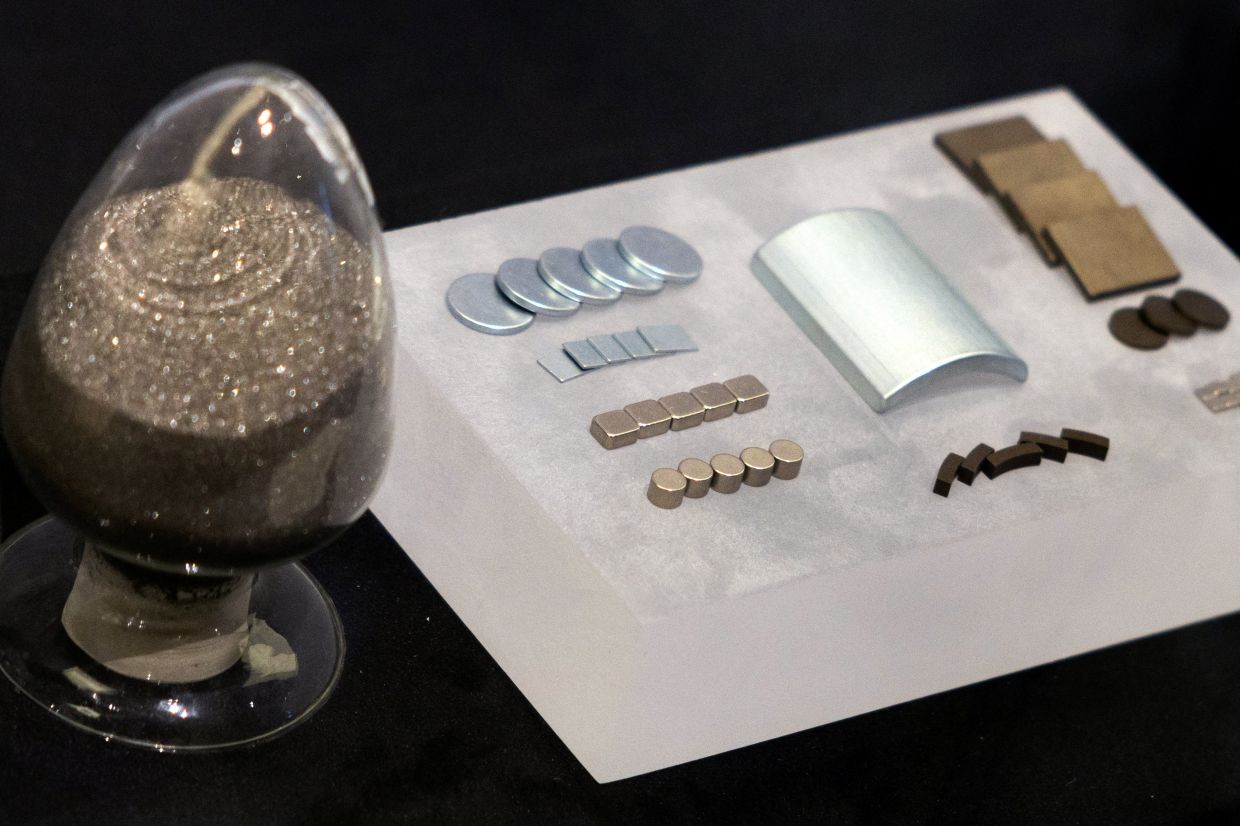
China is deepening its scientific partnership with Iran by venturing into the strategically critical domain of rare earth minerals exploration and processing. The expansion marks a significant move in Beijing's efforts to secure control over resources that are fundamental to advanced military and technological systems globally. Through coordinated workshops and research initiatives funded by China's National Natural Science Foundation (NSFC), the collaboration signals Beijing's intent to strengthen technological ties with Tehran while simultaneously positioning itself against Western competition for these essential materials.
The financial commitment underlying this partnership reveals the seriousness of China's intentions. Beijing has pledged 30,000 yuan—approximately US$4,200—for each workshop, a sum designated to cover logistical arrangements including venue costs, accommodation, and domestic transportation. Iran's National Science Foundation will reciprocate by funding international travel for Iranian participants and providing lodging for Chinese researchers conducting visits within Iranian territory. This structured approach to cost-sharing demonstrates a bilateral commitment that extends beyond simple research exchanges into sustained institutional cooperation.
Rare earths represent a group of 17 metallic elements possessing distinctive magnetic and electronic characteristics that render them indispensable to contemporary military hardware. From guided missiles and combat aircraft to sophisticated radar systems and advanced electronic components, modern defence technology relies fundamentally on these materials. The strategic importance of rare earth control cannot be overstated in the context of geopolitical competition, as access to these resources directly translates into military capability and technological superiority. This reality explains why nations worldwide are scrambling to secure alternative sources and reduce dependence on single suppliers.
The timing of this Sino-Iranian collaboration carries particular significance given the contemporary geopolitical landscape. Recently, the United States government revealed that it had previously tapped rare earth supplies from an undisclosed reserve to support military operations and defence manufacturing. This disclosure underscored Washington's vulnerability in the global rare earth supply chain. The incoming Trump administration has responded by announcing US$3 billion in targeted investments directed toward developing domestic critical minerals and battery manufacturing capabilities. These investments explicitly aim to replenish defence stockpiles and diminish American reliance on Chinese supply chain dominance—a direct acknowledgement of the strategic vulnerability that rare earth dependence creates.
China's position in the global rare earth market remains unparalleled. The nation possesses the world's most abundant reserves of these minerals and currently controls the overwhelming majority of global production and processing capacity. Moreover, Beijing has progressively tightened restrictions on the export of rare earth processing technologies, effectively leveraging its monopoly to advance strategic interests. When former President Donald Trump initiated trade hostilities with China in the preceding year, Beijing responded swiftly by imposing rare earth export limitations that rippled through American manufacturing sectors. This episode vividly demonstrated how rare earth supply chains can become instruments of economic and political pressure in international relations.
Iran's rare earth endowment, while less documented than China's, possesses potentially substantial untapped reserves. Geological surveys indicate that Iran's landscape contains iron ore and phosphate formations with characteristics favourable for rare earth mineral development. Systematic exploration has already identified rare earth anomalies distributed across approximately 7,000 square kilometres of central Iranian territory, according to recent analysis from the Hague Research Institute in the Netherlands. This geological potential remains largely underdeveloped, creating opportunities for cooperative development that could eventually reduce global dependence on Chinese production.
However, the gap between geological potential and actual extraction remains formidable. Iran currently possesses only rudimentary extraction and processing infrastructure, with industrial-scale operations far beyond present capabilities. This limitation means that even if exploration identifies substantial deposits, years of technological investment and infrastructure development would be necessary before Iran could emerge as a significant producer. The Chinese partnership addresses this capacity gap by providing technical expertise and research frameworks that could accelerate Iran's progression toward operational independence.
The institutional foundation for Sino-Iranian scientific cooperation traces back to 2017, when the two national science foundations formalised their relationship through a memorandum of understanding signed in Beijing. Rather than remaining confined to rare earths, this broader partnership has expanded into numerous research domains spanning mathematics, biological sciences, medical research, renewable energy systems, advanced materials, climate science, and artificial intelligence development. The framework reflects mutual recognition that scientific advancement serves national interests across multiple sectors, extending well beyond traditional resource extraction.
The current rare earth initiative sits within a deliberate expansion of the joint workshop programme that commenced in 2024. In its inaugural year, the programme offered funding of 150,000 yuan for each workshop and initially concentrated on climate studies, artificial intelligence applications, advanced materials science, and precision manufacturing techniques. The present round has broadened considerably, now encompassing nanomaterials for medical diagnostics, environmental monitoring systems, earthquake-resistant construction methodologies, and sustainable manufacturing processes. This diversification suggests that the rare earth focus, while strategically important, represents just one element of a comprehensive scientific engagement strategy.
For Southeast Asian nations, this Sino-Iranian cooperation carries implications worth monitoring closely. The region's economies depend heavily on stable global supply chains for manufactured goods and defence equipment. As major powers compete for rare earth control, regional stability could be affected by supply disruptions or technology transfer dynamics. Malaysia, with its own critical minerals sector and strategic position within global supply networks, occupies a vantage point from which to observe how this collaboration develops. Understanding these dynamics enables regional policymakers to anticipate shifts in technological dependence and strategic vulnerability.
The broader narrative surrounding rare earth minerals reflects a fundamental reordering of technological competition in the twenty-first century. Rather than traditional manufacturing, the contest increasingly centres on mastery of materials science and processing technology. China's strategy of simultaneously controlling reserves, dominating production, and restricting technology transfer creates a formidable position. Iran's emerging partnership with Beijing offers access to expertise that could eventually break this monopoly, though substantial development remains necessary before Iranian capabilities match Chinese sophistication.

