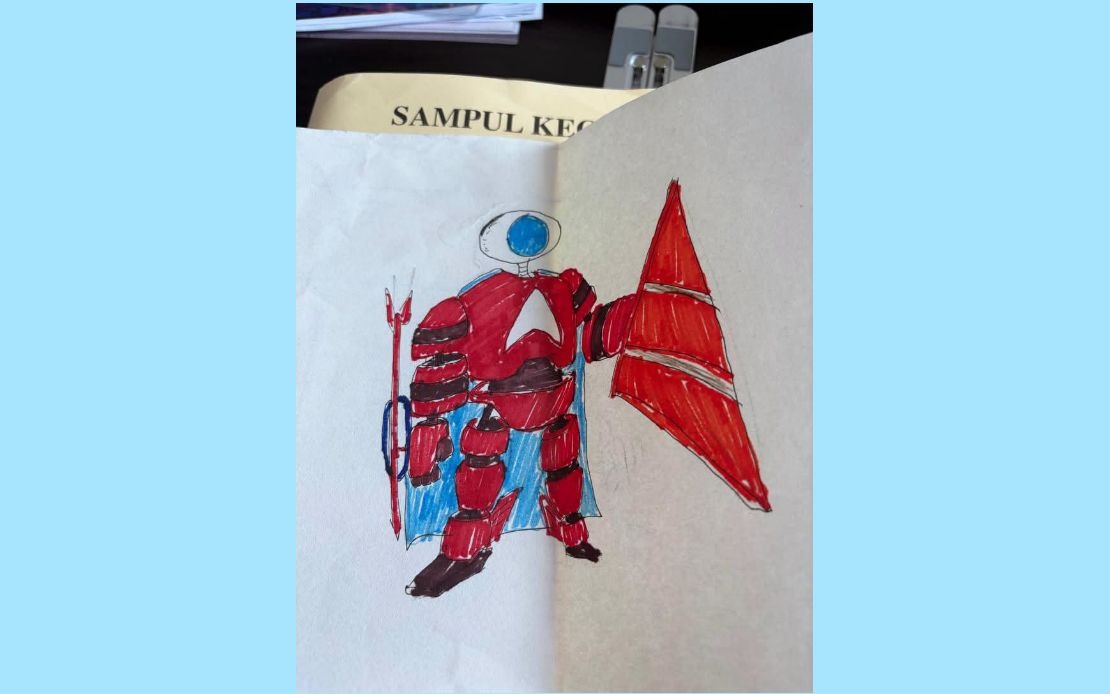
Prime Minister Datuk Seri Anwar Ibrahim has expressed his gratitude for a drawing presented to him by a child with special needs during a recent community engagement session, highlighting the touching moment that left a lasting impression on Malaysia's top leader.
The artwork was handed to Anwar during a Temu Anwar programme held in Negeri Sembilan, where the child presented the gift while being carried by his father. The Prime Minister took to Facebook to commemorate the encounter, underscoring the personal significance the drawing holds for him beyond its artistic merit.
The illustration depicts a robot character rendered in striking red and blue armour, clutching what appears to be a staff-like implement in its left hand. While the composition may seem simple to many observers, Anwar's decision to publicly acknowledge and preserve the gift speaks volumes about his approach to grassroots engagement and the value he places on human connection across all demographics.
Temu Anwar serves as a structured platform designed to facilitate direct dialogue between the Prime Minister and ordinary Malaysians, encompassing youth, families, and members of the public from diverse socioeconomic and cultural backgrounds. These sessions represent an attempt to bridge the traditional distance between high office and citizens, creating spaces where concerns can be voiced and perspectives exchanged without formal bureaucratic barriers.
The significance of this particular exchange extends beyond a simple transaction between a child and a political figure. For families raising children with special needs in Malaysia, such visible recognition and respectful engagement from national leadership can carry profound meaning. It signals that individuals with disabilities and their families are acknowledged as valued members of the national community, not peripheral to it.
Anwar's public sharing of this moment also reflects broader conversations about inclusivity in Malaysian public life. The nation has made strides in recognising special needs education and support services, yet parents and advocates consistently point to the importance of social acceptance and mainstream integration. When a Prime Minister publicly treasures a gift from a special needs child, it sends a cultural message that reverberates beyond the immediate family.
The Temu Anwar initiative itself represents a deliberate shift in governance communication style. Rather than relying solely on formal announcements and structured media interactions, these programmes create informal settings where spontaneous, human moments can occur. The encounter with the child and his father exemplifies this approach—an unscripted gesture of gifting that became meaningful precisely because it emerged from genuine participation rather than official protocol.
Malaysia's special needs community has long advocated for greater visibility and integration within national institutions. Educational programmes, employment opportunities, and social services remain areas requiring continuous improvement and investment. When such encounters occur at the highest levels of government, they contribute to normalising the presence and participation of people with disabilities in civic life.
For the child and his family, the experience of presenting artwork to the Prime Minister during a public engagement likely created an indelible memory. Such positive interactions during formative years can shape how young people with special needs perceive their place in society and their capacity to contribute meaningfully to their communities.
Anwar's response—documented on social media and thereby amplified beyond the immediate audience—demonstrates how modern political communication can serve purposes beyond messaging. By genuinely valuing and publicly acknowledging a gift from a special needs child, the Prime Minister reinforced messages about inclusion that resonate with broader national development goals.
The Temu Anwar programme continues to attract participants from various backgrounds, each bringing their own stories, concerns, and aspirations. These platforms accumulate significance through multiple individual interactions, gradually shaping perceptions about the accessibility of leadership and the inclusivity of national conversation. One drawing, one gift, one moment of connection contributes to this larger tapestry.
For observers across Southeast Asia watching Malaysian governance and social inclusion efforts, such moments offer evidence of evolving attitudes toward people with disabilities. Regional discourse increasingly emphasises the importance of creating truly inclusive societies where persons with special needs participate fully in community life and have their contributions recognised and valued.

