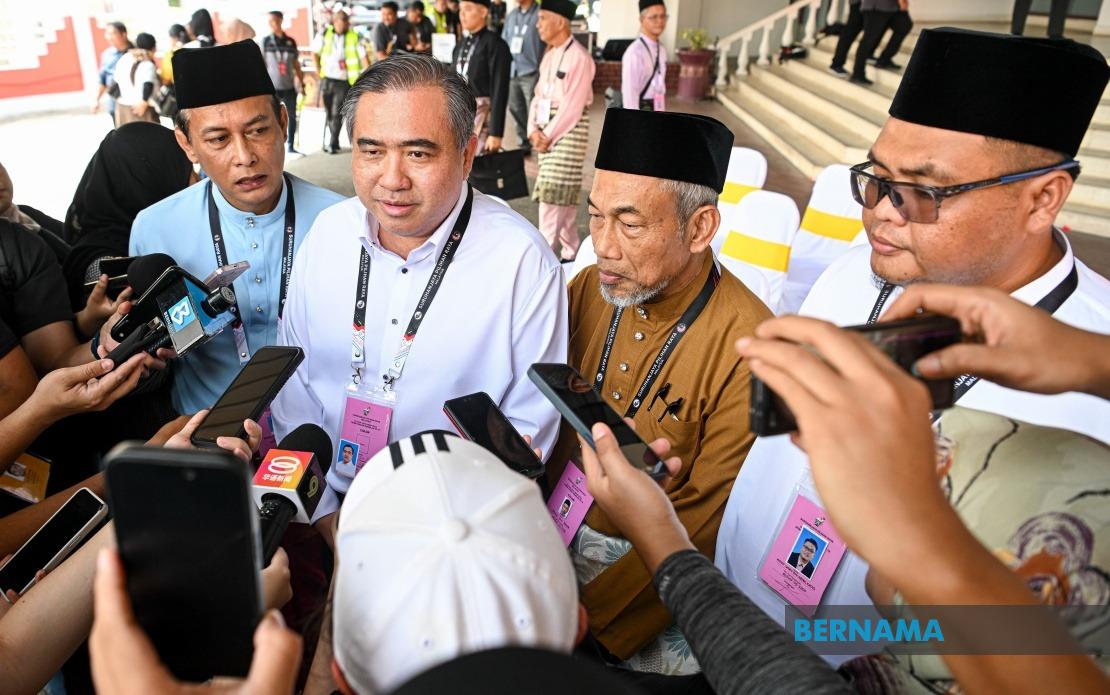
The Chennah state seat has emerged as a critical battleground in Pakatan Harapan's strategy to maintain its grip on Negeri Sembilan's state government, with Transport Minister Anthony Loke emphasizing the constituency's strategic importance during the nomination process in Jelebu on July 18. Among the four pivotal seats within the Jelebu parliamentary constituency, Chennah represents a linchpin in PH's broader retention ambitions, according to Loke, who is also the incumbent representative for the seat. The significance attributed to this particular contest underscores how Malaysian state elections often hinge on a relatively small number of hotly contested constituencies where margins tend to be razor-thin and where grassroots mobilization can determine outcomes.
The electoral contest in Chennah has been confirmed as a direct two-way battle between Loke and Siow Kong Choon, the Barisan Nasional candidate selected to challenge the incumbent. This straight fight configuration simplifies the tactical calculations for both camps, eliminating the unpredictability that three-way or multi-cornered contests introduce. In Malaysian electoral dynamics, such binary contests typically witness higher voter turnout and sharper partisan engagement, as both major coalitions can concentrate resources and messaging without dilution across multiple opponents. The absence of a significant third force in this particular seat suggests that both PH and BN view the contest as winnable and worthy of substantial organizational effort.
Loke grounded PH's confidence in the seat's retention within the coalition's administrative record over two consecutive terms managing the state since 2018. The Transport Minister articulated a development-focused narrative, asserting that the PH government has demonstrated competence in delivering infrastructure projects, economic stability, and public services across Negeri Sembilan. This performance-based appeal represents a common argument deployed by incumbent coalitions seeking re-election, particularly in states where infrastructure development has been visible and tangible to voters. For Malaysian constituencies where governance track records matter significantly to electoral decisions, Loke's emphasis on concrete deliverables rather than abstract promises carries particular weight.
The strategic weight assigned to Chennah gains additional context when examined against Loke's explicit reference to the 2018 election results. He noted that two state seats within Jelebu—Chennah and Kelawang—proved determinative in the formation of the state government following that election. This historical reference implies that narrow majorities characterize PH's hold on Negeri Sembilan, making individual seat performance disproportionately consequential to coalition survival. In states where governing coalitions operate with slim numerical advantages, the loss of even single constituencies can trigger government collapse or force uncomfortable realignments. This vulnerability dynamic would naturally concentrate campaign attention and resources on seats where prior electoral margins proved decisive.
The nomination process itself represents the formal gateway through which candidates transition from party selection to official candidacy. The public announcement of candidatures, returning officers' confirmation of election details, and candidates' immediate campaign statements establish the formal beginning of the electoral contest proper. In Malaysian electoral cycles, this moment signals the commencement of intensive campaigning periods during which political messaging, ground mobilization, and voter persuasion efforts intensify substantially. Loke's immediate remarks to reporters following nomination completion demonstrate how candidates seek to frame electoral narratives from the contest's outset, shaping media coverage and public perception before opposition counterarguments fully materialize.
The Transport Minister's framing of Chennnah as integral to PH's state-level ambitions reflects a broader campaign strategy emphasizing continuity and performance. By positioning the seat within a larger narrative about governmental stability and development delivery across Negeri Sembilan, Loke connects individual constituency contests to state-wide governance concerns. This vertical integration of messaging—linking local seat contests to state-level governance narratives—represents sophisticated political communication that encourages voters to evaluate their local choices within broader frameworks about which coalition can better manage state resources and implement development priorities. Such messaging proves particularly effective in constituencies where voters prioritize infrastructure, employment, and public service delivery above factional considerations.
For Malaysian political observers, the emphasis on Chennah's criticality illuminates how state elections often concentrate on a manageable subset of genuinely competitive seats while many constituencies function as either reliably incumbent-supporting or reliably opposition-supporting. The identification of four crucial seats within a single parliamentary constituency suggests that PH's hold on Negeri Sembilan depends on performing exceptionally well in these specific battlegrounds. This concentration of political competition in particular constituencies reflects Malaysia's electoral geography, where urban-rural divides, demographic distributions, and historical voting patterns create predictable regional strongholds for competing coalitions, leaving only selected constituencies genuinely competitive.
The straight fight configuration in Chennah also carries implications for voter behavior and campaign strategy. Without third-force candidates dividing opposition or protest votes, supporters of both major coalitions must make explicit choices rather than register dissatisfaction through protest voting. This binary structure generally produces higher accountability for incumbent performance, as voters cannot deflect discontent toward fringe candidates. For PH, retaining Chennah requires not merely mobilizing its own supporters but convincing voters who may harbor dissatisfaction with certain government policies that alternatives presented by BN offer inferior governance prospects. This comparative evaluation approach places premium emphasis on Loke's established reputation and the government's documented achievements in delivering state services.
The broader Negeri Sembilan electoral contest represents a critical test for PH's sustainability as a governing coalition in Malaysia's evolving political landscape. The state's status as a swing territory where neither major coalition enjoys overwhelming demographic or structural advantages makes electoral performance there significant for national political calculations. Should PH successfully retain Negeri Sembilan despite challenging national political circumstances, the victory would signal residual voter confidence in the coalition's governance capacity. Conversely, loss of the state would suggest eroding support and could trigger internal recalibrations within the coalition regarding strategic direction and leadership configurations.

